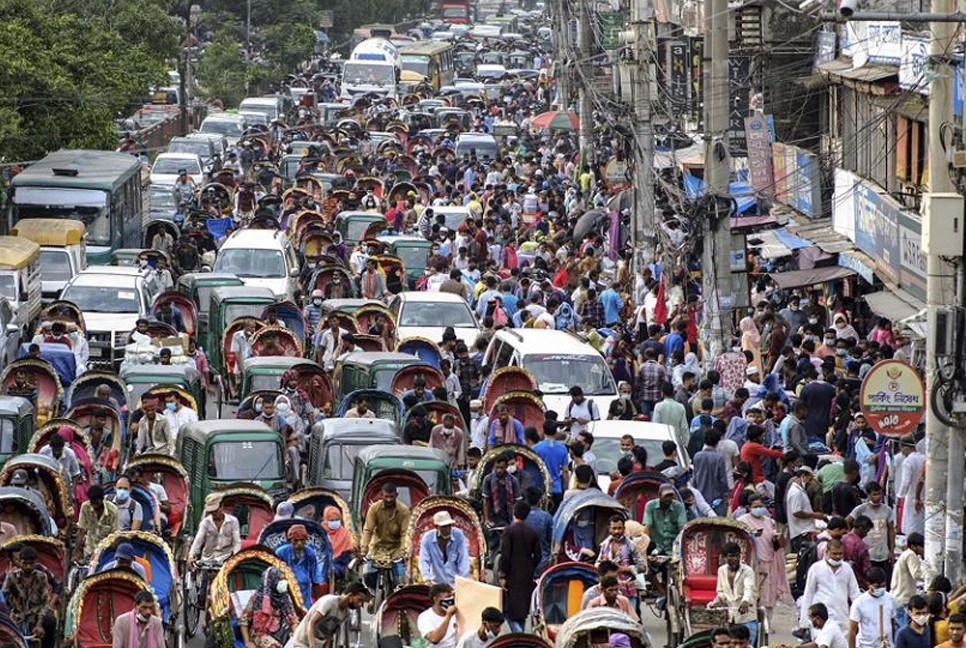
Dhaka city roads have now turned into a state of complete disorder due to the lackadaisical attitude of traffic police and law enforcement agencies, resulting in a near-collapse of the capital’s traffic system.
Unregulated battery-run rickshaws, once limited to narrow alleys, are now operating freely on major roads in VIP areas like Gulshan and Banani. Alongside them, easy bikes are also plying the city roads without control.
Old and dilapidated buses continue to stop randomly on roads to pick up passengers, while reckless overtaking among buses of different companies remains common.
High-speed private cars, illegal parking and excessive honking have also become difficult to control. City dwellers are increasingly frustrated by the reckless riding of motorcycles.
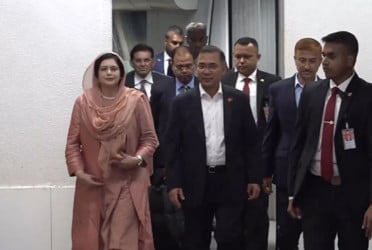
In this situation, Prime Minister Tarique Rahman is scheduled to hold a meeting on May 14 with officials of the two Dhaka city corporations, Dhaka Metropolitan Police (DMP) and the traffic division to restore discipline on the roads.
Transport experts told Bangladesh Pratidin that no effective initiative is being taken to control battery-run rickshaws in Dhaka and the situation has gone beyond control.
They said Dhaka already has a severe shortage of roads. While a city like Dhaka should have around 25 percent road coverage, the capital has only around 6 percent.
Under such conditions, giving unrestricted access to small, informal and unregulated vehicles on city roads is not appropriate, they added.
Experts also said many people are buying these illegal vehicles as an easy source of livelihood, as no documents are required to purchase them. As a result, people with black money are investing in the sector, creating powerful syndicates and extortion networks around it.
Though battery-run rickshaws were once confined to alleyways, there is now hardly any major road in Dhaka where they are not operating. Even the main roads of elite areas like Gulshan and Banani are crowded with battery-run rickshaws and easy bikes.
Hundreds of such rickshaws were seen operating around Gulshan-2 Circle on Tuesday.
A new concern has emerged with another type of three-wheeled battery-powered vehicle resembling a rickshaw. While the rear part looks like a traditional rickshaw, the front section is motorised.
Alarmingly, these high-speed vehicles are not only carrying passengers but also transporting heavy goods like vans and pickup trucks, raising fears of serious accidents at any time.
What is more concerning is that the drivers of these vehicles have no licences, no driving training, and the vehicles themselves have no registration. Despite this, they continue to move freely on roads, violating all traffic laws.
Although there is no official data, it is estimated that around one million battery-run rickshaws are now operating in Dhaka.
Local influential groups and makeshift stall owners are allegedly forming syndicates to put these vehicles on the capital’s roads, creating severe traffic disorder and congestion.
At the same time, motorcycle ride-sharing drivers are adding to the chaos through excessive speeding and reckless driving.
Bd-Pratidin English/AM