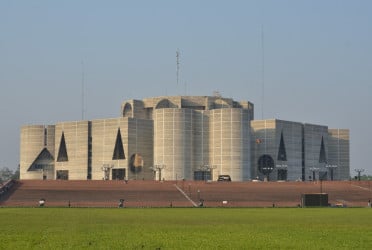
Do you remember the image of Rizwana Hasan and other members of civil society hugging trees and weeping at Osmani Udyan? Osmani Udyan was initially selected as the site for an international conference centre funded by China. In protest of the government’s decision, a section of our civil society suddenly became ardent nature lovers. They staged a drama of fake tears while clutching the trees in the park. They carried festoons that read, “killing trees is a crime.” The then-government took their tears seriously enough to move the conference centre to Agargaon. Through this incident, Rizwana gained fame as a massive environmentalist, and the path for “dollar business” opened up for her. When she became an advisor herself in 2024, her love for trees wasn’t as visible as her love for money – but let’s not delve into that here. Today, the tree-loving Rizwana and our “civil society” do not weep for children dying of measles. Forget protesting – they haven’t uttered a single word against those whose limitless negligence is causing these deaths.
The year was 1994. A tragic and unwanted incident occurred in the quiet town of Dinajpur. Yasmin, waiting for a vehicle late at night, was raped and subsequently murdered by police officers. It was a heartbreaking event. The then-BNP government immediately formed an investigation committee and suspended the accused officers. But civil society found a grand “issue”. In Dhaka, members of civil society rolled on the streets in protest and held torchlight processions. Seeing their lamentations, we thought, “Oh, how much compassion they have! How much love they have for the people.” Yet, not a single member of civil society gave even two taka to help Yasmin’s family. Yasmin’s elderly mother, in her struggle, had remarked, “Everyone is just marching, but my stomach burns with hunger.” Civil society used the Yasmin issue to host lavish seminars in five-star hotels and lecture about women’s liberation. Dollars poured in from abroad. While those dollars didn’t change the fate of the Yasmins of the world, they certainly increased the wealth and status of the “civil society” elites. So why is there no protest now from these elites regarding the deaths of hundreds of children due to the negligence of their patrons? Why haven’t they even issued a single statement?
On 29 July 2018, two students from Shaheed Ramiz Uddin Cantonment College died in a road accident. The “Safe Roads Movement” sparked across the country. That movement was primarily glamorised by certain representatives of civil society and stars from the showbiz world. Their tears, emotions, and style of protest took on a romanticised atmosphere, much like the Bollywood film “No One Killed Jessica”. The colourful outfits of the actors and their polished speeches turned mourning into a festive vibe. People are still dying on the roads today. Do these civil society members keep track of how many lives are lost in daily accidents anymore? Where are those “compassionate” stars today? They have no tears, no emotion, and no sympathy for the children infected with measles. Why have they become void of humanitarian sense?
The mass movement of 2024 is surely etched deep in all our minds. At one stage of the quota reform movement, members of our civil society joined in. Several showbiz stars protested in the rain, mimicking the style of a film shoot. Many people took to the streets just to watch their performance. Lawyers went to court and broke down in tears while talking about the torture of students. But today, not a single lawyer stands in court to demand justice for the killers of these children, to say that the children infected with measles have actually been murdered, and that we want justice for the killers.
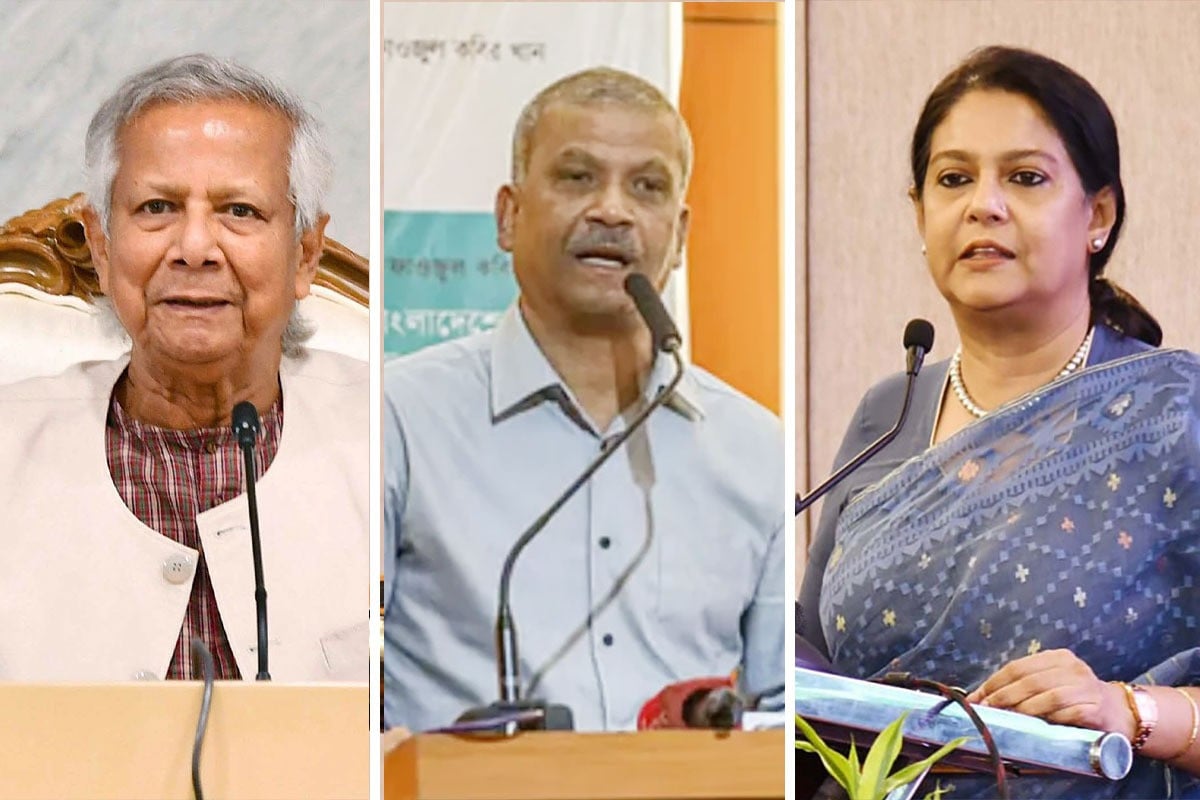
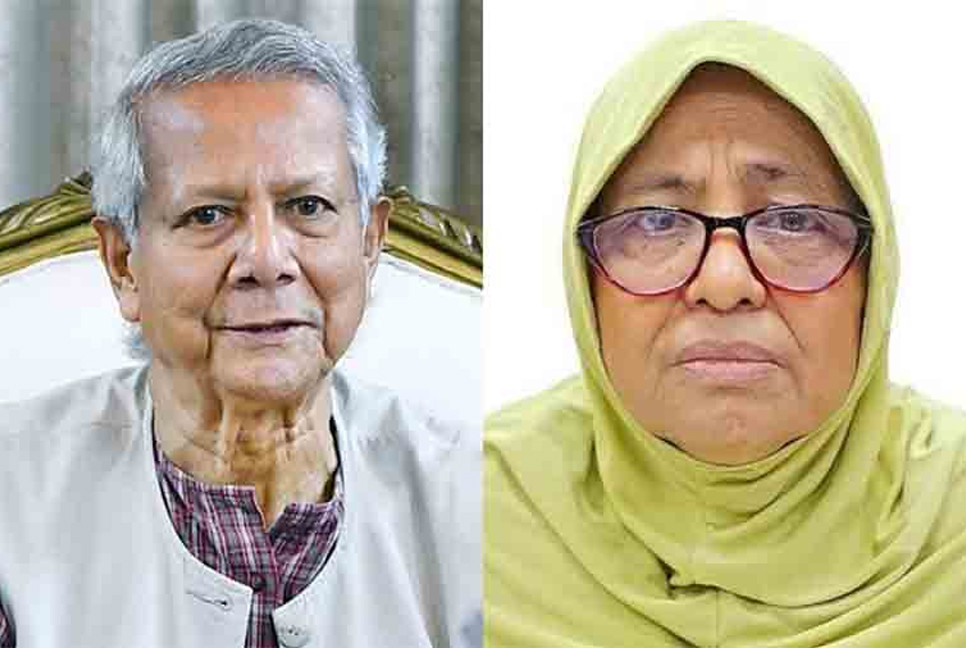
Many such examples can be given. Our civil society and showbiz stars become vocal on any humanitarian issue. Not just in Bangladesh, but across the world, conscientious people and celebrities come forward during crises, wars, and oppression. They protest for justice against injustice. The humanitarian disaster in Gaza has awakened the conscience of people worldwide. From Hollywood stars to respected global personalities, many have condemned the killing of children in the Iran conflict. Yet, Bangladesh’s civil society, human rights organisations, and showbiz stars haven’t uttered a peep against these oppressions. We could assume our civil society and celebrities are simply too busy with national affairs. Perhaps international human rights violations and barbarism do not move them emotionally. But how can we even say that? Just the other day, the death of media mogul Ted Turner deeply saddened Prof Muhammad Yunus, Bangladesh’s only Nobel laureate and former chief adviser. He sent a condolence message. Yet, he remained silent regarding the genocide in Gaza or the killing of children in Iran. This former chief adviser expressed concern during the July movement of 2024, but now, the accusation of “child murder” is levelled against him. Due to the intentional negligence and apathy of the Yunus government, hundreds of children are dying. Yunus is silent. Neither Yunus nor his constant companion, former health adviser Nurjahan Begum, has expressed even a modicum of regret.
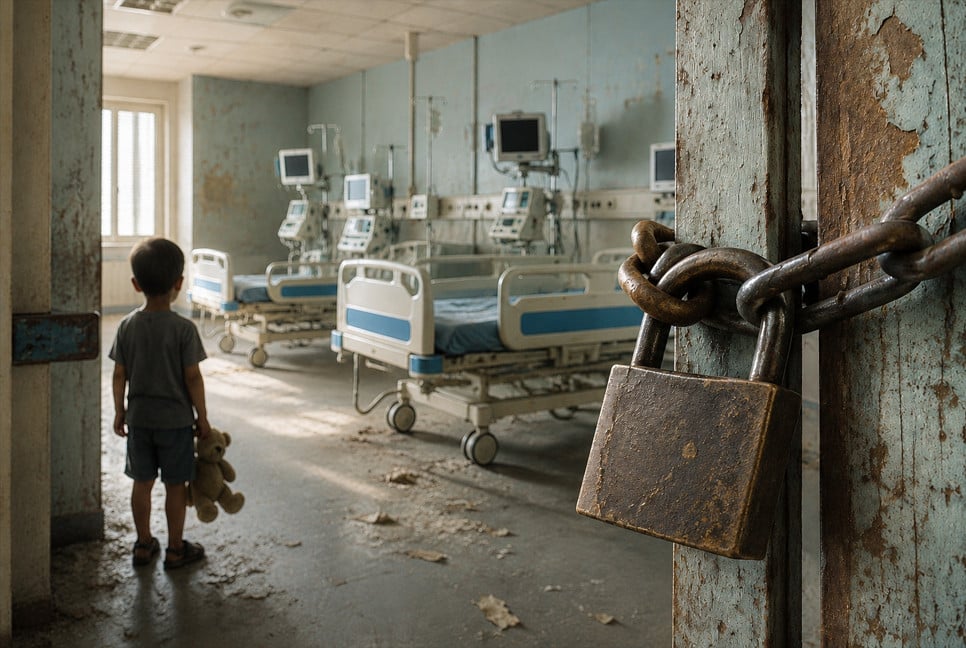
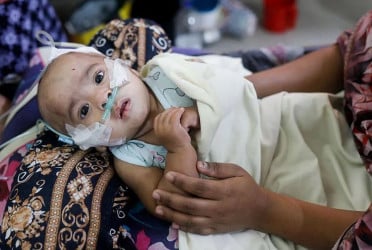
The death of hundreds of children from measles in Bangladesh is not just a health disaster; it is a symbol of the state’s moral collapse. In a country where measles had been nearly eradicated, over 400 children have died and more than 50,000 are infected. These deaths were preventable. To be honest, these children did not die at the hands of nature; they died at the hands of a failing state.
The most horrific part is that international organisations like UNICEF had warned the Yunus government beforehand. They warned that if the “measles vaccine procurement” method were changed – if direct procurement through UNICEF were stopped in favour of an “open tender system” – vaccine supply would be delayed and a crisis would emerge. UNICEF representatives pleaded not to adopt the open tender system. But the government did not listen. The result? A vaccine shortage, the collapse of the immunisation programme, and the subsequent epidemic spread of measles.
Are these deaths merely “misfortune”? Or are they the result of administrative negligence? Do the parents who waited eleven years for twins, only to lose one to measles while the other fights for life in the hospital, not have the right to ask questions? Do they not have the right to go to court? If they say, “Our child’s death is the failure of the state,” would that be wrong?
The World Health Organization (WHO) suggests that the painful deaths of children from measles have occurred due to the failure of the interim government led by Prof Yunus. Yet, our “national consciences” do not utter a single word against the Yunus government. Civil society members are now busy “warning” us about what will happen if reforms aren’t made. Showbiz stars are busy attending award ceremonies hosted by specific groups, flaunting their glamour in elaborate outfits. Meanwhile, in the hospitals of the country, there is a mournful atmosphere filled with the cries of children. The procession of dead children grows longer. The air of Bangladesh is heavy with the weeping of parents who have lost their beloved children. Seeing the indifference and silence of our civil society, it feels as though these innocent children, in leaving us forever, have sent a message: the conscience of the nation has rotted. Our civil society and celebrities are, in fact, “rotting corpses” from which a stench is spreading across the country. We are living in a society void of humanitarian sense.
Audite Karim is a writer and playwright. Email: [email protected]