1. The Loneliness of Truth in a Society of Rumours
There was a time when rumours spread in tea stalls. Now they spread in the palms of our hands. Once, conversations began with “I heard”; now people write “according to reliable sources” and dress their imagination in the clothing of truth. The most frightening aspect of this age is that truth and falsehood no longer compete with one another; instead, the contest is over whose lie can spread faster.
Recent reports on cybercrime, rumours, fake information and misinformation on social media reveal not only a crisis of law and order, but also a crisis in our collective social psychology. People are now more eager to share news than to verify whether it is true. It is as though panic, rather than information, has become the greatest form of entertainment.
Ironically, those who lament social decay the loudest are often the very people spreading rumours the most. Someone claims banks are about to collapse; another warns of an impending catastrophe; someone else urges people to flee the country overnight. Later, it turns out none of it was true. But by then, fear has already entered people’s minds.
Gabriel García Márquez once wrote that people tend to believe the stories they want to believe. Bangladesh now stands at precisely that point. Here, allegiance matters more than information. As a result, truth often fails to become popular, while rumours go viral within moments.
Not every loud word is a sign of courage. Some words merely conceal inner fear. That is why silence, at times, becomes the greatest form of strength.
2. The New Political Game Around the Youth
The greatest political battle in Bangladesh today revolves around the youth. Everyone is trying to claim them. Some want to turn them into soldiers of change, others into guardians of religion, and still others into the face of a digital revolution. Yet very few genuinely try to understand young people as human beings.
Recent discussions surrounding youth from different political streams focus on new strategies, new language and new organisational approaches. Some speak of bringing forward a new generation, while others attempt to reinvent themselves on social media. Everyone understands that this generation will shape the political language of future Bangladesh.
The problem, however, is that we are offering young people too many slogans and too few practical pathways. They see uncertainty in employment, widening social inequality and deep political mistrust. As a result, they are easily drawn towards powerful emotions or identities.
History shows that when a society fails to create real hope for its youth, young people begin to chase symbols instead. This was evident in the rise of extreme nationalism in Europe, extremism in the Middle East, and religious polarisation in South Asia. Bangladesh now faces a similar risk.
Young people are spoken to less and used more. Everyone wants their energy, but very few seek to understand their fears, loneliness or uncertainty about the future.
The most dangerous moment arrives when everyone begins agreeing too quickly. That is when questions disappear. And a society that forgets how to ask questions soon turns into a factory of slogans.
3. My Daughter Turning Sixteen and the Silent Fear of Fathers
On 7 May, my daughter Niza Jain turned sixteen. As a father, this age forces me to think differently. Sixteen is not merely an age; it is a strange bridge between childhood and adulthood. Childhood has not entirely disappeared, yet the door to maturity has already opened.
At this age, children laugh the most, but they also hide the most. They talk endlessly, yet never reveal everything. They want independence, while quietly searching for a safe shelter within.
As a father, I understand how quickly daughters grow up. Suddenly, the little girl who once held your hand while crossing the road says one day, “I can do it myself.” Fathers smile quietly at that moment, because they know the world is still far from easy.
Our society tends towards two extremes when it comes to girls. Some seek to control them excessively, while others abandon them completely in the name of freedom. Yet the most important thing is trust — creating an environment where children are not afraid of making mistakes and do not hesitate to speak the truth.
In today’s world, teenagers are among the most vulnerable. They may have thousands of online friends, yet very few meaningful conversations. On social media, they search for validation and build self-worth through the reactions of others. As a result, even a small rejection can create a deep emotional fracture within them.
What children need most at this age is presence — not constant advice. Sometimes they simply need someone beside them. Someone who understands their silence and takes their small fears seriously.
Humayun Ahmed once wrote that daughters are especially close to their fathers. The older I grow, the more deeply I understand those words.
4. The Echo of Power and the Beginning of Decline
Power rarely collapses because of its opponents. More often, it collapses within the echo of its own voice. The beginning of decline starts the moment everyone around power begins agreeing too quickly.
Empires throughout history did not collapse overnight. They decayed beautifully. Outwardly, they appeared stable; inwardly, fear continued to accumulate. Because when power loses confidence in itself, it begins imposing excessive control.
The moment a state or authority starts measuring people’s loyalty, it becomes clear that fear is operating beneath the surface. Surveillance is never a sign of confidence; it is a confession of insecurity.
The most dangerous person is not necessarily the corrupt individual. The most dangerous person is the one who believes they can never be wrong. Certainty without humility is often the softest road to authoritarianism.
In today’s world, the nature of control has changed. Previously, people were silenced through fear. Now truth is drowned beneath excessive noise. So much information, argument and manufactured outrage are created that truth itself becomes exhausted.
Yet truth possesses a strange endurance. It does not need to become popular. It survives the test of time.
Sometimes stepping aside is the strongest possible position, because not every battle deserves participation. Some people mistake silence for weakness. They do not understand the meaning of restraint.
Final Words
Rumours, youth politics, the growth of children and the psychology of power may appear unrelated, yet beneath the surface they are deeply interconnected. At the centre of all of them lies a crisis of trust.
We are living in a time when people value positions more than facts. Conversations within families are shrinking, tolerance in society is fading, and patience in politics is disappearing. As a result, everyone is becoming trapped within their own small echo chambers.
Today, people prefer speaking over listening. Declarations have replaced debate; attacks have replaced dialogue. On social media, nobody admits mistakes; instead, they repeat their positions even more loudly. It is as though gentleness has become a crime and restraint a sign of weakness.
Yet civilised societies do not survive through strength alone; they survive through self-control.
We teach children how to succeed, but rarely how to cope with failure. We teach young people how to protest, but not how to tolerate disagreement. The state seeks to provide security, yet sometimes the language of security itself turns into the language of fear. And when fear becomes the principal driving force of society, people gradually begin losing the capacity for independent thought.
Rabindranath Tagore once wrote: “To lose faith in humanity is a sin.”
Perhaps the greatest tragedy of our time lies precisely here: people now trust other people the least.
Families distrust families. Political parties distrust the public. Citizens distrust institutions. In such an atmosphere of suspicion, development, technology and grand infrastructure lose much of their meaning. Because civilisation ultimately stands not on concrete, but on trust.
And in a society where trust erodes, the sound of collapse begins long before people are able to hear it.
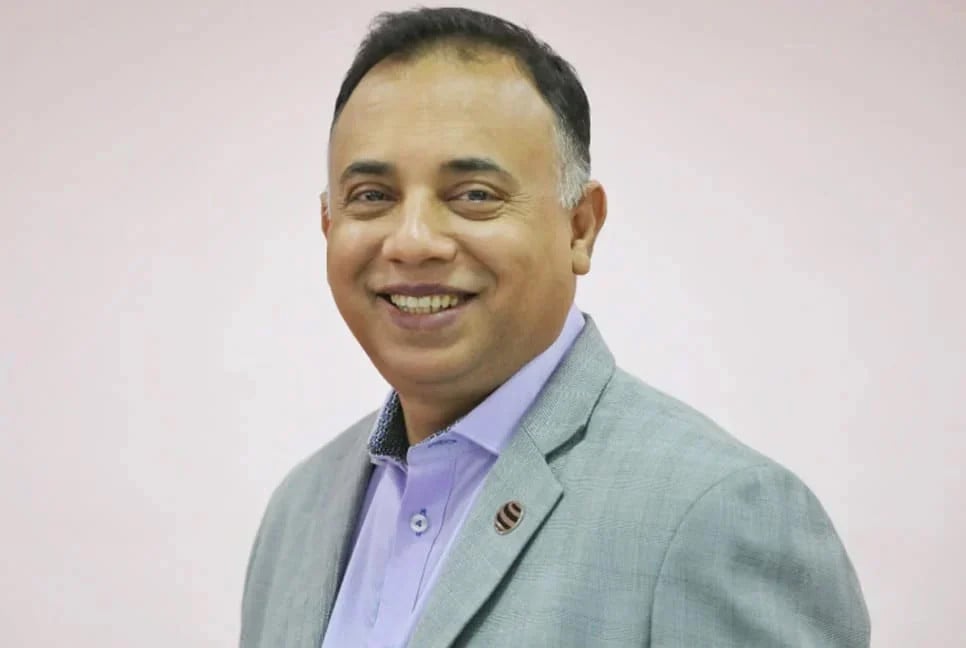
Writer: President, Centre for Governance Studies