The affairs of the royal court were underway when an urgent telephone call arrived for the king. After hanging up, the agitated monarch instructed the city minister, “Go and inspect the entire city immediately. See how the people are living and report back by this afternoon.” The same order was given to the chief official responsible for municipal services.
The two men hurried out and entered the residential areas, only to be stunned by what they saw. Houses had been built wall-to-wall with barely any space for light or air. Narrow lanes were crammed with towering buildings and clogged with vehicles. Hospitals and commercial structures lined the main roads. The city was choked with parking congestion and tangled overhead wires. Rubbish and foul-smelling waste littered the streets. Even in this twenty-first-century city, people openly relieved themselves in public. Illegal occupation of pavements and roads was rampant, while theft, mugging, and other crimes seemed endless. Broken roads, waterlogging, dust, a lack of public transport, and relentless mosquito bites during daylight hours left the observers utterly distressed.
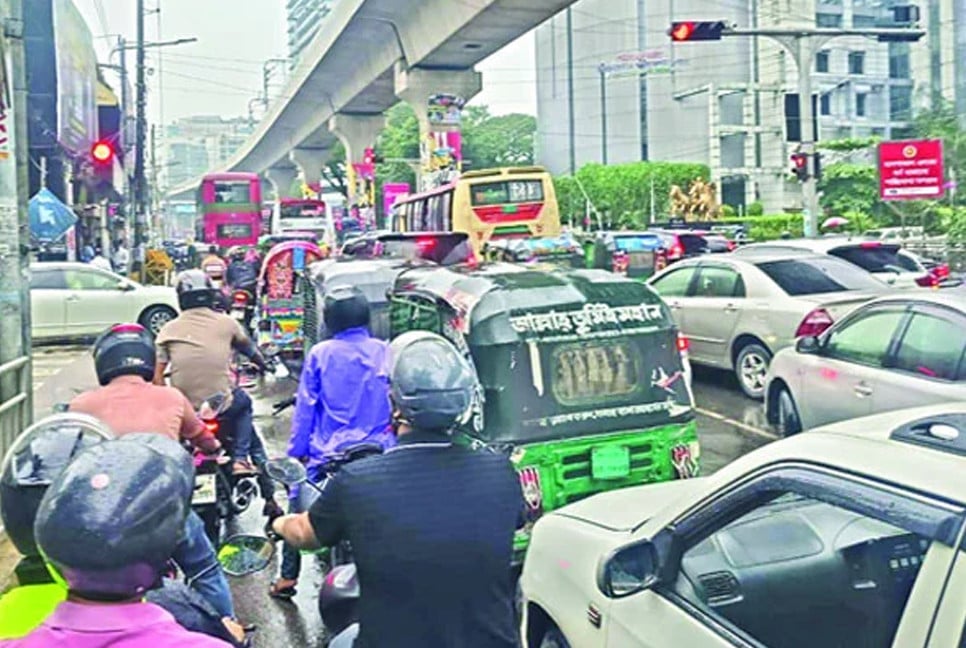
Behind the strict security barriers surrounding homes, residents lived in constant fear. Hospitals were overcrowded with thousands of patients, while desperate citizens struggled to receive assistance. Severe shortages of water, electricity, and gas had made life unbearable. After travelling nearly fifty kilometres, they found no trace of greenery or water bodies. The entire city appeared to have transformed into a giant commercial zone. On their return journey by bus, the cramped seating barely allowed them to stretch their legs. A journey that should have taken thirty minutes lasted two and a half hours because of horrific traffic congestion and unbearable noise pollution.
Exhausted after witnessing such suffering and hardship, the two officials returned to the king and declared, “The situation is dreadful. This city is no longer liveable.” The king asked, “Had you never seen these conditions before?” They replied simply, “We were asleep.” They added that urgent action was now needed to ensure citizens’ safety. When asked about their own role, they answered, “Leave us out of it. Our habit of sleeping on the job has made us incapable. A new plan and new leadership are required.”
The present condition of Dhaka, since municipal services began in August 1864, resembles that story of the royal court. Simply put, the people of this city are not well. Even after dividing the City Corporation into North and South, neither the quality nor the delivery of services has improved. As the population has grown, so too have the crises. The City Corporation has 15 core responsibilities, although the law outlines 28 categories of duties. The question is whether it is fulfilling its responsibilities properly. In short, it is not, despite the familiar excuses of various limitations.
The city continues to expand, but services and service quality do not. Instead, civic suffering and inconvenience are increasing alongside it. Drugs, terrorism, extortion, mugging, and other social crimes have made urban life miserable. Social instability is rising, while even controlling mosquitoes has become nearly impossible. Yet rather than improving services, the City Corporation has focused on increasing revenue through holding taxes and other fees. Revenue collection has been successful; service delivery has not. Overall, Dhaka would undoubtedly rank among the worst-managed cities in South Asia.
Policymakers still appear unclear about how an unplanned city should be redesigned, what citizens truly need, what services should be ensured, and what steps are necessary to make urban life bearable. Nor have we been able to follow the examples of developed cities around the world. Since there has been little meaningful change, it seems the authorities are simply “playing the flute while the city burns.”
Has the City Corporation ever seriously considered how many people this city can sustainably accommodate, how many vehicles should operate, or how much road space, greenery, water bodies, hospitals, security personnel, markets, and buildings are actually required? If such planning existed, the BRTA would not issue vehicle licences indiscriminately. In Dhaka today, the speed of pedestrians and vehicles is almost the same. The capital is approaching paralysis under the pressure of traffic. Likewise, the authorities should be frantic over the pollution that repeatedly places Dhaka among the world’s most polluted cities. Yet they remain indifferent.
According to the United Nations’ World Urbanisation Prospects Report at the end of 2025, Dhaka’s population has exceeded 36 million. However, the Bangladesh Bureau of Statistics estimated the city’s population at around 10.3 million in 2022. Within just a few years, Dhaka has become the world’s second most populous city and one of the most densely populated. By 2050, the UN predicts Dhaka will overtake Jakarta to become the world’s largest city, with a population of 52.1 million.
Has the City Corporation considered how rapidly Dhaka’s population has crossed the 35 million mark? Is there any preparation for the alarming future projected by the United Nations? Will all migration streams in the country continue to flow towards Dhaka? Discussions about halting this migration have been ongoing for two decades, yet meaningful decentralisation has not occurred. Had it happened, the flow of people to Dhaka would not continue unchecked. The growing population is intensifying every civic crisis and repeatedly exposing the shortcomings of municipal services.
Dhaka North City Corporation now covers 196 square kilometres and consists of 54 wards. Dhaka South City Corporation spans 109 square kilometres with 75 wards and employs 8,407 staff members. In 2016, both corporations incorporated eight new unions each, yet services did not improve. Residents of these newly added areas continue to suffer greatly. In many places, even half of the promised civic services have failed to reach them. Dark roads remain unlit and broken roads unrepaired.
What, then, is the City Corporation doing?
People do not expect food or clothing from the City Corporation; they expect services and security. One of the corporation’s key duties is removing illegal structures. Has it succeeded? Clearly not. Across the city, people occupy and build whatever they wish, wherever they wish. For whatever reason, the authorities have failed to fulfil this responsibility. Illegal occupation has engulfed the city.
Data from 2024 show that over the past twelve years (2013–2025), Dhaka WASA and the two City Corporations spent more than Tk 30 billion on reducing waterlogging. Of this, around Tk7.3 billion was spent by the City Corporations in just four years. Yet despite this enormous expenditure, poor maintenance and flawed drainage systems mean waterlogging remains unresolved. Even in this basic responsibility, the City Corporation has failed.
Waste management and street-cleaning operations remain plagued by corruption, mismanagement, poor planning, and political interference. Although the official monthly waste collection fee is Tk30, residents are often forced to pay Tk120 or more, while authorities remain silent. Citizens also endure severe harassment when obtaining trade licences, renewing documents, securing new holding numbers, paying holding taxes, or registering births and deaths. However, there seems to be no weakness when it comes to increasing taxes and collecting revenue. Correcting errors in birth and death registrations can become an ordeal only the victims truly understand.
The City Corporation is also responsible for roads, markets, and pavements, yet there are countless questions regarding its performance. Cemeteries and cremation grounds suffer from inadequate services, excessive fees, land shortages, and poor management. If preserving heritage sites is indeed the corporation’s duty, then what did it do while historic places such as Paltan Maidan and Muktangan disappeared before our eyes? What contribution has it made to protecting Dhaka’s history and heritage overall?
Although preserving parks and open spaces is also its responsibility, the protector has become the destroyer. Markets are being built on historic playing fields such as Dhupkhola Ground in Old Dhaka. Raw markets have occupied the Shyamoli and Haraki Club grounds. Mirpur’s Harun Mollah Eidgah, once a playground, has been turned into a wholesale market. Temporary shops have occupied the New Colony field in Lalmatia B Block. The twin ponds of Khilgaon were filled in to create a field. Similar stories of encroached and dying playgrounds can be found throughout the city.
The Prime Minister has directed that every ward in the capital should have at least two playgrounds, yet even on paper, 41 wards in Dhaka have none. According to the World Health Organization, every urban resident should have access to nine square metres of open space, but Dhaka offers less than one square metre per person. Of the city’s 235 playgrounds, 193 are illegally occupied. Are the guardians asleep in broad daylight?
A 2020 survey by the River and Delta Research Centre found that Dhaka once had 73 canals, of which 37 have been encroached upon. Meanwhile, the Buriganga, Shitalakkhya, Turag, and Balu rivers surrounding Dhaka have been dying before everyone’s eyes. Does the City Corporation bear no responsibility for protecting these canals and rivers? Those who fail to protect essential natural resources cannot properly serve millions of people.
On paper, the City Corporation operates general hospitals, maternal care centres, and charitable homeopathic clinics. But how many people actually benefit from these services? Where are these clinics located? Ask a thousand residents, and hardly anyone could answer. What kind of service is this? Community centres and gymnasiums have been built at enormous cost, but how much public benefit do they provide? Many appear to exist more for the comfort of officials than for citizens.
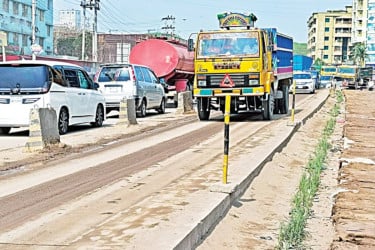
Although utility agencies pay to dig up roads, repairs often remain incomplete for months afterwards. Street lighting is another key responsibility, yet the quality of lighting across the city’s roads and alleys remains deeply inadequate. Dhaka lacks proper parking facilities, yet the City Corporation profits from leasing roadside parking spaces. Meanwhile, commercial buildings continue to be constructed without parking provisions, while citizens are fined for parking on roadsides. What sort of urban governance is this?
Questions surrounding food safety are endless. Food is openly prepared and sold in unhygienic conditions. Public defecation occurs on pavements. Dust and noise pollution have turned the city toxic. Although roads should account for at least 25 per cent of urban land, Dhaka has only around 8 per cent, of which barely 5 percent is usable. Roads are often resurfaced repeatedly without removing damaged layers underneath, leaving nearby homes effectively sunk below road level. Who listens to the suffering of these homeowners?
A healthy city should have 20–25 percent green space and 10–15 percent water bodies to maintain ecological balance, drainage, and groundwater recharge. Dhaka has none of these. Another major crisis is insecurity. Criminal gangs operate throughout the city, turning it into fertile ground for crime. There are few cultural development centres, slums continue to spread, tangled overhead cables remain unresolved, pavements and roads are occupied, unauthorised buildings are constructed freely, and risky structures threaten public safety. Coordination among agencies involved in urban planning and development is almost nonexistent.
It is astonishing that the entire capital has only a token number of air-conditioned buses. CNG-powered auto-rickshaw fares remain uncontrolled, while chaos in bus fares continues unchecked. The poor condition of buses and drivers would hardly encourage foreign investment. In this city, buses can stop anywhere at any time to pick up or drop off passengers. Taxi services have virtually disappeared. How, then, are middle-class residents expected to travel? Unauthorised vehicles have flooded the city. Around 2.342 million registered vehicles currently operate in Dhaka, yet no one can say how many are actually public transport. Beyond these official figures, countless more unregistered vehicles are on the roads. Still, the BRTA continues issuing registrations. The authorities seem oblivious to the fact that effective public transport is essential for civic life. Mosquitoes have turned the city unsafe and robbed residents of sleep. Vaccine shortages and mosquito infestations have created a major public health crisis.
There is no room left even to breathe. Children are growing up in this city like poultry chickens packed into cages. What kind of future awaits them? Nobody follows the law on the streets. Everyone acts as they please. Will this continue indefinitely? Is there no remedy?
What do citizens expect from the City Corporation?
A developed city requires planned housing, uninterrupted water and electricity, proper waste management, modern healthcare, congestion-free transport, and accessible digital services such as birth registration and land services. It also requires public safety, effective drainage, citizen participation, and cultural development. In all these areas, Dhaka lags behind. Even basic security during emergencies at midnight is often unavailable. Homes are left vulnerable during festivals when families travel away. Ambulance services are expensive, though they should be free. These issues now demand urgent attention. The entire city must be redesigned with citizen welfare as the priority. Countries that excel in urban services should be followed as examples. One hopes the city authorities will finally awaken from their slumber. The City Corporation must shed its reputation for prioritising business over service. Only when the city leaders wake up will the residents feel safe. One truth must always be remembered: when a city is unhappy, its people cannot be happy either.
The writer is journalist and columnist