In modern democracy, politics and economy go hand in hand; they are interdependent. Just as an economy cannot flourish without democracy, democracy collapses if the economy fails to function properly. In today’s world of free-market economics, economic development is an impossible dream without the private sector. The global economy now stands on the shoulders of private enterprise.
The private sector is not just creating employment; it is serving humanity.
For instance, the Bill & Melinda Gates Foundation contributes more to the healthcare of the poor than the World Health Organization (WHO). Such examples are many. Therefore, damage to a large corporation poses a risk of significant loss to the global economy. This is why, in developed democratic nations, the private sector is considered an integral part of the government. The President of the United States consults with the private sector before making any major economic decisions. The Joint Economic Committee of the US Congress and Senate works in regular coordination with the private sector. Their influence is so profound that they often play a role in resolving standoffs between the President and Congress.
It is not just the US; the UK and various European countries consider the private sector a partner in governance. When German automakers were cornered in the global market by low-cost Japanese cars, the German government passed a “joint cooperation agreement” bill to revitalize the industry, which included provisions for buying German cars in German-aided projects. This is just one small example. A primary goal of governments worldwide is to develop the private sector. Not only Western nations, but Southeast Asian countries are also working alongside private entrepreneurs and industrialists to move their nations forward.
The example of Sri Lanka is noteworthy here. The country had gone bankrupt; its economy had deteriorated to the point where it took loans from Bangladesh. Yet, after the mass uprising, the new government did not throttle the private sector. They did not file fabricated cases against those who were commercially close to the Rajapaksa family, nor were their bank accounts frozen. Instead, the new government relied on these businessmen to recover the economy, tackling the difficult situation together. Consequently, the country has bounced back. The Governor of the Central Bank of Sri Lanka (CBSL), Dr. P. Nandalal Weerasinghe, stated that private sector entrepreneurs do not belong to any party—they are the warriors of the national economy.
In a democracy, the private sector is now viewed as a part of the government. They don’t obsess over what the BJP stands to gain if Tata succeeds, or how much commission Boeing will pay for a good deal. They think about the interests of the people and the development of the country. There is no alternative to a robust private sector for sustainable democracy.
A major example is the trade agreement signed with Bangladesh on February 9th. This deal might be against Bangladesh’s interests, but through it, the US skillfully protected the interests of its private institutions. Bangladesh has already signed an agreement to buy 14 Boeing aircraft. This will profit the Boeing Company, but it isn’t just Boeing’s gain—it’s a win for the US economy. The US President or government never thinks, “What is my personal gain in bringing business to Boeing?” Nor does a Democrat president come in and freeze Boeing’s accounts or accuse its executives of money laundering just because a Republican president secured a big deal for them.
However, the reality in Bangladesh is the exact opposite. Some politicians here either want to make businessmen their opponents or turn them into party cadres. They think, “This businessman did well during the Awami League era; therefore, he must be ‘sized up’ now. Take action against him. If possible, destroy him.” But no one pauses to think that harming this businessman harms the national economy and shuts down employment for many.
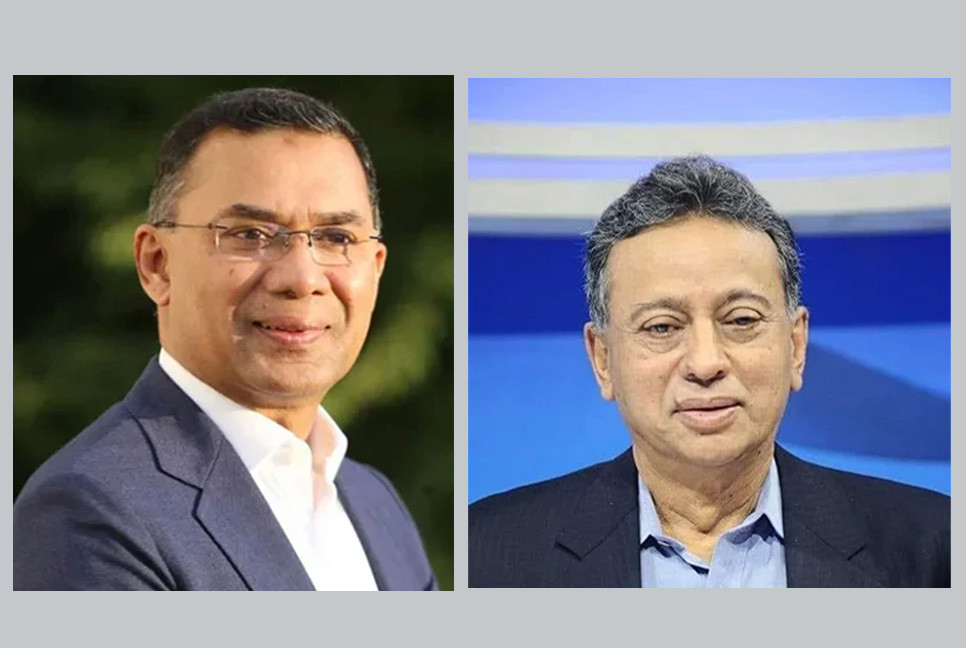
In Bangladesh, the culture of judging industrialists and businessmen based on party interests has existed from the beginning. For example, during the Awami League’s tenure, businessmen like Amir Khosru Mahmud Chowdhury and Abdul Awal Mintoo were not allowed to conduct business properly and were harassed in various ways. This hurt the national economy more than it hurt those individuals. These victims are now important figures in the BNP government. They surely know and understand how dangerous such a narrow-minded mentality is. The BNP has come to power with a message of moving forward; why should they follow the bad practices of the past?
Just as Manmohan Singh is called the architect of private sector development in India, Shaheed President Ziaur Rahman is the father of the free-market economy in Bangladesh. Taking charge of the country, he freed it from the shackles of a socialist economy. The BNP is a party of Zia’s ideals, and one of their foundational principles is to flourish the private sector. Over the last 54 years, the private sector has been a brutal victim of political vengeance. Had it been otherwise, this country would have progressed much further.
A segment of Bangladesh’s civil society is perpetually anti-development. They have been spreading propaganda against the private sector for years. The reason is that they never want Bangladesh’s economy to be self-sufficient; if foreign loans stop, the luxurious lives of many in the civil society will be shattered. Thus, whenever they get a chance, they indulge in the bloodlust of destroying the private sector. During the 1/11 shift in 2007, they declared war against the private sector and crippled it by publishing lists of so-called “top corrupt individuals.”
Following that same trend, the Yunus government embarked on a mission to complete the unfinished work of 1/11. By filing murder cases against businessmen and industrialists, freezing their bank accounts, and restricting foreign travel, the Yunus government created a terrifying situation in the private sector. Through “mob-terrorism” in factories, indiscriminate attacks on industrial units, and arson, the Yunus government set the economy back twenty years. We must recover from this state, and for that, swift action is required.
The BNP government is committed to establishing the rule of law and justice. Then why is there a delay in withdrawing the false cases filed during the Yunus administration? How do businessmen, journalists, or teachers become defendants in murder cases? It shouldn’t take three months to withdraw these cases.
The country’s economic condition is not good. Next month, the new government will present its first budget. Now, to save the country and protect democracy, the economy must be saved. To save the economy, the private sector must be mobilized. Therefore, initiatives must be taken immediately to stop all irregularities and high-handedness against the private sector that occurred during the Yunus regime. All private entrepreneurs must be taken into confidence. A fearless, investment-friendly environment must be created for them. Investment growth is not possible amidst fear and panic, nor is running a business. If employment cannot be created, the economy will not gain momentum. And if the economy isn’t functional, no matter how sincere the government is, it won’t be able to fulfill its electoral promises.
Enough of the conflict and discord; our potential and dreams have burned long enough in the fire of political vengeance. Let this country of 200 million people belong to everyone. Leaving behind hatred and malice, we must move forward. We must bring smiles to people’s faces, build a beautiful future for children, and arrange employment for the youth. And for that, we must work hand in hand with the private sector.
Audite Karim is a writer and playwright. Email: [email protected]