Prices of essential commodities continue to rise in markets across the country, including the capital, making it increasingly difficult for many families to manage daily expenses.
With incomes remaining largely unchanged, households are being forced to cut back on purchases and shorten their shopping lists. Fixed-income families are facing the greatest pressure.
The surge in prices has made everyday life more challenging for ordinary people. The impact of higher fuel costs has gradually spread to almost all goods. Experts warn that the situation may worsen without prompt and effective measures.
According to the April economic update report by the General Economics Division (GED) of the Planning Commission, rising global energy costs and tensions in the Middle East have created new risks for inflation in the country. Higher global fuel prices, increased import costs, and rising expenses in production and supply chains could push inflation upward again.
Rashedul Islam, who works at a private firm in Mirpur and earns around Tk 30,000 per month, said he can no longer buy a full week’s groceries with the same amount of money. “Earlier, I could manage everything in one trip to the market. Now, even half of that is not possible. I am forced to cut many items,” he said while shopping at Mirpur-11 kitchen market on Friday.
Housewife Sumi Akter shared a similar concern. Her husband runs a small business and earns Tk 30,000–35,000 a month. With two children, including one enrolled in school last year, managing expenses has become difficult.
“We used to buy milk and eggs regularly for the children. Now prices are so high that we cannot always afford them. We have to calculate every cost,” she said.
A visit to Mirpur-11 and Mirpur-6 kitchen markets shows that prices of almost all essentials, including rice, lentils, oil, eggs and chicken, remain high. Medium-quality rice is selling at Tk 60–62 per kg, coarse rice at Tk 58–60, and Miniket rice at Tk 80–90. Fine lentils are priced at Tk 140–150 per kg, while coarse lentils cost Tk 100–110. Eggs are selling at Tk 130–140 per dozen. Broiler chicken is priced at Tk 180–190 per kg and Sonali chicken at Tk 360–380.
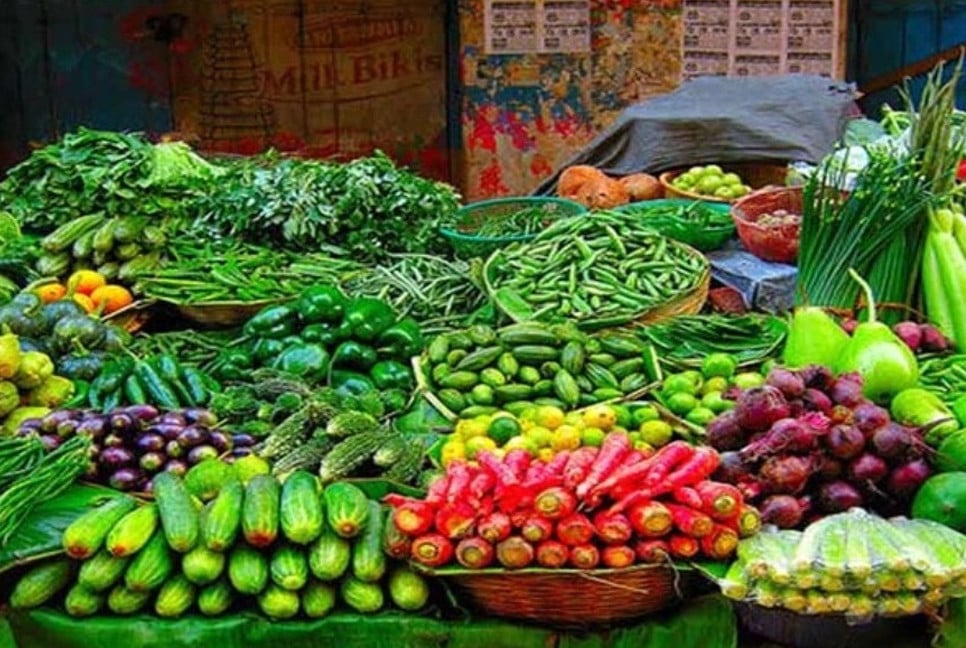
Vegetable prices also remain elevated. Most vegetables are being sold between Tk 60 and Tk 80 per kg, with some priced even higher. Pointed gourd and okra are selling at Tk 60–80, while ridge gourd, bitter gourd and yardlong beans range from Tk 80–100. Spiny gourd is priced at Tk 120–130. Green chilli is selling at Tk 80–100, tomato at Tk 50, papaya at Tk 70–80, pumpkin at Tk 40–50 and brinjal at Tk 70–80. Potatoes are selling at Tk 20–25 per kg and onions at Tk 40–50. A medium-sized bottle gourd is being sold at Tk 80–100 per piece.
Vice-President of the Consumers Association of Bangladesh SM Nazrul Hossain said there is a lack of effective market monitoring, allowing unjustified price hikes in many cases. He noted that weaknesses in the supply chain and the role of middlemen are hurting consumers.
He stressed the need to examine differences between import costs, wholesale and retail prices, and to ensure regular market supervision.
Bd-Pratidin English/ AM