“We begin but do not finish; we make grand gestures but do not work; we do not believe in what we perform, and we do not practise what we believe; we can produce volumes of words, yet cannot offer even a grain of sacrifice. We take pride in arrogance rather than striving for merit; we depend on others for everything, yet loudly condemn their faults; imitation is our pride, favour from others is our honour, and deceiving others through rhetoric while being enamoured of our own eloquence has become the principal aim of our lives.”
This reflection belongs to Rabindranath Tagore. While discussing Ishwar Chandra Vidyasagar, Tagore lamented what he saw as the inherent weaknesses in the Bengali national character, noting that Vidyasagar stood against this prevailing tendency.
Tagore expressed these views in 1895 in his essay on Vidyasagar. Remarkably, more than a century later, the Bengali character appears not to have changed significantly. Each line of Tagore’s observation still resonates. Time and again, we have initiated noble pursuits, only to leave them unfinished.
In 1905, Bengal was partitioned and Dhaka was made the capital. The once backward town began transforming into a vibrant urban centre. Yet in 1911, that journey was abruptly halted as the partition was annulled. Dhaka fell back while Calcutta regained its prominence.
In 1948, the movement for the Bangla language began, reaching its climax in 1952. Blood was shed to establish the dignity of Bangla, forming the foundation of Bengali identity. Efforts were made to preserve and purify the language, sometimes to the point of excess. Eventually, through a bloody war of liberation, Bangladesh emerged as an independent nation, and the journey towards democracy began.
Yet, before the spirit of independence could fully mature, it began to dissolve into competing narratives. The Bangla language itself now risks degeneration.
And what of democracy? Although it formally began with the Proclamation of Independence in April 1971 and the Constitution of 1972, it faltered within a year. By 1975, democracy was effectively bottled up. It later returned, only to be disrupted again by authoritarian rule in 1982. The restoration in 1990 was followed by another setback in 2007.
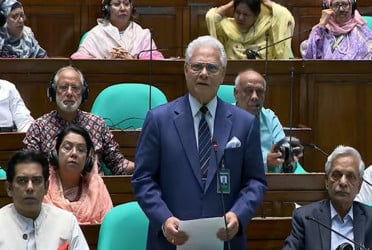
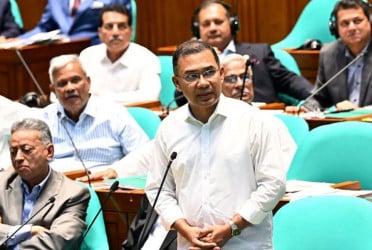
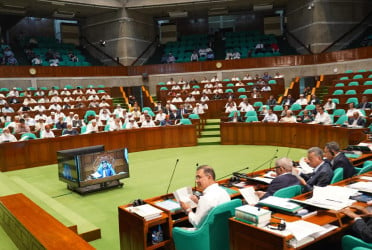
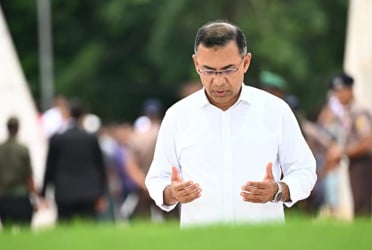
In February 2026, democracy has once again embarked on a new journey. At the same time, there are warnings of conspiracy—not from ordinary voices, but from Prime Minister Tarique Rahman himself.
The question is: what kind of conspiracy, and why? To answer this, one must look deeper. Are these conspiracies aimed merely at destabilising a government, or do they pursue broader, long-term objectives? Questions arise about narratives surrounding independence, carefully crafted political designs, and movements framed in the name of reform.
Conspiracies against Bangladesh’s independence and sovereignty date back to 1971. Those who opposed the Liberation War are known in history by names such as Al-Badr, Razakar, Al-Shams and Peace Committee. While they no longer appear openly under those identities, their presence is believed to persist in disguised forms, supported by forces that once stood against the Liberation War.
Despite repeated setbacks to democracy, these forces have never withdrawn. Following a successful mass movement involving people from all walks of life, so-called anti-discrimination student groups installed an interim government led by Muhammad Yunus, assuming the role of its guardians. The country, it is alleged, was pushed towards a pre-designed state of mob rule, while lofty rhetoric continued from the seat of power.
Before going further, it is necessary to examine how such a meticulously designed roadmap managed to capture the credit and outcomes of a mass uprising. The background, arguably, was shaped by short-sighted politics. Tagore’s observation remains relevant—we seek to elevate ourselves by diminishing others rather than building genuine merit.
Political divisions, historical distortions, and mutual hostility have weakened national unity. Those who claimed to stand for independence and democracy have, at times, undermined both through misuse of power and erosion of voting rights. In such circumstances, the very forces that threaten independence find space to grow.
Just three days before the 12 February election, the interim government led by Muhammad Yunus reportedly signed an agreement which, if not revoked, could seriously call into question Bangladesh’s independence and sovereignty. Informed quarters fear the country may, in the near future, drift towards a state of dependency. These concerns are, in many ways, an open secret. Political parties that threaten to topple an elected government in the name of referendums and July Charter are also aware of this alleged anti-state agreement, yet they appear unconcerned.
It is further claimed that the deal could pave the way for unrestricted import of pork into Muslim-majority Bangladesh—raising fears that a time may not be far off when such products are openly traded. Notably, those advocating for the establishment of Islamic principles in the country have remained silent on this issue, focusing instead on the rhetoric surrounding referendums and the so-called July Charter.
* The writer is a senior journalist and fiction writer