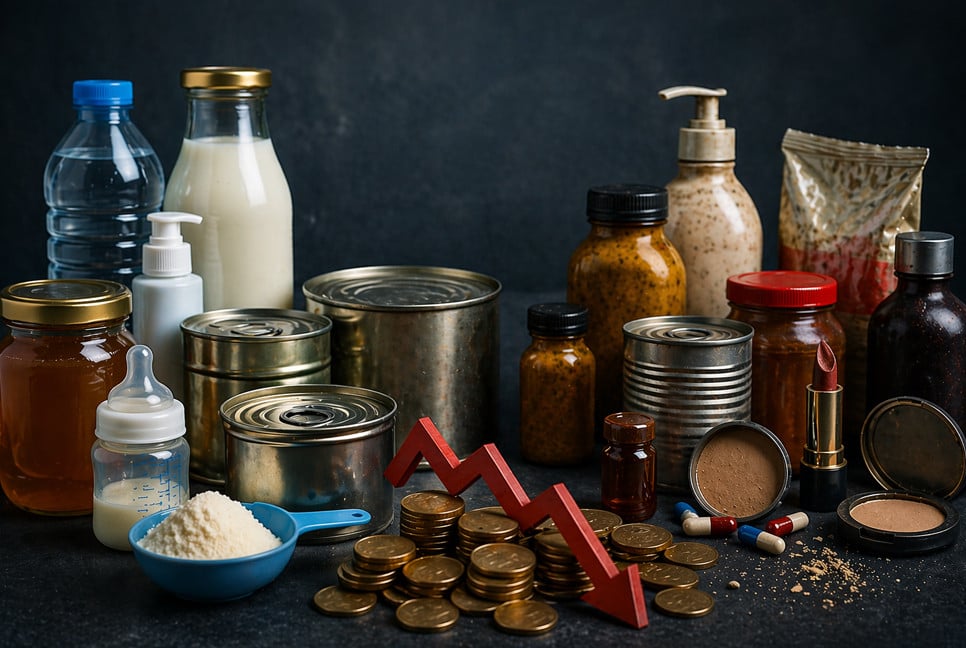
Counterfeit and adulterated products are increasingly dominating the market across the country. At present, around 40 percent of the domestic market is believed to be occupied by fake and substandard goods. From food items, baby food and cosmetics to all categories of consumer products, this “poison” has spread widely, posing a serious threat to public health.
The government is losing substantial revenue as counterfeit goods are being sold under the names of legitimate companies. It is estimated that around Tk31.70 billion in revenue is being lost to the state exchequer, while legitimate businesses are suffering a decline in sales worth Tk136.80 billion. In addition, diseases linked to such products are said to be reducing GDP by around 2 percent.
Consumers and stakeholders in the sector have called for strict action against those responsible.
According to sources at the National Board of Revenue (NBR), revenue shortfall during the first eight months (July–February) of the 2025–26 fiscal year has reached Tk714.72 billion. By the end of the fiscal year, the deficit could exceed Tk1 trillion. The government has incurred such losses largely due to its inability to prevent the rising trend of untaxed and informal market transactions across various sectors. As a result, development expenditure, subsidies and allocations for poverty alleviation programmes are being constrained.
At the same time, legitimate companies that pay significant taxes are losing competitiveness due to the expansion of illegal trade, leading to the rise of black market operators. The presence of counterfeit goods alongside genuine products has made it increasingly difficult for consumers to distinguish between authentic and fake items, placing legitimate companies under pressure and further widening the revenue gap.
According to the Bangladesh Cosmetics and Toiletries Importers Association, nearly 40 percent of the local market is now controlled by counterfeit and adulterated products. Almost no sector remains untouched—medicines, food and beverages, spices, dairy products, cigarettes, cosmetics, fake revenue stamps and more are being replicated.
The most commonly adulterated items include milk, oil, honey, coffee, tea, sauces, chocolate, bottled water, soft drinks and baby food. Unscrupulous traders often slightly alter the names and packaging of well-known brands to market fake products. Industry sources say the growth of this trade is driven by simple production methods, lower prices, weak regulatory enforcement and infrastructural limitations.
According to various studies, including those by the Bangladesh Bureau of Statistics (BBS), 80–90 percent of households regularly consume milk, tea, coffee and baby food. Millions of children depend entirely on infant formula. The widespread adulteration of such essential products poses a serious public health risk. Contaminated raw materials and harmful chemicals can lead to malnutrition, diarrhoea, infections and kidney complications in children, while adults face increased risks of liver and digestive diseases. In addition, counterfeiters closely replicate trademarks, packaging and colours of legitimate brands, making it extremely difficult for consumers to identify authentic products.
Stakeholders have stressed the need for stronger market monitoring, sustained anti-adulteration drives and stricter punishment for offenders. They also emphasised protecting legitimate producers to restore market transparency, strengthen revenue collection and improve the overall business environment.
Several government agencies, including the Bangladesh Food Safety Authority, the Directorate of National Consumer Rights Protection and the Bangladesh Standards and Testing Institution (BSTI), conduct regular anti-adulteration drives. However, control over the situation remains ineffective, with the problem reportedly worsening over time. Experts cite manpower shortages, inadequate laboratory facilities and weak monitoring as key reasons behind the growing crisis.
A senior official said that introducing a QR code system for product verification and imposing stricter legal action against counterfeiters are necessary steps. However, legal limitations often restrict enforcement agencies from taking effective action.
Investigations have found that counterfeit products—including tea, coffee, edible oil, powdered milk, bottled water, soft drinks, cosmetics, medicines, cigarettes and electrical goods—are being sold using fake BSTI seals and copied brand identities. Many of these are produced in unauthorised factories in Dhaka, Chattogram and other cities. Traders attract consumers with low prices and misleading packaging, while fake BSTI stickers and holograms further complicate identification.
Consumers have expressed frustration over the government’s inability to control counterfeit goods. Some knowingly purchase cheaper alternatives, while others are deceived by packaging that closely resembles genuine products. High import duties, weak regulatory systems and lack of coordination among enforcement agencies have further exacerbated the situation.
Adulterated food and beverages often contain harmful chemicals, excessive preservatives and low-quality ingredients, leading to food poisoning, gastric problems and long-term health risks. Fake cosmetics may contain mercury, steroids and lead, causing skin allergies and lasting health damage.
Although BSTI, food safety authorities and law enforcement agencies regularly carry out raids, the problem persists. Even after operations, production and distribution of counterfeit goods continue. Some stakeholders believe investigations by the Anti-Corruption Commission (ACC) are necessary into alleged internal collusion and irregularities in issuing certification.
Commenting on the issue, Dr Mohammad Mostafa, Member (Public Health and Nutrition) of the Bangladesh Food Safety Authority, said that existing laws impose relatively high minimum fines, which sometimes limit mobile court operations. As a result, authorities are often forced to issue warnings instead of taking strict action. He also noted a lack of coordination between licensing and monitoring bodies, which weakens overall quality control.
According to World Health Organization data, around 600 million people fall ill each year due to contaminated food, and approximately 442,000 die. In Bangladesh, studies suggest that millions suffer annually from cancer, kidney disease and diabetes linked to adulterated food consumption.
Experts warn that long-term use of counterfeit products poses serious health risks. They emphasise the importance of safe home-cooked food and stronger ethical standards among businesses.
According to the Bangladesh Food Safety Authority’s report for the 2025–26 fiscal year, 126 mobile court drives were conducted in the first eight months, resulting in fines of Tk5.6 million and over 100 cases being filed. Despite these efforts, the overall situation has shown little improvement.
Bd-pratidin English/TR