There is a proverb: “What is an insult in one country may be ordinary speech in another.” In other words, a word considered offensive in one place may carry a positive meaning elsewhere. Just as a person’s character, personality and family background are reflected in their good words and behaviour, the use of abusive or offensive language likewise reveals the shortcomings of one’s upbringing and cultural values. That is why many public transports or restaurants display the phrase, “Manners reflect one’s heritage.” Another widely quoted proverb says, “Let one’s birth be anywhere, but let one’s deeds be noble.”
People must navigate life amid various changes and circumstances within family, society and the state. As a result, even individuals from well-established, educated families may lose their way, while those from disadvantaged backgrounds can bring pride and honour to society. There are numerous examples of this reality in our political sphere as well. Politics, too, has many forms of expression. Some leaders are eagerly listened to, and their speeches are remembered like enduring quotations.
I began by discussing abusive language. Even here, there is a distinction between how men and women use it. Certain expressions may be uttered casually by men, but many women would feel embarrassed even hearing them, let alone speaking them. Yet we are now living in a chaotic time, where the more abusive language one uses, the more popular one appears to become. Such language spreads rapidly on social media. Some women, too, are now using more vulgar expressions than men. Abuse is often associated with people from slum areas, but today even some university teachers and students use such language that would make others uncomfortable. It is unclear what this generation, accustomed to such language, will contribute to the nation, but someone will inevitably bear responsibility. There is, after all, an enduring principle of consequences, whether we recognise it or not.
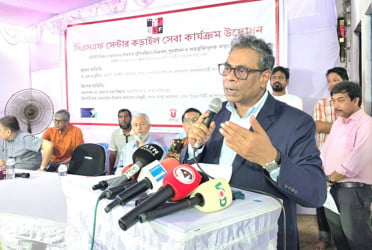
Recently, a student of Dhaka University posted a highly offensive statement on Facebook targeting the Health Minister, criticising the poor infrastructure, lack of basic facilities, hygiene issues and absence of proper systems in hospitals. Following this, a former Dhaka University student responded in a restrained and respectful manner. Addressing her as “sister”, he questioned whether it was appropriate for an educated person to use such language against another, particularly when the current government has only been in office for a short time. He expressed his protest and said he felt ashamed as a former student of the university.
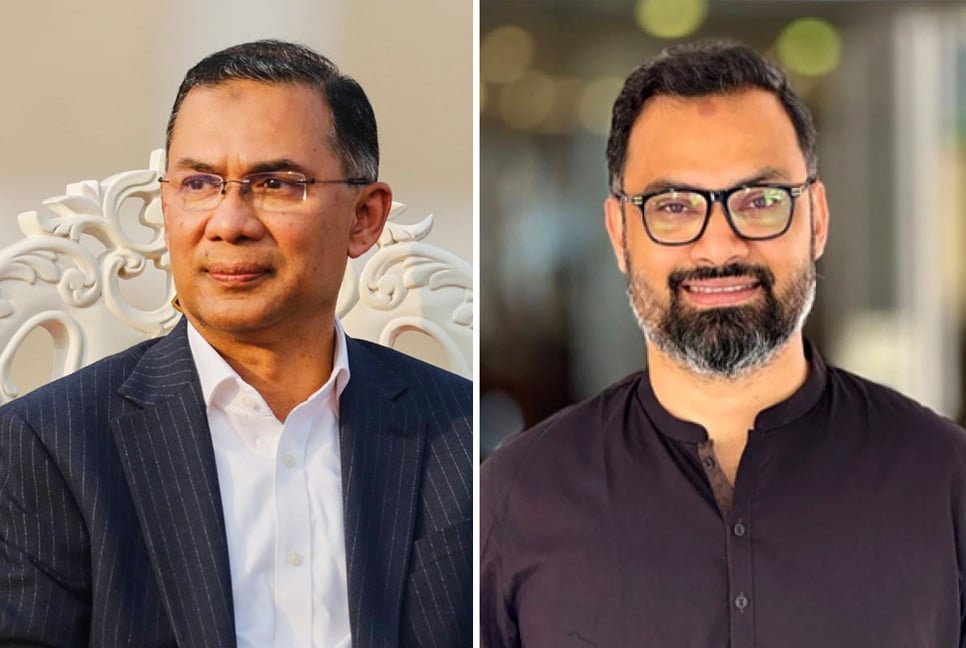
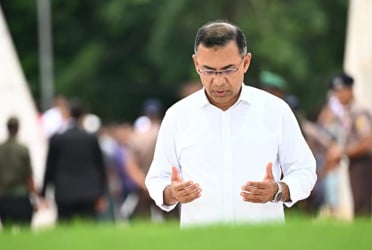
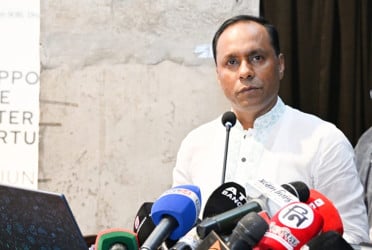
Health and Family Welfare Minister Sardar Md Sakhawat Husain Bakul, born in 1951, is a senior citizen, a distinguished individual, a politician and a valiant freedom fighter. He has been elected as a Member of Parliament four times and comes from a respected family in Narsingdi. He was once General Secretary of the Narsingdi Government College student union and actively participated in the Liberation War while studying at Dhaka University. The question arises whether it is appropriate to use such language against a person of his stature. Can a current university student address a former student in such a manner? Does this reflect education or decency?
When the minister studied at Dhaka University, the student’s father may not even have been born. Using abusive language against an elderly individual without any personal wrongdoing raises legitimate questions about the speaker’s upbringing and education. More importantly, what can the country expect from someone who presents themselves in such a vulgar manner on social media while studying at a prestigious institution once dubbed the “Oxford of the East”? A father who invests his hard-earned money in his daughter’s education may not even be aware of what kind of person she is becoming. In the future, she may take on roles within a family—will she contribute positively, or negatively? If such behaviour continues across generations, who will bear the responsibility?
The spread of such indecent and uncivil language in politics, society and educational institutions has increased significantly following the recent mass uprising. During and after that period, the public heard a range of new and old abusive expressions from educated youths. While such movements can bring positive outcomes—like fertile silt after a flood—they can also carry undesirable elements. It increasingly appears that the negative aspects have outweighed the positive ones.
This trend is not limited to one individual; many educated people gained attention during that period for their use of offensive language, some even rising to prominence in politics. While people can become famous for various reasons, those who gain recognition through abusive speech often contribute to the degradation of social values. Such language has now spread even among schoolchildren, creating what seems to be a new culture of verbal abuse.
This phenomenon is not driven by a single cause; rather, it is the result of political instability, social change, technological influence and emotional pressures. It is important to recognise that this trend is harmful to democratic culture in the long run. When civility is replaced by insults, the social fabric weakens and divisions deepen, leaving lasting psychological scars across generations.
There was a time when conversations revolved around great songs, dramas, films or inspiring individuals from past decades. Today, among some educated youths, discussions revolve around who can use the most shocking or attention-grabbing language. A kind of competition has emerged over who can be more extreme or provocative in their expression.
The country is currently facing multiple crises—global, political, social and familial. None is insignificant. After 16 years of governance, marked by allegations of corruption and mismanagement, the recent uprising became inevitable. However, the post-uprising interim government has also struggled to deliver significant improvements, and the nation continues to face serious challenges, particularly in the energy sector. The ongoing global conflict has added pressure to the world economy, and Bangladesh, with its already fragile economy, is now in a critical period.
Families, societies and states do not function in isolation. Just as families can be divided, so too can nations. Strength in the physical world may increase when matter is broken down, but in human society, strength comes from unity. The more united a nation remains, the stronger it becomes. Unity and patriotism are therefore essential to overcoming any national crisis.
Yet, among the country’s 180 million people, attachment to foreign nations appears to be growing, while genuine love for Bangladesh is declining. What is needed now is unity and a renewed sense of patriotism. By rejecting abusive language and fostering an enlightened, responsible generation, the nation can move forward—because one productive force is far more valuable than countless harmful elements.
Writer: Executive Editor, Bangladesh Pratidin.