Even before the ink marking voters’ fingers has faded, the Prime Minister has been pushing ahead with a range of promising initiatives—many going beyond her election pledges. Observing the pace of her work, several ministers also appear to be working tirelessly, focusing on constructive initiatives. Yet, in sharp contrast, a group of professional extortionists continues to run rampant, engaging in various criminal activities.
Using party identities and banners as shields, these individuals are carrying out whatever misconduct they can wherever opportunities arise. They occasionally stumble and sometimes face consequences, yet they remain undeterred.
Alarmingly, they appear to have little fear of the party, the government or law enforcement agencies.
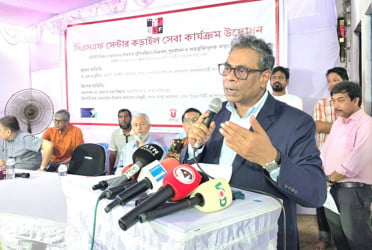
Under mounting pressure, the Bangladesh Nationalist Party (BNP) has now adopted a stricter organisational stance against such activities. In a Facebook post on Saturday morning, the party’s media cell declared “zero tolerance against extortionists” following allegations that prominent physician Professor Dr Kamrul Islam had been targeted by extortionists. The post stated that Jubo Dal leaders stood beside Dr Kamrul Islam and assured swift arrests of those responsible.
A Case That Sparked National Attention
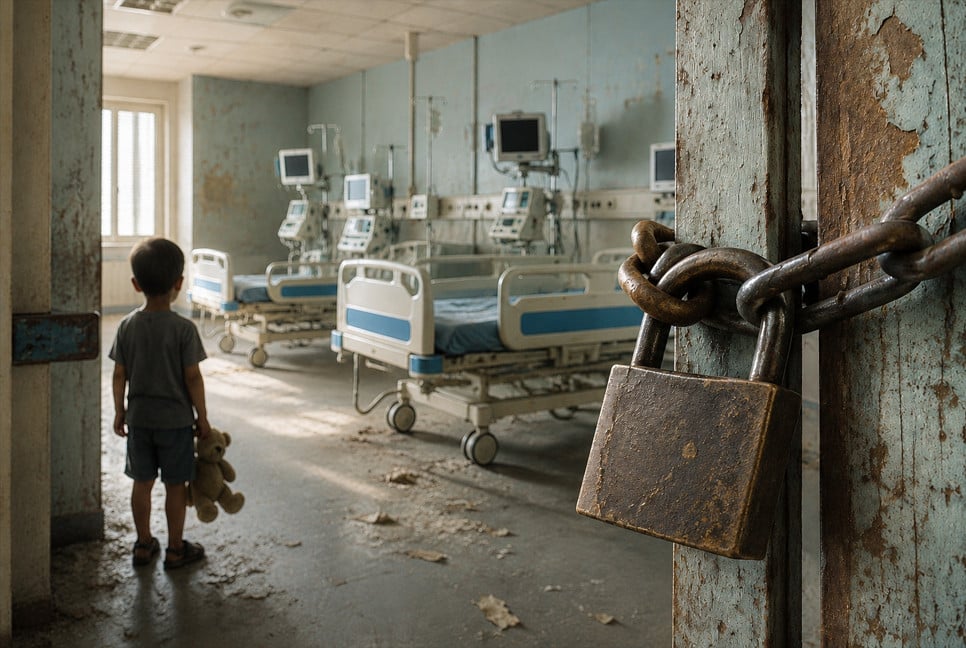
Reports suggest that around the middle of last year, the hospital run by Dr Kamrul Islam came under the attention of Md Moin Uddin Moin, a former organising secretary of Sher-e-Bangla Nagar Thana Jubo Dal. Under his leadership, a group allegedly subjected the hospital to intimidation and pressure for nearly a year.
CCTV footage obtained by Kaler Kantho shows a man entering the hospital and repeatedly threatening a staff member while identifying himself as a Jubo Dal leader. That individual has been identified as Moin.
According to Dr Kamrul Islam, the group has been demanding money since July–August of last year, sometimes through intimidation and at other times by invoking political influence. The hospital authorities eventually filed a general diary with the local police station.
After the allegations surfaced, senior Jubo Dal leaders reportedly visited the hospital late at night, claiming that the accused individuals were not affiliated with the organisation. However, such explanations appeared more like attempts to avoid responsibility than genuine accountability.
Political parties rarely maintain complete records of every activist, nor does every individual hold an official designation. The silence of some leaders who had earlier received complaints about the issue has contributed to the current situation. Meanwhile, the officer-in-charge of the police station has also been accused of trying to protect the extortionists. In effect, three sides—political actors, law enforcement and administrative authorities—share responsibility for allowing the situation to escalate.
Growth of a Criminal Network
The case gained widespread attention after media reports revealed that the activities extended far beyond a single incident. Investigations suggest that Moin had built a criminal network in the Sher-e-Bangla Nagar area over the past one and a half years.
Operating under the identity of a political activist, he allegedly engaged in a wide range of criminal activities including murder, extortion, drug trafficking, illegal occupation of government property and land grabbing. Even mosques and religious schools were reportedly not spared from the influence of the group.
Local BNP leaders are said to be helpless in the face of this dominance, while residents have been living in fear. For a long time, the local police were reportedly under the influence of the group, discouraging residents from speaking out.
Since 5 August 2024, control over several local businesses—including cable television, internet services, gas cylinder distribution and waste management—has reportedly fallen into the hands of such groups in many urban and sub-district areas. Essential services often depend on their approval. Businesses ranging from waste collection and scrap trading to filtered water and egg supply are said to be under their control.
Such activities stand in stark contrast to the Prime Minister’s efforts to reform political culture and restore public confidence in governance.
Political Consequences
While the government’s initiatives continue to generate hope among citizens, the actions of individuals like Moin risk undermining both the party and the administration.
Dr Kamrul Islam’s case became widely known because of his reputation and public standing. But countless other victims of extortion rarely receive such attention. These incidents frequently become political tools for opponents seeking to challenge the government’s credibility.
History provides cautionary examples. The events surrounding the 1982 Bangladesh coup d'état led by Hussain Muhammad Ershad demonstrate how isolated criminal incidents can be used as pretexts for major political shifts. After the assassination of Ziaur Rahman, Ershad sought opportunities to consolidate power. A controversial incident involving a criminal figure named Imdu was used to tarnish BNP’s reputation and create a justification for broader political action, ultimately paving the way for military rule.
Although Moin and Imdu are not identical figures, they represent a similar pattern—individuals who emerge under political patronage and whose actions can destabilise governments while creating opportunities for rivals.
The Need for Firm Action
Encouragingly, the Rapid Action Battalion (RAB) has announced that it is preparing an unbiased nationwide list of extortionists. Once the list is finalised, the agency has said legal action will be taken swiftly against those involved.
The BNP has also issued a stern warning against such activities.
The public now waits to see whether these declarations will translate into decisive action. Without firm measures, figures like Moin—no matter how small they may appear—can cause disproportionate damage to a government’s credibility and stability.
The writer is a journalist and columnist, and Deputy Head of News at Banglavision.