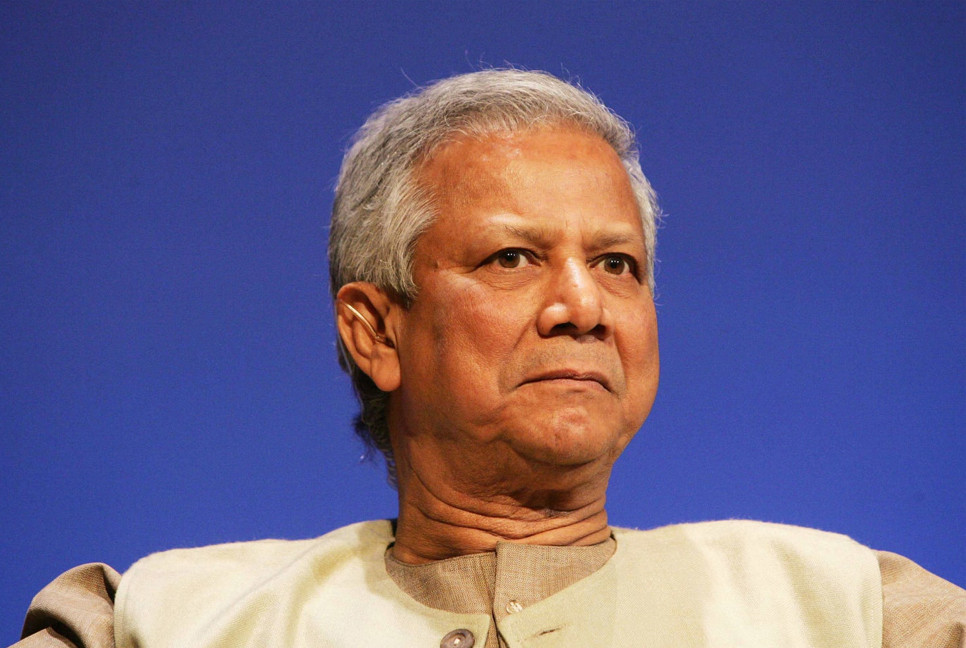
On a January night in 2007, Army Chief Moeen U Ahmed called Prof Yunus. A brief account of their conversation can be found in the book Shantir Swapne, Somoyer Smriticharan (Dreams of Peace, Memoirs of a Time).
The author of the book is General Moeen himself. On page 328, he wrote: “At everyone’s request, I called him (Prof Yunus) and requested him to become the Chief Advisor, guaranteeing all kinds of assistance.
Yet, he did not agree. He said that a part-time period is not enough to build the Bangladesh he envisions. He is interested in serving Bangladesh for a longer duration.”
Prof Yunus was not willing to become the head of the caretaker government for a “part-time” period in 2007. However, in 2024, he gladly became the head of the interim government. Why? Seeking the answer to this question will unravel many mysteries.
Within the answer to this question lies the reason behind the Yunus government’s 18 months of anti-national and development-destructive activities.
Before that, let’s look at the similarities between 1/11 and Prof Yunus’s interim government.
The two governments took power in two completely different contexts. In 2007, through the continuous efforts of civil society and several foreign nations, the divide between the two main political parties in Bangladesh turned into violence.
Amidst extreme political chaos, an unelected government took power. In 2024, the interim government was formed through a mass uprising.
Following a fierce student-led movement, the fifteen-year-long Awami League government fell. The interim government was formed under the leadership of Prof Yunus according to the aspirations of the students and the public.
The 1/11 government was entirely controlled by the “civil society” (intellectuals). On the other hand, there was direct participation of the students who led the July movement in Yunus’s interim government.
Aside from these two fundamental differences, the activities of both governments were nearly identical. In some cases, it may even seem that fulfilling the unfinished tasks of 1/11 was one of the primary agendas of the Yunus government.
The 1/11 government was anti-election. In the name of so-called political reform, they wanted to stay in power for a long time. The Yunus government showed the exact same attitude.
Upon taking office, the Yunus government began saying: “Reform first, then elections.” For the first eight months, they were not interested in any discussion regarding elections.
Rather, they grew irritated when elections were mentioned. When the Yunus government failed completely in governing the country and opposition parties called for a movement demanding elections, the isolated interim government was forced to move toward the path of elections. In 2007, the 1/11 government also said: “Reform first, then elections.” The Moinuddin-Fakhruddin government, having failed in governance, was also forced to hold elections due to public pressure.
The political reforms brought forward during 1/11 are almost identical in nature to the political reforms of 2024. The fundamental goals of these reforms were to curtail the government’s power, render the Prime Minister powerless, and create conflict between the government and various state institutions. The difference is that during 1/11, these reform proposals were brought from within the political parties. By creating divisions within the parties, a faction was used to raise the reform proposals. The strategy of 1/11’s political reform was to weaken political parties by creating internal splits.
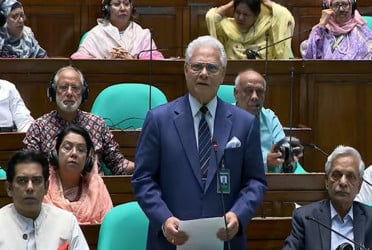
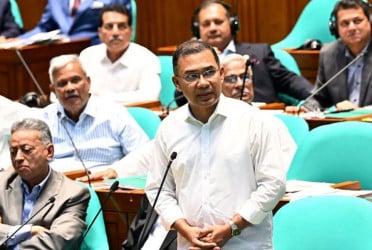
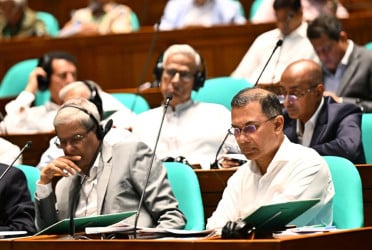
The Yunus government’s strategy for political reform was different. They gathered all political parties under the umbrella of a “Reform Commission.” Then, they attempted to implement the unfinished dreams of 1/11 by placing the responsibility on the shoulders of the political parties. Whether the political parties agreed or not, the “National Consensus Commission” committed a fraud by imposing reforms discovered by civil society in the name of the political parties. They even tried to implement things where the political parties had raised objections. The constitutional reform order and the referendum are prime examples. In the National Parliament, the Home Minister provided a detailed account of how a foreign individual fraudulently inserted unresolved issues into the four questions of the referendum. In other words, Prof Yunus wanted to complete the unfinished work of 1/11.
The 1/11 government wanted to destroy the private sector. To this end, they launched a direct attack on the private sector. Harassment was carried out by bringing false allegations of corruption against various private institutions. An attempt was made to destroy the Bangladesh economy by creating a fabricated list of “top corrupt individuals.” Extortion and plunder were carried out at the state level. Nearly 1,300 crore Taka was illegally seized from private entrepreneurs.
Following in the footsteps of 1/11, the Yunus government also became obsessed with destroying the private sector. On one hand, thousands of factories fell victim to looting and arson by “mob forces,” while on the other, hundreds of thousands of workers became unemployed in an instant. Just like during 1/11, the Yunus government tried to tarnish the image of major private entrepreneurs by labeling them corrupt. Prof Yunus ruined the country’s economy by crafting fabricated stories of money laundering against them. Just as the 1/11 government tried to damage the private sector through “media trials” by publishing a fabricated list of top corrupt individuals without any evidence, the Yunus government also invented imaginary stories of eleven fictional money launderers.
Just as the 1/11 government wanted to make the economy debt-dependent based on the prescriptions of the World Bank and IMF, the Yunus government did the same. The trend of a foreign-dependent and debt-driven economy established by the 1/11 government was further advanced by the Yunus government. Emerging from this is now a major challenge for the elected government.
The 1/11 government wanted to destroy education. Educational institutions, starting from Dhaka University, were kept closed day after day. Similarly, the Yunus government engaged in the game of destroying education. By humiliating teachers through mob violence and creating planned chaos in educational institutions, the Yunus government devastated the education sector in 18 months. Education is now in a state from which it will take a long time to return to the right path.
During 1/11, two “civil society” newspapers became part of the government and ran campaigns to assassinate the character of political leaders and businessmen. During the interim government, these two newspapers played the same role. They are essentially the proof of continuity between the 1/11 and Yunus governments.
Examining it this way shows that completing the unfinished tasks of 1/11 was the primary goal of the Yunus government. Therefore, if the misdeeds of 1/11 are to be judged, the misdeeds of the Yunus government must also be scrutinised. 1/11 is not just the ambition of a few individuals to stay in power; it is an ideology of “depoliticisation”. The main goal of this ideology is to strip away the rights of the people, destroy the country’s democracy, and obstruct economic development. If they are not uprooted now, they will regroup and hatch new conspiracies. They are like the “Raktabija” (mythological demons who multiply from drops of blood). They will strike at democracy whenever they get the chance.
Bd-pratidin English/ ANI