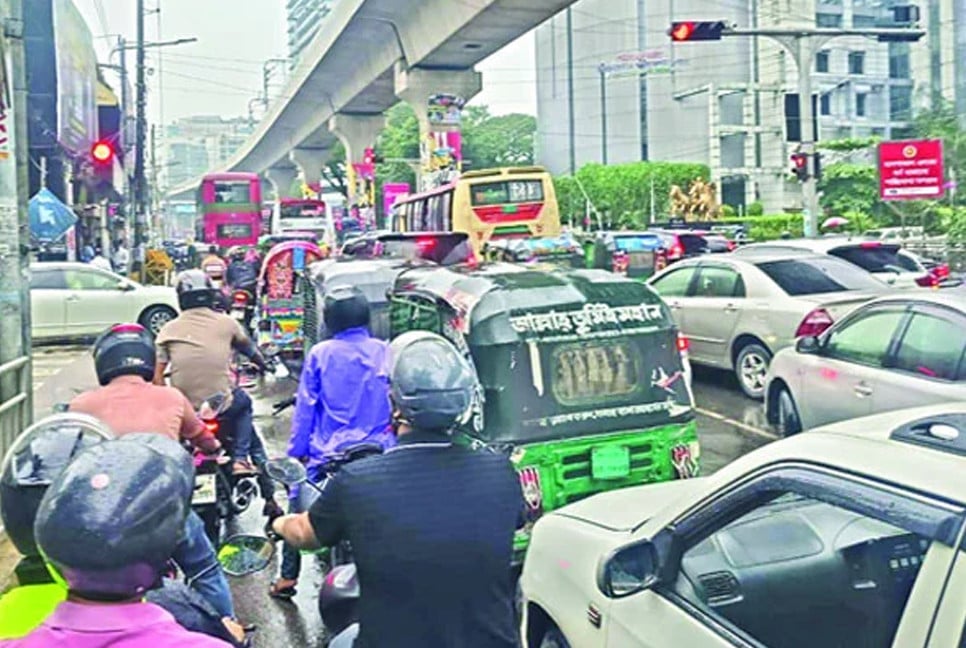
At 9:30am, the 300-feet Purbachal Expressway hums with the frantic energy of school and office commuters.
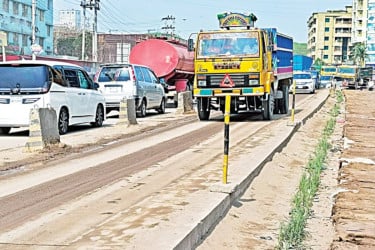
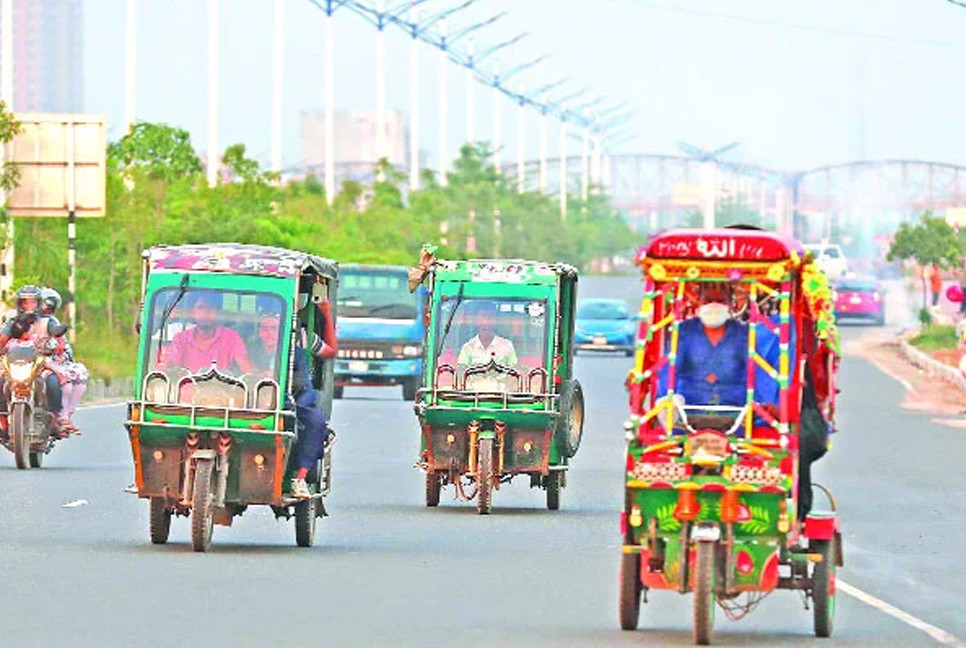
On the service road near the Australian International School, several auto-rickshaws jostle for space, dominating the lanes in a high-speed race for passengers.
Suddenly, a speeding private car loses control and rams into one of the three-wheelers.
The crash yesterday killed 60-year-old passenger Kaiyum Mia, while the auto-rickshaw driver, Borhan Uddin, remains in critical condition at a local hospital. The car driver fled the scene immediately after the impact.
This tragedy is not an isolated event. The expressway is rapidly becoming a notorious accident hotspot. High-speed collisions occur almost daily, leaving a trail of fatalities, critical injuries, and permanent disabilities.
Just one day before the service road fatality, a speeding covered van struck a bus on the main expressway. Reckless driving has become a cultural menace on this route.
A viral social media video from 10 March showed a group of youths cheering as their driver hit speeds exceeding 120 km/h while overtaking vehicles, ending abruptly with a violent crash.
While the law mandates speed limits of 80 km/h for cars and buses, 60 km/h for motorcycles, and 50 km/h for trucks, motorists routinely ignore these rules. Authorities also prohibit auto-rickshaws on this route, yet they operate freely, often driving against the traffic flow.
Pedestrians face equal danger due to a lack of conveniently placed footbridges. On 23 February, a speeding vehicle killed a man near Pink City as he attempted to cross the road. Witnesses said his body lay on the tarmac for nearly an hour. Locals complain that existing footbridges sit in useless locations.
"The bridge is 400 metres away from where the bus stops and people actually cross," said a BRTC ticket seller in the Mastul area. "Not even 10 people use it in a month. People prefer to dash across the main road, leading to frequent accidents."
Traffic police have set up checkpoints, but a lack of speed guns makes it nearly impossible to identify and penalize speeders. Although officers filed 70 cases during a 24-hour drive on 29 March, the chaos persists.
After sunset, the expressway transforms. Neon lights attract crowds for sightseeing, video content creation, and street food. By late night, the road turns into an illegal racing track where motorcycles and cars compete at deafening speeds.
"I see accidents almost every day," said Imran, a tea stall owner near the Police Officers' Housing Society (POHS). "High speed and auto-rickshaws driving the wrong way are the main killers.
At night, bikers perform stunts and ride hands-free. I have seen people crushed right before my eyes."
Accident experts urge the government to enforce a total ban on auto-rickshaws or create dedicated lanes. They also recommend installing automated speed cameras, imposing heavy fines, and ensuring speed governors are fitted in all vehicles.
"Almost every vehicle violates the limit, with many hitting 130 km/h," said Sub-Inspector Raju Ahmed of Khilkhet Police Station.
Pointing to a broken barricade, he added, "Speeding motorists often crash into our checkpoints because they cannot brake in time. There is hardly a day without an accident here."
Despite the modern infrastructure and functioning signal lights at U-turns, motorists rarely stop, treating the signals as mere decorations. Without strict enforcement and public awareness, the Purbachal Expressway remains a "death track" for all who use it.
Bd-pratidin English/ ANI