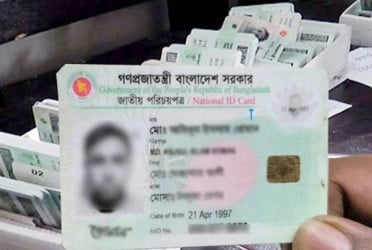
Up to 67% of Bangladesh’s total migrant workers go to Saudi Arabia. In that sense, more than half of Bangladesh’s labor market depends on this single country. Qatar ranks second, Kuwait fourth, the United Arab Emirates sixth, and Jordan seventh as destinations for Bangladeshi workers.
At the beginning of this month, the war involving Iran, Israel, and the United States triggered widespread drone attacks across the Middle East, severely disrupting the labor market. For the past month, sending workers to Middle Eastern countries—or even to destinations using the Middle East as a transit route—has nearly come to a halt.
Migration experts believe that if the conflict continues for a long time, the negative impact on Bangladesh’s labor market will be unimaginable. According to them, the country’s labour market is now waiting for the war in the Middle East to end. At the same time, workers seeking alternative markets are also waiting for an end to the Russia–Ukraine war.
According to reports, as of March 28, a total of 797 flights to various Middle Eastern countries have been canceled at Shahjalal International Airport. Among these, the highest number of cancellations occurred on March 1 (40 flights) and March 2 (46 flights). Throughout the month, an average of 20 to 30 flights were canceled daily, bringing the total to 797.
Due to the war situation, Iran, Iraq, Kuwait, the United Arab Emirates, Bahrain, Qatar, and Jordan have temporarily closed their airspace. Although a few airports—such as those in Oman and Jeddah—remain open, travel through them has become extremely expensive for ordinary migrant workers. As a result, air connectivity between Dhaka and the Middle East is effectively shut down.
The Bureau of Manpower, Employment and Training (BMET) reports that due to nearly 800 flight cancellations, at least 65,000 migrant workers have been unable to travel. Just a month before the flight disruptions, 65,613 workers had gone abroad. Since the war began, the number of BMET clearances for Middle Eastern destinations has dropped sharply to one-third of previous levels.
From March 1 to March 28, only 36,673 workers received clearance for 73 countries. Of them, 19,829 were for Saudi Arabia, 3,921 for Qatar, 1,353 for Kuwait, 891 for Jordan, 884 for the UAE, and 591 for Iraq. Only a handful received clearance for other countries. However, due to flight disruptions, none of these 36,000-plus workers have been able to leave the country.
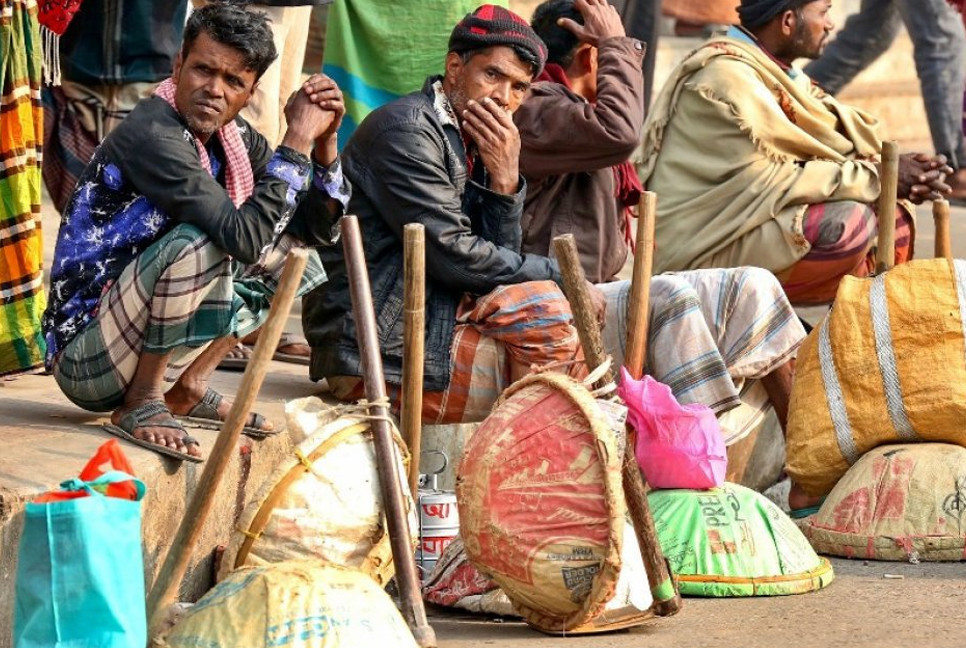
In addition to new migrants, many returning workers are also stranded in Bangladesh, leaving them in distress. Many are facing visa complications. Ahad Islam from Mirsarai, Chattogram, said, “I came home from Kuwait on just a 10-day leave and got stuck. My visa was about to expire. My employer has assured some flexibility from the Kuwaiti government, but uncertainty still remains. I don’t know if I’ll be able to return.”
Fakhrul Islam, former joint secretary general of the Bangladesh Association of International Recruiting Agencies (BAIRA), told Bangladesh Pratidin, “The labor market in the Middle East is heading toward a very bad situation. Many people are now afraid to go there due to the war. Those who returned home are facing visa expiration problems. The situation is so negative that our confidence has dropped to the lowest level.”
He added, “Even though we receive demand letters from various countries, we cannot respond due to the uncertainty of sending workers.”
Another recruiter, Mobarak Ullah Shimul, said that the situation has become extremely uncertain due to the war. New visas are not being issued. He noted that if Bangladesh had reduced its dependence on Saudi Arabia and developed alternative labor markets, the situation would not have been so severe. Potential markets like Europe, Japan, and Malaysia are still not being effectively utilized for various reasons.
Meanwhile, even before the Middle East conflict, the Russia–Ukraine war had already impacted the Russian labor market. According to businesspeople involved in that sector, Russia could be a promising destination for Bangladeshi workers.
However, incidents involving a few Bangladeshis becoming involved in the war, along with human trafficking activities by some dishonest recruiters, have harmed opportunities there as well.
If the war ends, legitimate recruitment agencies could open up Russia as a major alternative labor market for Bangladesh. Therefore, Bangladesh’s labor market is now waiting not only for peace in the Middle East but also for an end to the Russia–Ukraine war.
Bd-pratidin English/ ANI