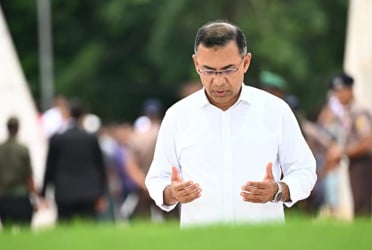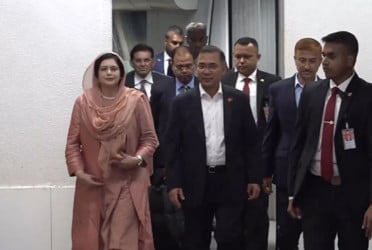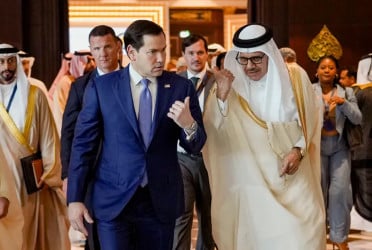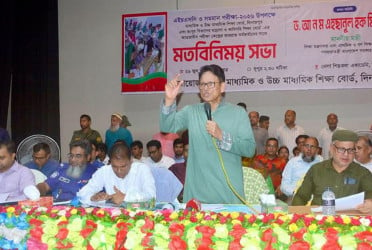
Following the arrest of Masud Uddin Chowdhury, another implementer of the One-Eleven conspiracy, Lt Gen (Retd) Mamun Khaled – former director general of the Directorate General of Forces Intelligence (DGFI), has been arrested by the Dhaka Metropolitan Detective Police (DB). According to DB and intelligence sources, he was detained late Wednesday night from an area in the capital.
Investigations were underway regarding various allegations against Sheikh Mamun Khaled. These include accusations of involving DGFI in political activities, his controversial role during the One-Eleven period, and irregularities related to the Jalsiri housing project. He has reportedly been detained for questioning in connection with these allegations.
During the One-Eleven regime, Mamun Khaled served as the last director general of DGFI. He was known as a close and trusted associate of the then Army chief Gen Moeen U Ahmed. Allegations also exist that he played a significant role in ensuring the victory of a particular party in the 2008 election.
The One-Eleven conspiracy had two dimensions: planning and implementation.
It was a blueprint aimed at depoliticizing the country. Through this plan, a group sought to dismantle democracy in Bangladesh and make the country permanently dependent. This group, loyal to foreign interests, aimed to prevent Bangladesh from emerging as an independent and sovereign state. The plan had been in the making for a long time.
Following the victory of the anti-autocracy movement in the 1990s, Bangladesh entered a democratic trajectory. A two-party political system began to develop, modeled after Western democracies. Free and fair elections under a neutral caretaker government every five years strengthened the democratic foundation. Elections in 1991, 1996, and 2001 were widely regarded as free and fair. Had this trend continued, the rise of undemocratic forces would have been unlikely.
However, a section of the so-called civil society remained power-hungry. They knew they could not come to power through popular vote, so they sought to create instability. While they preached integrity publicly, many became deeply corrupt when given opportunities. During periods of military rule, they often hovered around power, accepting advisory roles and engaging in corruption.
With democracy strengthening after the 1990 uprising, their influence began to wane. Meanwhile, Bangladesh’s economy, particularly the private sector, started to flourish. New industries emerged, and creative entrepreneurs revitalised the economy. Significant progress occurred in housing, garments, and pharmaceuticals. Bangladesh began transitioning from a foreign aid-dependent country to a self-reliant economy. This posed a threat to the power ambitions of certain civil society actors.
They feared that a strong democracy and economic independence would reduce foreign influence and undermine NGO-based financial flows. As foreign aid declined, their control over development organisations would weaken. This prompted them to devise a new strategy to seize power.
After the BNP's landslide victory in 2001, this plan began to take shape. Two influential newspapers – one in Bangla and one in English – reportedly played a leading role. These media outlets conducted what is described as a “media trial” against the government, publishing a series of allegedly false and misleading reports. They also promoted narratives of militancy and terrorism in Bangladesh to damage the country’s image internationally and justify foreign intervention.
The plan involved creating political conflict between major parties and promoting long-term unelected governance under the guise of reform. This is what became known as One-Eleven. To implement the plan, support from the military was deemed necessary, leading to the involvement of certain high-ranking officers.
Ahead of the scheduled 22 January 2007 election, allegations of a flawed voter list were publicised. Political disputes were taken to court, creating instability. A fabricated letter, allegedly from the UNDP, claimed that Bangladesh’s participation in UN peacekeeping missions would be suspended if the military supported the election. This created unrest within the armed forces, eventually leading them to oppose the election.
According to former Army Chief Moeen U Ahmed’s book “Shantir Swapne: Somoyer Smriticharon,” their first choice for Chief Adviser was Prof Muhammad Yunus. However, he declined, reportedly stating that his plans were larger than a two-year tenure. On his advice, Dr Fakhruddin Ahmed, a former World Bank official, was appointed.
Prior to this, there had been efforts to launch a political party under Prof Yunus following his Nobel Peace Prize in 2006. Some individuals involved in that initiative later held key positions during the One-Eleven period.
The One-Eleven government had predefined objectives: Depoliticisation and removal of political leadership; character assassination of political leaders; keeping the economy dependent on foreign loans and aid; weakening the private sector; and eliminating student politics.
Media outlets allegedly played a guiding role, with reports often followed by arrests. Political figures and entrepreneurs were targeted, often facing public vilification before legal proceedings.
While it is encouraging that some individuals involved in implementing the plan are now being brought to justice after 19 years, the main architects remain beyond reach. Many are still influential and reportedly remain active.
To eliminate such conspiracies, it is essential to identify and hold the true planners accountable. Otherwise, similar efforts to undermine democracy may re-emerge in new forms.
Audite Karim is a writer and playwright. Email: [email protected]