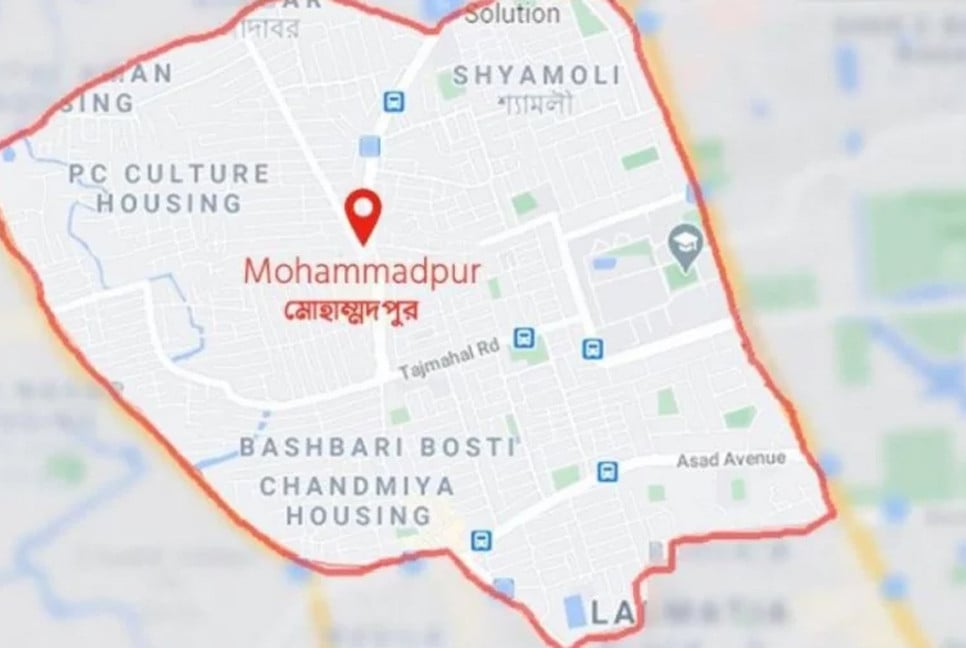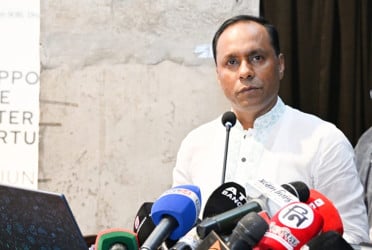
Law enforcement agencies have arrested Lt Gen (Retd) Masud Uddin Chowdhury, a controversial former military officer known as one of the key architects and a powerful coordinator of the Army-backed 1/11 changeover. He was detained late on Monday night from his residence in the Baridhara DOHS area of the capital.
Masud Uddin Chowdhury was a wanted fugitive in multiple serious cases, including a murder charge. At present, there are at least five cases pending against him. Furthermore, there are specific allegations regarding his involvement in a manpower export syndicate to Malaysia, as well as the accumulation of vast illegal wealth through abuse of power.
On 11 January 2007, during the political transition, Masud Uddin Chowdhury was serving as the GOC of the Army’s 9th Division. He played a leading role as one of the chief conspirators and architects of the 1/11 shift. He was later promoted to Lieutenant General and appointed coordinator of the “National Coordination Committee on Serious Crimes and Corruption”. Under the leadership of this committee, a so-called anti-corruption drive was launched across the country, which ultimately resulted in actions detrimental to the nation.
In June 2008, the Moeen–Fakhruddin caretaker government appointed him as Bangladesh’s High Commissioner to Australia. Even after the Awami League came to power in 2009, he was not removed; instead, his tenure was extended three times. As a result, he remained in that significant diplomatic post until June 2011. After retiring from the army, he became involved in various businesses in Dhaka, including the restaurant sector.
Before the 11th National Parliamentary Election in 2018, Masud Uddin Chowdhury entered active politics. To contest from the Feni-3 (Sonagazi and Daganbhuiyan) constituency, he initially purchased and submitted a nomination form from the Awami League. However, just five days later, he obtained a nomination form from the Jatiya Party and was appointed a member of its Presidium the very next day. Subsequently, as a Grand Alliance candidate, he was elected Member of Parliament from the same constituency twice, in the controversial and allegedly staged elections of 2018 and 2024. His arrest marks a turning point in Bangladesh’s politics. In the country’s history, 1/11 is widely regarded as a dark chapter of depoliticisation.
On 11 January 2007, taking advantage of political instability, a section of civil society and some senior military officials seized power illegally as part of a foreign-backed conspiracy. The primary objective of this conspiracy was to permanently undermine democracy and development in Bangladesh. Under the leadership of the then Army Chief Moeen U Ahmed and civil society representative Dr Fakhruddin Ahmed, the government’s principal aim was to strip the people of their rights and set the country backwards.
From the moment they seized power, repression and torture were unleashed upon political leaders. Two leading and influential newspapers provided the theoretical foundation for this government. These newspapers, widely seen as mouthpieces of civil society, promoted the so-called “Minus Formula”. Through editorials titled “The two leaders must go”, they encouraged the government’s push towards depoliticisation. During this period, a blueprint was executed to arrest political leaders one after another and assassinate their reputations through “media trials”. The central aim of the Moeen-Fakhruddin government was to render the country leaderless and turn it into a foreign-dependent state.
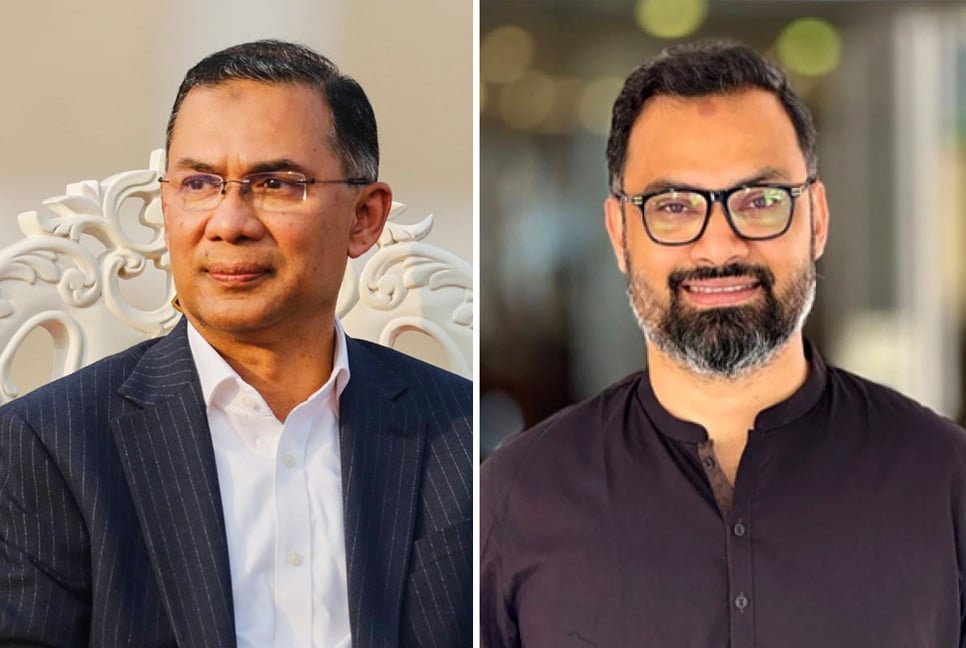
To achieve this goal, the 1/11 government arrested leaders of the two major political parties on false charges. In addition, they detained the current Prime Minister and Begum Khaleda Zia’s eldest son, Tarique Rahman, on fabricated allegations in an attempt to deprive the country of leadership. Tarique Rahman was subjected to inhumane treatment. The anti-national 1/11 government sought to eliminate patriotic and nationalist political forces in Bangladesh. For this reason, Begum Khaleda Zia’s younger son, Arafat Rahman, was also arrested and mistreated despite having committed no crime. During this period, there was also an attempt to fracture the BNP under the guise of “reform proposals”.
The 1/11 government did not limit its actions to politicians; it also targeted reputable industrial groups in the private sector. Its second agenda was to weaken the economy and render the country dependent on foreign debt, thereby forcing it into subservience to external donors. This involved harassing patriotic businessmen and industrialists who provide employment to millions, filing false cases against them, and tarnishing their reputations through media trials. During this period, certain newspapers – acting as agents of the 1/11 architects – published fabricated and baseless reports against major industrial groups. The strategy of undermining the economy while shielding actual corrupt individuals was a hallmark of the 1/11 regime.
Businessmen and entrepreneurs were publicly humiliated through the publication of so-called lists of “suspected corrupt persons”. Money was illegally extorted from them; approximately 1,600 crore BDT was collected, severely damaging the private sector. The Supreme Court later declared this extortion illegal. However, despite the ruling, the money has yet to be returned to the affected businessmen,
The 1/11 episode was, in reality, an anti-Bangladesh plot, and Masud Uddin Chowdhury was one of its principal actors. Under the guise of anti-corruption efforts, he and others conspired to undermine the country’s political and economic foundations. After 19 years, his arrest represents a significant step towards exposing this conspiracy.
However, Masud Uddin Chowdhury did not act alone. Many other architects of the 1/11 conspiracy remain, both at home and abroad. It is widely known that two officials from military intelligence at the time – Brigadier Bari and General Amin Uddin (known as “Bihari Amin”) – were particularly influential and operated as close associates of Masud Uddin. They allegedly fabricated accusations against politicians and businessmen, which were then published in pro-1/11 newspapers to justify arrests. An editor of one such newspaper has admitted to publishing reports supplied by military intelligence without verification. The editors of these newspapers must also be considered among the architects of 1/11.
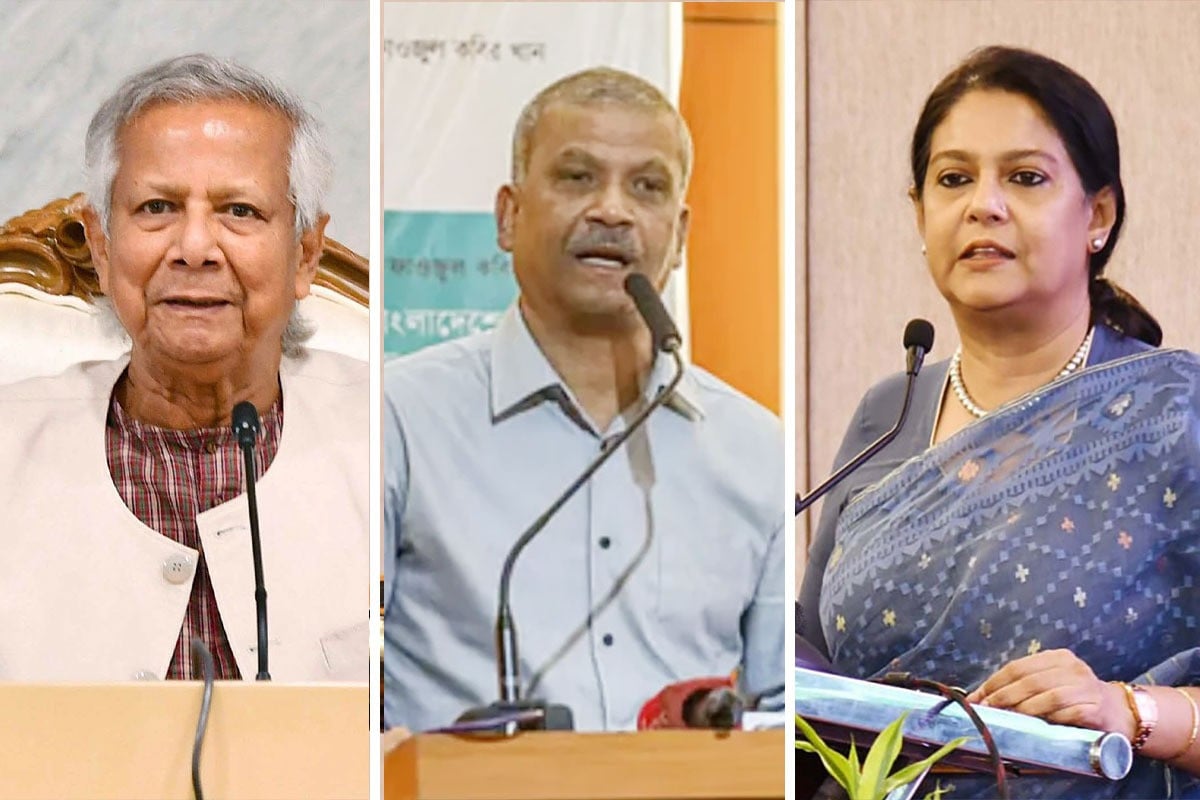
Several civil society figures who advocated for 1/11 were also highly vocal at the time. Many of them later shifted their positions during Professor Yunus’s administration and regained influence, joining various reform committees in attempts to obstruct the 12 February election.
The arrest of Masud Uddin Chowdhury is akin to opening a long-closed door. It must now be followed by a comprehensive effort to identify all conspirators of 1/11. Legal action should be taken against every architect involved. To ensure that such unconstitutional and anti-national actions are never repeated, the formation of an independent investigation commission into 1/11 is urgently required. Such a commission would expose all those responsible.
Those who were tortured, persecuted, or harmed during this period, including victims of media trials, should receive appropriate compensation. Furthermore, in accordance with the Supreme Court’s verdict, immediate steps must be taken to return the money that was illegally extorted from businessmen.
The arrest of Masud Uddin Chowdhury is undoubtedly a bold and necessary step. It signals a challenge to the culture of impunity. However, the process must not end here. Only by bringing all the architects of 1/11, including Moeen Uddin Ahmed and Fakhruddin Ahmed, to justice can the path to illegal seizures of power be closed for good.
@ Audite Karim is a writer and playwright. Email: [email protected]