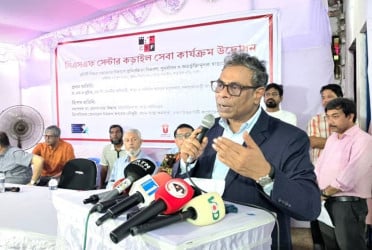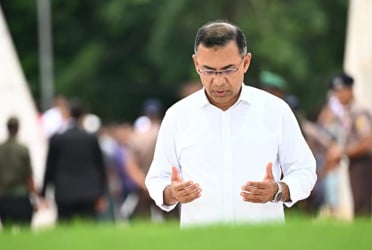
The memory of Shaheed Zia returned on March 16, 2026. Last Monday, Prime Minister Tarique Rahman inaugurated the canal digging programme at Sahapara in Kaharole upazila, Dinajpur. He officially launched the programme by digging the soil with a spade. After the inauguration, he planted a tree on the bank of the canal.
With the prime minister’s inauguration of the Sahapara canal re-digging, the nationwide “Excavation and Re-excavation of Rivers, Canals, and Waterbodies” programme has commenced. In accordance with the government’s election pledges, a plan has been adopted to excavate and re-excavate 20,000 kilometres of rivers, canals, and water reservoirs across the country over the next five years.
In the first phase, this programme has started in 53 districts. Concerned government officials stated that the implementation of this initiative will have a positive impact on alleviating waterlogging, improving irrigation systems, increasing agricultural production, and conserving water bodies.
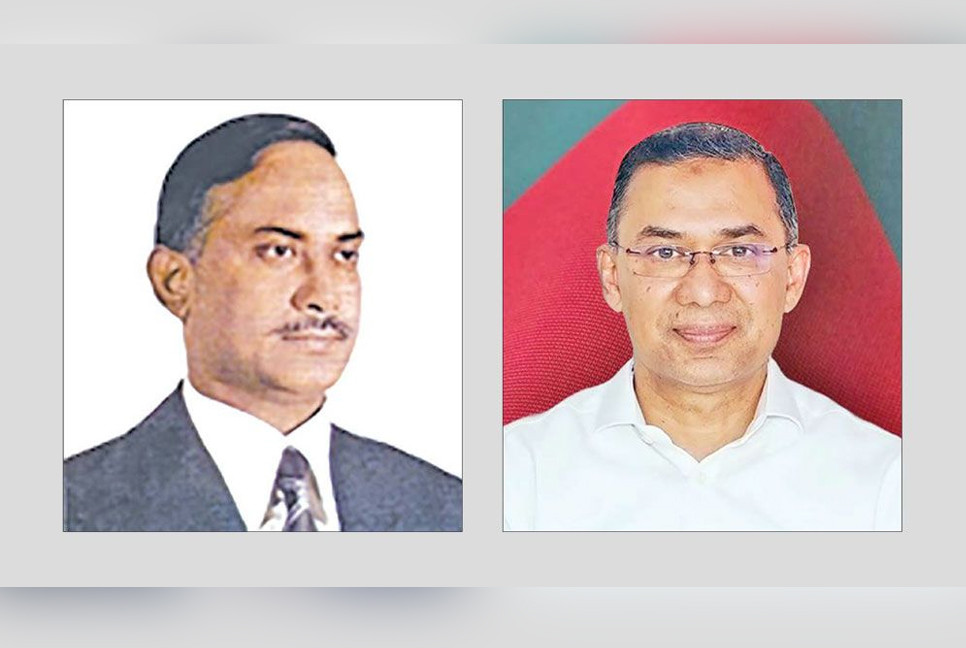
The prime minister initiated this programme following the footsteps of his father, former President Ziaur Rahman. During his tenure, Ziaur Rahman introduced a nationwide canal-digging programme that played a vital role in developing the rural economy, agricultural production, and irrigation. The current initiative is being viewed as a continuation of that legacy.
Even 45 years after his departure, Shaheed President Ziaur Rahman remains eternally awake in the hearts of the Bangladeshi people, held in a seat of profound respect.
Ziaur Rahman’s tenure was a significant period of military and political transition in Bangladesh. He became President on 21 April, 1977, reintroduced multi-party democracy, founded the BNP in 1978, and implemented notable reforms in agriculture, industry, and foreign policy. He remained in power until his assassination in 1981. During his brief rule, he set a unique example of honesty, dedication, and patriotism in state governance. The people of this country still remember Shaheed Zia for his integrity. Ziaur Rahman is a prime example of how honestly a head of state can live. Shaheed Zia’s reign proves that if a President is vocal against corruption and refuses to indulge it in any way, a government can indeed remain corruption-free. Shaheed Zia practiced honesty throughout his life and suppressed corruption sternly wherever he saw it. His integrity is still discussed among the masses; he is the personification of an honest man.
While President, he never indulged in luxury, nor did he allow his relatives to exercise influence or abuse power. His career shows that no member of his family enjoyed state facilities or special powers. He reduced the luxury of the President’s House and maintained a simple lifestyle. He followed a “zero-tolerance” policy against corruption until his death. His close associates recall that he regularly joined work before office hours, never burdened the state with personal expenses, and taught his family the same values. Dedication to national development and planned activity were his nature. Shaheed Zia initiated a new philosophy of development with a great vow to build the nation. The development programmes implemented during his time were effective in improving the quality of life for marginalised people. Regarding his honesty and dedication, the renowned author Humayun Ahmed wrote in his novel Deyal: “The people of Bangladesh began to feel that after a long time, they had found a head of state who was honest. The thought of looting money for himself or his relatives never entered his mind. Instead, his mind was occupied with thoughts of the country. He wanted to change the country by digging canals. There is no doubt the man Zia was honest. Not performative honesty, but truly honest. After his death, it was found that the Zia family had no savings.”
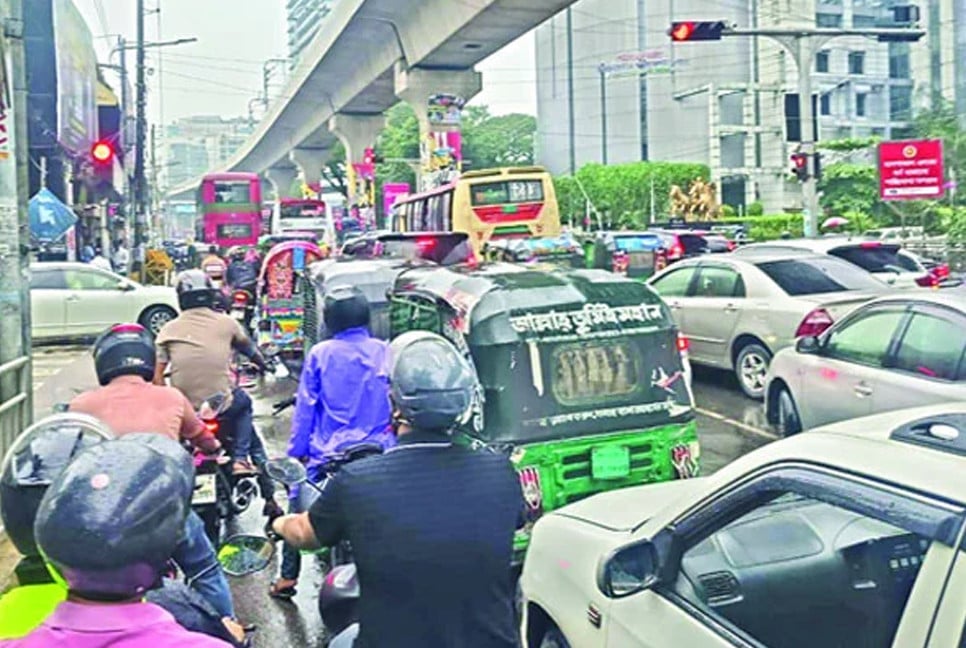
Forty-five years after Ziaur Rahman’s martyrdom, the responsibility of state governance is in the hands of his eldest son, Tarique Rahman. Upon assuming the office of prime minister, he has brought back the ideals of Shaheed Zia to statecraft. Tarique Rahman’s simple attire, his respect for time, and his remaining stuck in traffic without a protocol—all remind the people of Shaheed Zia’s ideals.
The strongest pillar of Shaheed Zia’s ideology was honesty and a firm stance against corruption. Since the passing of Ziaur Rahman, the absence of an anti-corruption statesman has been deeply felt. Seeing the reflection of Zia within Tarique Rahman, the common people are hopeful. Ordinary citizens want a corruption-free Bangladesh—a place where bribery does not exist at every step, where citizens do not live in fear of extortionists, and where they are not harassed for government services.
In the 45 years since Shaheed Zia’s death, corruption has become institutionalised in Bangladesh. Corruption and nepotism are now embedded in the very veins of the state. From high-ranking officials to peons, everyone demands “extra”. From Police OCs to senior government officials, almost everyone is hungry for bribes. Bribes are required to get a job or a promotion. There are literal “auctions” for good postings. Bribes ranging Tk5-10 crore are reportedly paid for postings of Sub-Registrars in desirable locations. To be appointed as an OC of a “good” police station, the bribe amount exceeds crores.
In departments like Public Works, LGED, and PDB, engineers have to pay specific amounts as “tribute” for lucrative postings. These transactions were once an open secret, but during the previous interim government, this “posting business” took the form of an epidemic. The rates of bribes doubled.
A student advisor of the interim government reportedly set new records in the bribery business. Crores were taken as kickbacks for appointments to positions like chief engineer, WASA MD, and city corporation administrators. Allegations of corruption in the appointment of secretaries and district commissioners have surfaced in the media. Corruption spread like cancer among the policy-makers of that government.
Daily news reports now highlight the corruption scandals of various advisors of the interim government. Hundreds of complaints are reaching the Anti-Corruption Commission against former advisors. Much like the 1/11 government of 2007, which spread widespread corruption and set Bangladesh back ten years, the “civil society-led” interim government turned Bangladesh into a paradise for looters. By placing corrupt individuals in top positions at institutions like the PIB or Bangladesh Bank, the previous interim government issued a license for unrestrained looting.
When an individual occupies a chair by paying a bribe, their primary goal becomes embezzling money through corruption. First, they recover the bribe money; then, they line their own pockets. Many believe that the amount of corruption and bribery that occurred during the year and a half of the interim government broke all previous records.
The current democratic government under the leadership of Tarique Rahman has taken charge amidst these ruins. A reign of looting had been established over the past year and a half. To recover the state from that, the government’s first task is to rein in corruption and strictly apply a zero-tolerance policy.
If only corruption can be stopped in Bangladesh, 90% of the country’s problems can be solved. Incredible development is possible if corruption is eliminated. If illegal transactions in the postings of officials in various service sectors can be halted, public harassment will vanish. To achieve this, Shaheed Zia’s ideals must be followed in government actions. Zia was able to suppress corruption because he kept himself corruption-free. Therefore, the first task of the cabinet under the prime minister’s leadership will be to say “No” to corruption. Corruption can be eliminated if the “recruitment business,” “posting business,” “lobbying business,” “tender business,” and political interference in development projects are stopped—just as Shaheed Zia demonstrated during his rule.
Through the canal digging program on 16 March, it feels as though Shaheed Zia has returned to Bangladesh. If the prime minister takes an uncompromising stand against corruption by following the footsteps of his principled father, no one can stop Bangladesh’s progress. The people of this country want to see the manifestation of Shaheed President Ziaur Rahman’s ideals in Tarique Rahman’s governance. Like the canal digging, let Shaheed Zia be the guide for Tarique Rahman in the war against corruption.
Bd-pratidin English/ ANI