Politics in Bangladesh rarely moves in a straight line. At times history circles back—events change, actors change, but the questions remain largely the same. When the first sitting of Bangladesh’s 13th National Parliament began on 12 March, many may have felt this sense: the start of a new chapter, yet one that echoes the past. The new parliament has emerged after a turbulent period. Nearly 20 months after the fall of the Awami League government through a mass uprising of students and citizens, a new legislature has taken shape.
During this time, the country experienced an interim administration, political realignments and an unusual transitional reality in governance. When a state finds itself caught between an elected government, an unelected interim arrangement, public aspirations, politics of retribution, promises of reform and competition for power, parliament becomes more than a constitutional body—it becomes a testing ground for the nation’s political psyche.
Political observers often say parliament reflects a country’s political culture. The conduct displayed there ultimately mirrors the broader political behaviour of society. In Bangladesh, however, parliament has not always been merely a forum for lawmaking. At times it has served as a stage for political tension; at other times as a place for national introspection. Thus, whenever a new parliament begins, a key question arises: will it run on the strength of numbers alone, or on the strength of reason?
A New Parliament: Between Expectation and Reality
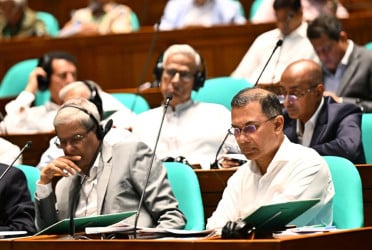
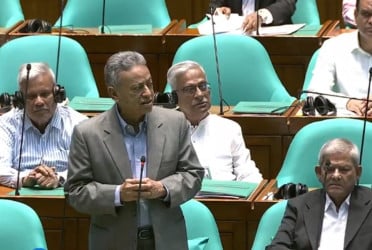
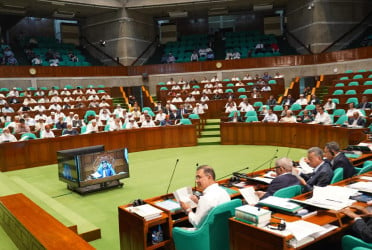
The first day of the 13th parliament’s opening session carried symbolic significance. Hafiz Uddin Ahmed, MP from Bhola-3, was elected Speaker, while Kaiser Kamal, MP from Netrakona-1, was unanimously elected Deputy Speaker. Yet even before the session began, an unusual situation had emerged in Bangladesh’s parliamentary history. The Speaker of the 12th parliament had effectively become absent, while the Deputy Speaker was in prison. As a result, the session had to begin under the chairmanship of senior lawmaker Khandaker Mosharraf Hossain.
Such a scenario is hardly typical in democratic politics. It serves as a reminder that institutions may appear strong on paper, but when political behaviour weakens, institutions too can suddenly become fragile. The parliamentary structure remains, but the spirit of parliament hangs in uncertainty.
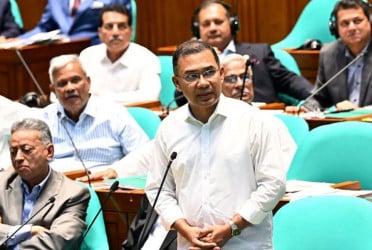
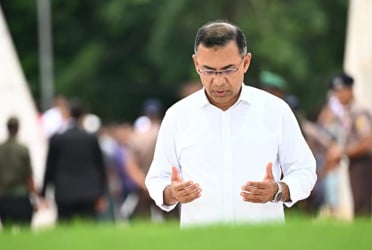
Prime Minister Tarique Rahman, in his address, described parliament as a symbol of the people’s expectations and urged the opposition not to oppose merely for the sake of opposition, but to engage in constructive debate. Yet another scene unfolded inside the chamber. During the President’s address, the opposition alliance led by Jamaat-e-Islami staged a strong protest and walked out of parliament, chanting slogans and symbolically displaying a “red card”.
Such scenes are not new in Bangladesh’s parliamentary politics. Parliament often becomes a stage of symbolism as much as of reason. One side delivers speeches, another walks out, others protest—it resembles a political drama. Yet within that drama lies a basic truth of democracy: dissent does not weaken democracy; often it is a sign of its vitality.
The 133 Ordinances: Legal Markers of a Transitional Period
Another important aspect of the session was the presentation of 133 ordinances issued during the interim government’s tenure. After the government’s fall on 5 August 2024, the interim administration governed the country for nearly 20 months. These ordinances were issued largely to meet administrative and legal needs during that period.
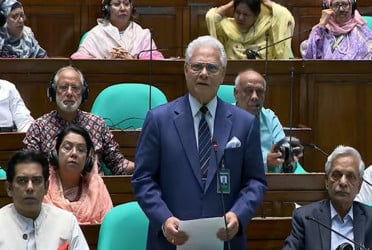
In accordance with Article 93(2) of the Constitution, Law Minister Md Asaduzzaman placed the ordinances before parliament. However, it is important to note that although the ordinances have been presented, they have not yet been debated. Under parliamentary rules, they will be discussed and decided upon later.
In a sense, these ordinances are administrative relics of a transitional time. When a state passes through political uncertainty, law often acts like a bridge connecting one period to another. Yet not all bridges are meant to last forever; some are built simply to cross over. It remains to be seen which of these ordinances will become permanent laws and which will remain as documentary traces of a political crossroads.
The English thinker Edmund Burke once observed that laws sometimes speak louder than history itself. These 133 ordinances may well become part of that historical record.
Democracy: Elections Are Not the Final Word
In Bangladesh, discussions about democracy often stop at the question of elections. Elections are certainly the first step, but they are not the last. Genuine democracy requires accountability, an independent judiciary, the rule of law and a free media.
One major political challenge in Bangladesh is the fragility of political memory. With every change of power, interpretations of history tend to change as well. Textbooks are rewritten and political events are reassessed. As a result, a lasting national consensus rarely develops.
A European diplomat once remarked jokingly that in Bangladesh even history sometimes runs like a coalition government. What is considered truth today may be replaced by another interpretation tomorrow. This tendency must be overcome. When a nation repeatedly erases its political memory, it risks repeating the same mistakes. Governments change, elections change, but political behaviour often remains the same.
Power, Morality and the Politics of Silence
International politics operates in what is essentially an anarchic system, where no central world government exists. States rely on their own strength to survive. In such a reality, questions of morality often become complex.
Some view morality as merely a tool for advancing national interests. Others place supreme value on state sovereignty. Still others prioritise individual rights beyond the boundaries of the state. In practice, elements of all three perspectives appear in politics.
The ancient Greek historian Thucydides once wrote: “The strong do what they can, and the weak suffer what they must.” This remains a harsh truth of international relations. Yet politics also contains another powerful element—silence. Not every question requires an immediate answer, and not every criticism demands a response. Sometimes silence itself becomes a powerful political language.
A state or leader constantly explaining themselves at every moment may reveal not confidence, but anxiety. At times, a pause speaks louder than a microphone.
Conclusion
Bangladesh’s politics often produces scenes that are both fascinating for scholars of political science and surprising for ordinary citizens. Consider a parliament where the previous Speaker has not formally resigned yet is effectively absent, the Deputy Speaker is in prison, and the new session begins under the chairmanship of the most senior lawmaker. Such situations are rare in democratic systems.
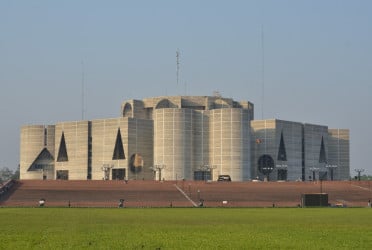
This reality reminds us that democracy is not merely a constitutional provision or the outcome of elections; it is also a political culture. Constructing a parliament building is easy, but building a parliamentary culture is far more difficult.
The 13th National Parliament is therefore not just a new political chapter—it is also a major test. Laws will be passed, debates will occur, political conflicts will arise—these are natural features of democracy. Yet something more is required: institutional memory.
A state that fails to learn from its political crises risks falling into the same pitfalls repeatedly. In Bangladesh’s history, new parliaments often begin with great expectations but soon turn into arenas of power calculations. Some rely on the strength of numbers, others on politics of protest, while some view the entire system with distrust.
The French thinker Alexis de Tocqueville once wrote that the strength of democracy lies not merely in ballot boxes but in the habits of citizens. The real challenge before Bangladesh’s new parliament, therefore, is to cultivate new habits—habits of debate, tolerance and respect for institutions.
The parliament that has begun today may eventually pass into history. But history will remember not only the laws it passes, but also the character it displays. And history is patient: it observes everything, remembers everything and one day quietly delivers its judgment.
Writer: President, Centre for Governance Studies