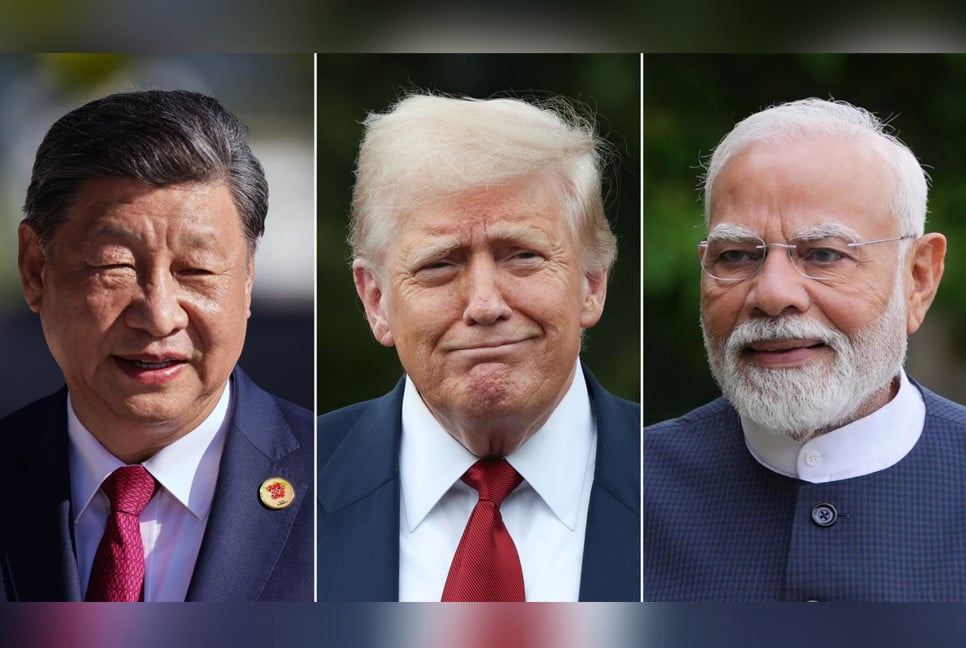
When the United States and Israel launched joint airstrikes on Iran on 28 February, many might have assumed this would be another one-sided war that would end quickly, with Iran collapsing easily. However, two weeks into the conflict, it is now clear that the invasion of Iran may prove to be one of the most significant miscalculations of the US President. President Donald Trump now faces a complex situation regarding the war in Iran; he cannot easily declare victory as the conflict continues to spread. Conversely, ending the war now could result in severe strategic and economic losses. Consequently, Trump faces a moment of difficult decisions.
While the situation has not yet reached the level of historic failure seen under predecessors such as Johnson or Bush, warning signs are emerging. Most importantly, as the duration of the war increases, the world is confronting a complex reality in which multifaceted economic, political, and humanitarian crises are becoming increasingly acute. Rarely does one side emerge as a clear winner in war; usually, ordinary people pay the highest price.
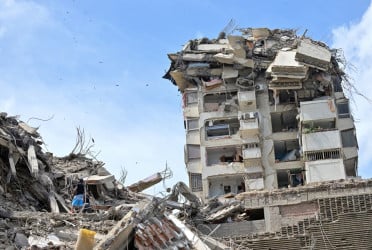
The US–Israeli war on Iran has created a dramatic situation in the Gulf region and across the globe. Gulf nations have become increasingly unstable, and thousands of people across the Middle East have been forced to flee their homes. However, the impact is felt far beyond the battlefield. Oil prices have surged, and disruptions to shipping through the Strait of Hormuz have increased costs for consumers and businesses alike.
Though the war is nearly 4,000 kilometres away, its shadow is already falling on Bangladesh. Economists believe this global market instability will serve as a major economic test for the country. Within days of the attacks, the conflict spread across the Middle East. As the region is a global energy hub, the widespread effects are already being felt worldwide.
The rise in fuel prices is creating a “chain reaction”. The impact is visible in Bangladesh’s domestic market; while the government claims the situation is normal, the reality at petrol pumps suggests otherwise. Although the government repeatedly states that fuel prices will not be increased, it may be forced to reconsider if international prices rise sharply, as the Bangladeshi economy cannot currently absorb such pressure.
An increase in fuel or gas prices could raise bus and truck fares, electricity production costs, and fertiliser prices. This, in turn, threatens to increase agricultural production and transport costs, affecting the prices of rice, pulses, and vegetables. Additionally, the prices of imported edible oil, wheat, and sugar could rise in line with international markets, eventually affecting the kitchens of ordinary citizens.
Economic risks and infrastructure
Bangladesh’s economy faces a high risk of sudden uncertainty. Iranian drones have reportedly struck fuel tankers in the UAE, and Qatar has reported extensive damage to several liquefied natural gas (LNG) facilities following Iranian strikes. Saudi oil refineries have also been targeted.
The Islamic Revolutionary Guard Corps (IRGC) has already announced the closure of the Strait of Hormuz – the world’s most vital maritime route for energy shipments. They warned that “anyone attempting to cross the Strait will be shot”. Consequently, the global energy supply system is in turmoil. Brent crude, the international benchmark for oil, surpassed $83 per barrel on Thursday – nearly a 10% increase since the start of the attacks on 28 February. Experts predict prices could soon reach $100.
For an import-dependent nation such as Bangladesh, this is catastrophic. Domestic electricity production largely relies on gas, with Qatar and Oman serving as the primary suppliers through long-term LNG contracts. The closure of the Strait of Hormuz has created immediate anxiety regarding gas supplies. Furthermore, Bangladesh’s oil-based power generation – much of which depends on India – also relies on fuel transported through this Strait. This energy crisis threatens factories, businesses, and the broader economy.
Remittance and export concerns
Rising oil prices mean the government must spend more dollars on fuel, straining foreign exchange reserves and potentially weakening the local currency. Bangladesh’s ready-made garment (RMG) and agricultural exports to Middle Eastern and European markets are already feeling the pressure. Business owners report that as routes such as the Red Sea or the Suez Canal become risky, shipping companies are imposing “war risk surcharges”, multiplying freight costs and increasing lead times. This ultimately reduces Bangladesh’s global competitiveness.
Beyond exports, the crisis also affects agriculture. A significant portion of Bangladesh’s fertiliser is imported from Qatar and Saudi Arabia. Domestic fertiliser production also depends on fuel, which is now in short supply.
Furthermore, the remittance lifeline is at risk. Over 10 million Bangladeshis work abroad, with at least 6 million residing in the Middle East (Saudi Arabia, the UAE, Qatar, Kuwait, and Oman). Since the war began, hundreds of flights have been cancelled, leaving many workers stranded. There is also concern that Middle Eastern nations may alter their recruitment policies or suspend hiring new workers. A repeat of the Kuwait War scenario – when thousands returned home empty-handed – would place immense pressure on national employment.
Domestic political and economic context
This crisis has arrived at a sensitive moment. Just a month ago, a democratic government was established under the leadership of Tarique Rahman. The new administration inherited a complex economic crisis. For the past year and a half, the interim government led by Dr Yunus had brought the economy to the brink of collapse – borrowing from abroad even to pay salaries. Thousands of factories closed, and both domestic and foreign investment stalled. Due to mob violence, legal harassment, and extortion, private entrepreneurs lost confidence. Many industrial groups fell victim to the interim government’s vendettas, facing frozen bank accounts and media trials.
The new government has initiated an economic recovery programme. By appointing a business-friendly Finance Minister and removing the controversial former Governor of Bangladesh Bank, Ahsan H. Mansur, the government signalled its intention to build an investment-friendly economy. Within a month, it launched the “Family Card” distribution programme for the ultra-poor. However, these recovery efforts now face a major setback due to the war in Iran.
The path forward
The government must prepare immediately. This crisis cannot be tackled alone; it must engage all economic stakeholders. Now is not the time for partisanship. To regain the confidence of the private sector, the government should cancel the retaliatory measures imposed by the previous administration – such as frozen accounts and harassment cases.
A National Steering Committee, comprising both government and private sector representatives, is needed to address short-, medium-, and long-term planning. The government must also be transparent with the public about the energy crisis, emphasising that this is a global problem rather than one created domestically, in order to encourage national resilience.
Difficult choices lie ahead regarding priorities. During the upcoming summer, how will load-shedding be managed? Prioritising households over factories could cripple production. Prioritising cities over rural areas could devastate the Boro rice season. The government must prioritise national realities over public popularity. Bold decisions – such as reducing non-productive expenditure and reconsidering subsidies – will be essential. While these choices may be unpopular in the short term, they are necessary to navigate this global crisis.
Audite Karim is a writer and playwright. Email: [email protected]