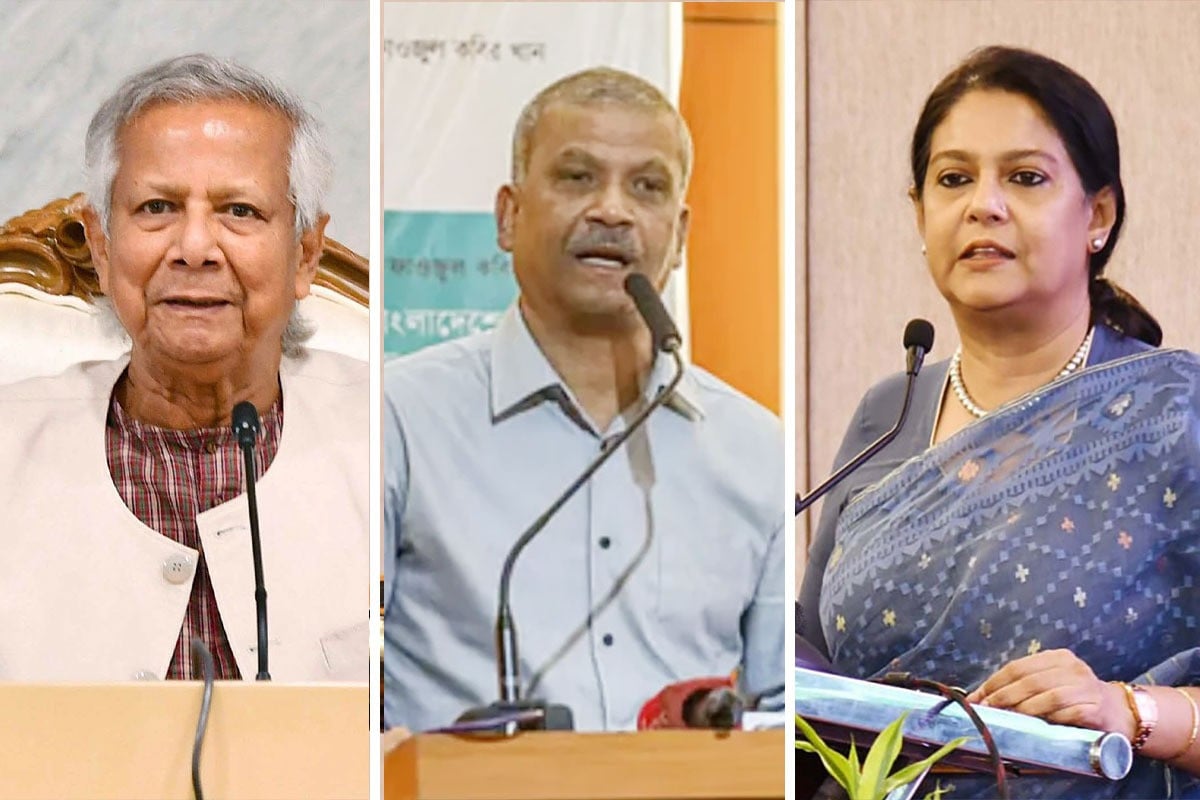
The biggest obstacle to Bangladesh’s progress and planned development is bureaucracy. Bureaucratic complexities often stand in the way of any creative, effective and sustainable development initiative. At a time when the need for planned and sustainable development is becoming increasingly important and experts are calling for urban development free from bureaucratic influence, the previous Yunus government left office after making the path to planned development even more complicated by introducing a law that many believe will create further obstacles.
The “Integrated Spatial Planning Formulation and Sustainable Development Ordinance,” enacted on 26 November last year, aims to provide a legal framework for planned urban and rural infrastructure development in Bangladesh to ensure proper land use, sustainable development, economic growth and disaster resilience. However, while the ordinance claims to coordinate local and national planning for balanced development and protection of agricultural land, experts argue that it effectively consolidates bureaucratic authority over urban development, sidelining professionals and technical experts.
The main objectives of the Integrated Spatial Planning Formulation and Sustainable Development Ordinance, 2025 include building a planned Bangladesh through sustainable urban and rural infrastructure development, ensuring proper land use to prevent unplanned urbanisation, achieving the Sustainable Development Goals (SDGs) by promoting social justice, economic growth and environmental sustainability, strengthening disaster and climate resilience, protecting agricultural land and biodiversity, ensuring coordination between local development and national master plans, and encouraging public participation in planning processes.
Behind these ambitious goals, critics say the ordinance marks the first attempt in Bangladesh’s history to establish a national spatial planning framework that legally empowers the Urban Development Directorate (UDD) and other agencies. In doing so, however, it reduces the role of urban planners, environmental experts and professional practitioners, placing bureaucrats at the centre of decision-making. Experts fear this could hinder planned urbanisation while increasing corruption and administrative delays.
Bangladesh is among the fastest urbanising countries in South Asia. Although the country has achieved remarkable progress in many sectors, the losses over the past 50 years since independence are also significant. The natural beauty of cities has declined, and rivers such as the Buriganga and Turag, along with numerous canals and wetlands, have deteriorated. The capital, Dhaka, now stands as a stark example of unplanned urban development.
Apart from the Bashundhara Residential Area, Dhaka has very few planned residential neighbourhoods. Residents have limited access to green spaces, and recreational areas are increasingly being replaced by digital entertainment. Even basic facilities remain inadequate. For example, the city often fails to provide safe overnight accommodation for visitors from smaller towns and rural areas who travel to the capital for personal or professional needs. Similar shortcomings exist across the country.
To keep pace with a growing economy and make full use of the country’s workforce, sustainable and well-structured planning is essential. As urban areas expand and economic opportunities grow around major cities, people are increasingly migrating from rural areas in search of better livelihoods. Urbanisation is essentially a process of transformation: rural populations gradually shift towards industrial and urban livelihoods, agricultural land decreases, and many farmers change professions.
Since independence, this process has accelerated rapidly. Each year, approximately 3.5 percent of the country’s population migrates from rural areas to urban centres. This trend also raises the issue of decentralisation. While Bangladesh has some administrative decentralisation, it lacks genuine planned decentralisation capable of reducing regional economic disparities.
Land use, infrastructure development and urbanisation in Bangladesh have now reached a critical juncture where new ideas and structural reforms are needed to ensure a planned future. Addressing these challenges requires coordinated efforts involving environmental experts, architects, engineers and urban planners.
However, critics say the new ordinance instead strengthens bureaucratic control by ensuring a dominant presence of administrative officials in the proposed National Spatial Planning Council and inter-ministerial committees. Experts argue that, given the current political and administrative context in Bangladesh, a small number of specialists would find it extremely difficult to influence decisions within such a large bureaucratic structure.
Professional planners and engineers typically rely on technical analysis, data-driven research and international standards when offering recommendations. But with administrative officials forming the majority in the proposed committees, experts fear that rigorous technical evaluation may be overlooked.
Furthermore, the ordinance lacks a clear framework for active participation by stakeholders or local communities in preparing strategic plans, structural plans or urban area plans. For this reason, many specialists believe that to build an effective and sustainable Bangladesh, decision-making bodies must include a sufficient number of professional planners and technical experts.
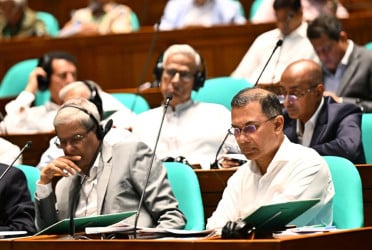
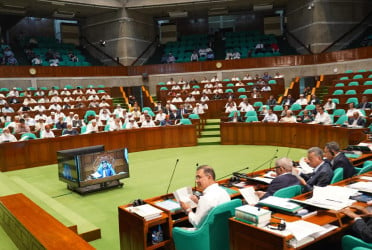
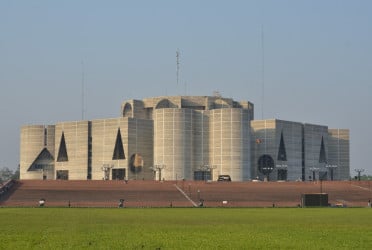
Another major concern is that the Yunus government was an interim administration. Critics argue that such policy-level decisions should be made only by governments elected by the people. The ordinance was presented in the National Parliament on Thursday, and many hope that lawmakers will review the controversial law, which critics say could hinder the country’s path toward planned and sustainable development.
Bd-pratidin English/ ANI