People should appreciate Bangladesh's progress during the last 40 years. The country's place in the world has changed because of strong economic growth, dynamic exports, longer life expectancy, higher literacy rates, and better infrastructure.
But behind this accomplishment is a sad fact: poverty is still common, inequality is growing, and millions of families are still having trouble making ends meet. Families can still fall back into poor times because of a medical emergency, losing their job, or a climactic shock.
Bangladesh continues to ignore zakat, one of its most effective indigenous redistributive tools, even as its public welfare institutions run out of money and resources.
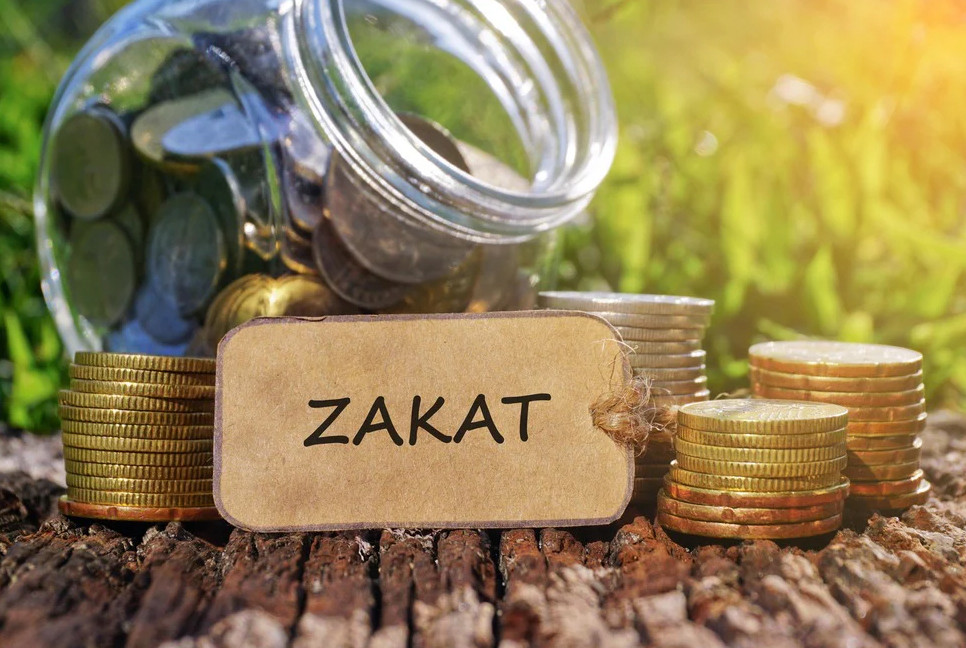
Zakat is more than just giving money to charity. It is an Islamic economic entity mandated by law to redistribute wealth, reduce inequality, and safeguard human dignity. When set up correctly, zakat can be a structured, long-lasting way for people to help each other financially, complementing government welfare programs and strengthening safety nets for the most disadvantaged.
The paradox is clear. Bangladeshi Muslims are very kind and do good deeds because of their faith, yet zakat remains mostly informal, fragmented, and not linked to national development plans. As a result, a large pool of resources for redistribution remains unused.
A Resource That Can't Be Ignored
According to national-level projections, Bangladesh has significant zakat potential. Careful macroeconomic studies show that zakat resources might amount to around 4% of GDP each year, which is more than one-fifth of the national budget.
This suggests that if zakat is used correctly, it could be as much as, or more than, what the government spends on major social security programs. Even partial institutionalization would greatly increase the resources available for disaster recovery, poverty reduction, healthcare access, education support, and livelihood development.
The structure of zakat potential is an important part of Bangladesh's modern economy. The zakat basis is now largely composed of financial assets, bank deposits, service-sector profits, agricultural output, and manufacturing activity.
Zakat is no longer limited to traditional assets such as crops or cattle; contemporary riches and commercial endeavors have significantly broadened its reach.
In a way, Bangladesh's economic change has quietly increased the zakat base, but institutions have not changed to take advantage of it.
Why Zakat is Important for Today's Problems
Bangladesh's development problems are becoming increasingly complex. Poverty, measured by income, has declined, but vulnerability remains high. There is no social protection for informal laborers. There is still a high rate of youth unemployment. Climate calamities keep ruining people's lives. Disparities among regions grow.
Zakat can be very helpful in closing these gaps in the system.
First, zakat is a way to get money without going into debt in your own country. Zakat, unlike foreign aid or borrowing from abroad, uses domestic resources in accordance with religious duties.
Second, zakat is meant to directly redistribute wealth. The people who benefit from it—poor people, needy people, people who owe money, and vulnerable communities—naturally fit with the purposes of social protection.
Third, zakat can help people get through hard times. Redistributive transfers enable poor families keep buying things, avoid having to sell their things in a hurry, and get back on their feet faster after a calamity.
Fourth, zakat can help people whom public programs generally ignore, such as informal workers, people who live in remote rural areas, and groups that are socially ostracized.
A government that wants to be an upper-middle-income country while also working toward the Sustainable Development Goals should not ignore zakat's ability to redistribute wealth. This is bad for the economy and society.
The True Limitation: Institutions, Not Aspirations
If zakat has so much potential, why isn't it more important in public policy?
The answer is not religious drive, but rather institutional weakness.
In Bangladesh, the handling of zakat is rather disorganized. Collection channels are spread out among people, religious groups, NGOs, and a few government programs. There is a wide range of criteria for reporting and transparency. There isn't much coordination. Most transfers happen informally between people.
This fragmentation leads to duplication, inefficiency, and little effect. Small amounts of money are distributed, and people generally use them right away rather than for long-term poverty alleviation. Zakat cannot become a transformative development instrument without size and cooperation.
Another problem is trust. Many people who might give zakat don't want to do so through official channels because they're worried about mismanagement or politicization. Because of this, informal giving remains the most common form of giving. It's personally satisfying but not very good for development.
From Giving Money to Helping People for a Long Time
Bangladesh needs to change its approach to zakat from charity to a development financing strategy to get the most out of it.
Emergency help is still very important, but to really cut down on poverty, people need to be included in ways that work. Zakat can fund things like small businesses, vocational training, healthcare, education, and programs that help people recover from disasters.
Islamic law promotes these kinds of productive uses because they align with the ideals of social fairness and public welfare. This method connects zakat with both Islamic goals and modern plans for growth.
If managed correctly, zakat can help families who are struggling move from dependence on others to self-sufficiency.
Reforming governance is necessary. The basis for zakat reform is institutional credibility. Without good governance, more collecting won't lead to trust or change. Some of the most important things to do for reform are: Clear reporting of income and expenses; Required financial audits and independent Shariah oversight; Set rules for how to calculate zakat and who to give it to; Safe digital platforms for payments, tracking, and monitoring; National cooperation between government agencies, Islamic banks, non-governmental organizations (NGOs), and zakat foundations Digitalization opens many doors. Bangladesh's progress in mobile banking services and digital identification technologies can help better manage zakat and make things more open.
Not replacing, but adding to, government welfare
Zakat should not replace taxes or government programs that help people. Instead, it should be part of a larger social protection system that works alongside other parts.
The government can provide universal services, while zakat institutions can help people who are very poor or at risk. Islamic banks can be reliable middlemen for collecting money. Community-based development projects can be implemented by NGOs. This collaborative model keeps the state from having too much power while yet making sure that everyone works together and is responsible.
An Opportunity for Strategy
Bangladesh is at a very important point. There isn't much room in the budget. Climate hazards are getting worse. There is a growing need for social protection. The possibility of making money from outside sources is becoming less certain.
On the other hand, digital infrastructure is expanding, Islamic finance is growing, and more people are learning about ethical finance.
This coming together gives us a rare chance to update how zakat is administered through progressive, trust-based changes rather than forced centralization. Zakat can go from being a collection of small donations to a reliable source of social funding if there are pilot programs, open reporting, stakeholder involvement, and increased institutional capacity.
The Price of Not Doing Anything
Not making Zakat a part of the system has big opportunity costs. When resources aren't used, safety nets don't get enough money, people stay vulnerable, they need to borrow more, and informal redistribution stays inefficient.
In a society where millions remain vulnerable to economic and climate shocks, it is neither economically sensible nor socially fair to leave such a potent redistributive tool unused.
Zakat is not a little act of generosity. When organized correctly, it is a strategic tool for fair distribution of resources and development that includes everyone. Bangladesh has proved many times that bold new policies can turn problems into opportunities. The next step in making society stronger and fairer is to unlock zakat's potential.
The writer is a Distinguished Professor at LSU-New Orleans, USA.