Following the US attack on Iran, the entire Middle East has become unstable. The whole world is alarmed. Experts have expressed concern that this war could have global re-percussions. Analysts believe that this conflict could create a severe crisis for Bangladesh. During Prof Muhammad Yunus’s 18-month rule, Bangladesh’s economic condition had already deteriorated; the Middle East crisis may now become a further blow to an already fragile situation. Due to the Yunus government’s flawed economic policies, Bangladesh’s condition has become extremely vulnerable. Unemployment has in-creased, and new investments have stalled.
Thousands of industrial factories remain closed. The former Governor of Bangladesh Bank had virtually declared war against the private sector. With the objective of crippling the private sector, Ahsan Mansur introduced a contractionary monetary policy. By raising interest rates, investment was choked. Various harassing measures were taken against private entrepreneurs, pushing the private sector into distress. During the interim government period, remittance was the only major achievement of the economy. The country’s economy was effectively sustained by remittances sent by expatriate workers. The new government has only just begun formulating investment-friendly policies. A new Governor of Bangladesh Bank has been appointed. The Prime Minister has directed that closed factories be reopened. However, steering the economy back to the right path from the wrong one takes time. Before that recovery can take hold, this war may inflict a major blow on Bangladesh’s economy. If prolonged, the conflict could undermine the country’s overall macroeconomic stability.
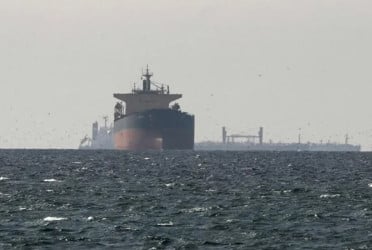
The Middle East is Bangladesh’s primary source of imports. Therefore, if this war continues, fuel prices and supply for the country may become unstable. Due to the ineffective implementation of energy security plans, Bangladesh is now largely dependent on imported fuel. Any prolonged conflict in the Middle East would negatively impact oil prices, LPG transportation, and global LPG supply. The country currently has approximately 40 days’ worth of fuel reserves. If the war is short-lived and the situation normalizes quickly, a major crisis may be avoided. However, if the conflict becomes prolonged or the Strait of Hormuz effectively becomes inoperable, Bangladesh could face severe disruptions in fuel supply. Although oil can be imported from alternative sources, it would be costly and time-consuming.
Due to the war, the international energy market may soon become unstable. Particularly if movement through the Strait of Hormuz is disrupted, the routes for oil and LNG supply will face serious challenges. Consequently, the market may become completely unstable and prices could spike suddenly. As a result of the war, we may face severe suffering in the electricity and energy sectors. Problems in these sectors would directly affect business, production, income, and the entire economy. Prices of all goods may rise uncontrollably. It is already being speculated that oil prices, currently around $70 per barrel, could rise to $120. If oil prices increase by $50 per barrel, the price of fuel in our country –currently around Tk120 per litre – could exceed Tk200. If that happens, transportation costs will rise, affecting daily life. The number of extremely poor people in the country is already increasing and may rise further.
In such a situation, additional pressure will be created on the balance of payments and foreign exchange reserves. The Suez Canal, a major maritime route for sending goods to Asia, Europe, and partially to the United States, lies close to Iran. If the war affects this route, transportation of Bangladesh’s export goods to Europe and the US will be disrupted. A prolonged war would significantly impact Bangladesh’s product shipments. Additionally, due to Houthi attacks, shipping through the Red Sea has already been reduced. As an export-dependent country, we must confront the impact of this war. Be-cause of the conflict, consumers’ purchasing power will decline, leading to reduced spending on products such as garments. Increased fuel prices would raise production costs in the domestic market, as Bangladesh depends on imported energy. If businesses are forced to choose alternative maritime routes to ship goods to Europe and the US, overall trade would be severely affected.
Previously, Bangladeshi garment exporters thought the Ukraine war would end within two weeks, but that war has now continued for four years. If the Iran conflict becomes long-term, export markets in Kuwait, Iraq, Iran, Bahrain, Saudi Arabia, and other Middle Eastern countries could be severely affected. According to the Ministry of Commerce, in fiscal year 2024–25, Bangladesh exported goods worth approximately $10.9 million to Iran’s roughly $650 billion market, mostly garments and pharmaceutical products. Analysis of data from Bangladesh Bank and the Export Promotion Bureau (EPB) shows that bilateral trade between Bangladesh and Iran has long been slightly above $10 million, most of which is Bangladeshi exports. Imports from Iran are minimal and sometimes even zero. This war may halt exports to Iran, reducing our export earnings. Although exports to Iran are relatively small, other Middle Eastern countries are emerging markets for Bangladesh. Therefore, exporters are concerned that ongoing attacks and counterattacks across the region may disrupt trade. They also fear that if the Strait of Hormuz is closed, export costs will rise.
According to international media reports, in response to attacks by the United States and Israel, Iran has launched strikes on the United Arab Emirates (UAE), Qatar, Bahrain, Saudi Arabia, and Iraq. Among these countries, the UAE is a major market for Bangladesh. Hifs Agro Food Industries exports processed food worth $200,000–$300,000 per month to the UAE, Saudi Arabia, Oman, and Qatar. If the situation does not stabilize quickly, exports may decline significantly. According to EPB data, exports to the UAE in fiscal year 2024–25 totaled $407.9 million, $23 million more than the previous fiscal year. In the same year, exports to Saudi Arabia totaled $246.2 million, an increase of $10.6 million from the previous year. Additionally, Bangladesh exported goods worth $26 million to Qatar, $25.4 million to Kuwait, $9 million to Bahrain, and $2.7 million to Iraq. These exports could suffer significant setbacks due to the war.
Middle Eastern countries are Bangladesh’s primary labor market. Therefore, a pro-longed conflict may reduce interest in hiring new workers there. Many Bangladeshis working in the UAE, Qatar, Saudi Arabia, and other Middle Eastern countries could lose their jobs due to the conflict. As a result, remittance inflows may decline. New overseas employment opportunities may also temporarily halt. Over the past 18 months, man-power exports have already decreased. If this shrinks further due to the war, Bangladesh could face a severe crisis.
This war has pushed Bangladesh toward an uncertain future. Major economic challenges lie ahead. That is why we must take planned measures immediately. Through short-, medium-, and long-term strategies, we must confront the coming challenges. There is no room for complacency. We cannot simply wait and see what happens. We must make swift and effective decisions. We must remember that we are a resilient nation; if we work together in unity, we can surely overcome this crisis.
Audite Karim is a writer and playwright. Email: [email protected]