Word of impending government action, including policy support and the reopening of dormant factories, has reached the nation’s business and investment community like a drop of water in a parched desert. News of fresh initiatives to bolster Bangladesh’s footprint in global trade has only added to this growing sense of anticipation.
However, the most vital task remains within the Government’s immediate reach: sitting down with business leaders and investors without a moment’s delay. Beyond simply hearing their grievances, Ministers must take the pulse of the real economy, the ‘ground truths’ that these stakeholders know best. After eighteen months squandered in a ‘wait-and-see’ limbo, the community has remained patient, holding out for an elected political government to finally break the economic deadlock.
Rather than offering a lifeline, the interim government has left businesses and investors drowning in a “wait-and-see” limbo, failing to conduct even the basic groundwork upon which an elected administration could build. Business leaders have been left knocking on closed doors, waiting in vain for the government to sit with them, seek their counsel, or grant them the chance to contribute. They even welcomed the prospect of justice for any past wrongdoings, yet the government failed to move an inch toward ensuring a pro-investment climate, policy stability, or financial integrity.
Instead, the private sector has been systematically vilified, cast as the ‘villain’ of the piece while officials spun tall tales of impending foreign investment. Meanwhile, the government has ostracised the formidable domestic investors right under its nose, men and women who are celebrated abroad as prestigious foreign investors in other nations. Despite enduring a relentless barrage of contempt and neglect, these investors have watched on, forced to witness a ‘bioscope’ of government meddling and mounting economic distress.
From the outset, the nation’s economic practitioners, its business leaders and investors, could see that the government of so-called intellectuals, academics, and civil society was leading the economy toward catastrophe. Yet, their warnings were ignored. Rather than seeking their counsel, the government kept them at arm’s length, treating them with unconcealed contempt and branding them as wrongdoers. Even as business leaders repeatedly attempted to sound the alarm, cautioning that the administration was on the wrong path, the Yunus government turned a deaf ear. Left with no alternative, the business community has endured this period as a stroke of ill-fate, pinning its hopes on the arrival of an elected government—one they expect will show genuine sincerity in revitalising the nation’s economic momentum.
It is a matter of simple common sense and evident even to those without a background in economics that investment cannot thrive in the absence of political stability. Following the fall of the Awami League government, the nation found itself without a political guardian. There was no recourse for justice as factories were seized or torched; many remain shuttered, leaving thousands of workers unemployed. While small entrepreneurs were left too broken to even lament their losses, major corporate groups found themselves suffocated. Production halted, costs spiralled, and a collapse in export orders forced widespread redundancies.
Despite the fanfare surrounding the Nobel laureate’s administration, the state of both domestic and foreign investment remains dire. The incoming government under Prime Minister Tarique Rahman appears to have grasped this reality, echoing a clear message in its election rallies: a pledge to reopen dormant factories, revitalise the industrial spirit, and create jobs alongside fresh investment. Crucially, it has promised to address the plight of those business leaders who were targets of unjust persecution.
The time for action has arrived. The first and most vital task is for the Government to sit down with the investor community, fostering connections with small, medium, and large-scale enterprises alike. This must be the cornerstone of the nation’s economic journey; it is not a task for tomorrow, but for today. By acting now, the top echelons of government will finally understand how a drought in production and exports crippled the nation and exactly where the rot set in, leading the economy to this perilous crossroads.
The nation’s business leaders and investors are the primary custodians of this vital economic intelligence. Having stood on the front lines of the crisis, they possess a granular understanding of the systemic rot. Should the Government choose to take them into its confidence, they would undoubtedly provide the insights necessary to fortify the administration and the national economy alike. While the Yunus administration failed to seize this opportunity, a political government surely cannot afford such an oversight. It is not that the interim government lacked effort; indeed, Chief Adviser Dr. Yunus extended an ‘investment friend request’ at every international summit, issuing and receiving numerous offers. A high-profile investment summit, attended by multinational CEOs with great fanfare, succeeded in generating significant ‘hype’ and grand assurances. Yet, in the end, it was all thunder and no rain. The primary cause of this failure was the systematic marginalisation of domestic investors.
The scars run deep. Previously, the Sheikh Hasina administration did more than just insult the business community through tawdry politicisation; it left them dangerously exposed. Before that, the ‘One-Eleven’ era, another form of fascism, humiliated entrepreneurs in its own style, branding them as villains and tainting their reputations at every turn. Those wounds have yet to heal. Between the trauma of the 1/11 takeover and the subsequent ordeals of the last regime, the nation’s investors have endured a relentless cycle of persecution.
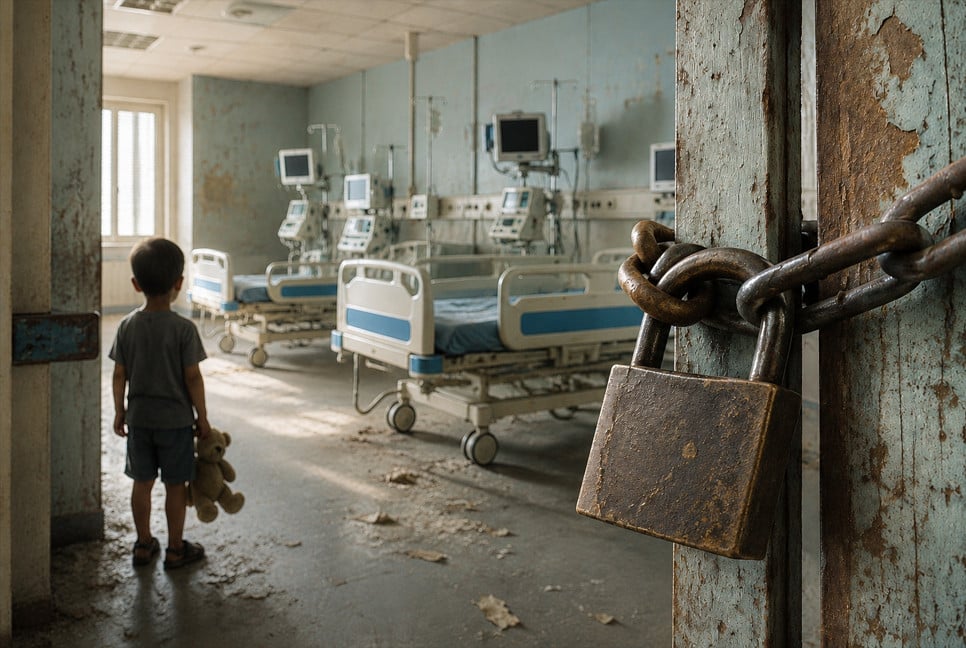
In the global arena, nations and corporate giants look to the stock market as a barometer of a country’s economic health. Here, Bangladesh remains uniquely unfortunate. The commodities market is in a state of reckless volatility; industrial disruptions have led to mass redundancies, and a freeze on new hiring has tethered a fresh wave of graduates to the ranks of the long-term unemployed. A crippling gas crisis has dealt a body blow to production, investment, and recruitment alike. While the wheels of industry are technically turning, it can hardly be called ‘progress.’ From Dhaka and Gazipur to Narayanganj and Ashulia, the situation across the nation’s industrial belts is dire.
For reasons that remain mysterious, the previous administration turned a blind eye to this decay. Rather than fostering a climate of confidence or embracing investors as partners, they treated the private sector as an outsider. The economy and the current administration are now paying the price for this estrangement. Beyond a modest pride in remittances and export earnings, there are no tangible macroeconomic achievements to speak of. The constant “hype” surrounding foreign investment has been squeezed until it has turned bitter. Today, the force of reality is such that even slum-dwellers are forced to grasp the economy out of sheer necessity, while the middle class has drastically scaled back on essentials.
Those within the trade and investment sectors understand this omen better than most; they are currently relegated to the role of spectators in the gallery or observers on the sidelines. However, a government brought to power by immense popular will and the blood of an uprising does not have the luxury of being a spectator. It must restore political stability. It must, without fail, reignite the engine of the economy.
The new administration cannot seek refuge in the failures of the Yunus or Hasina regimes. Throughout the recent interregnum, the finger of blame for the nation’s regression was pointed squarely at the unelected government and a critique led consistently by the BNP. Figures like Secretary General Mirza Fakhrul Islam Alamgir and the economically astute Finance Minister, Amir Khosru Mahmud Chowdhury, have warned repeatedly: without an elected mandate, the nation will remain in a tailspin. Without stability, investment will vanish, mobocracy will flourish, and the judicial and law enforcement systems will continue their collapse. These were not mere rhetorical flourishes; they were profound warnings. Now, the time has come to deliver.
To resuscitate the economy, the Government must enlist the very sector it once championed. Business leaders possess the ledger of grievances from the last eighteen months; they know exactly why the machinery of trade, development, and social order ground to a halt. For Prime Minister Tarique Rahman, this alignment should be instinctive rather than difficult. There is a natural affinity here: the persecuted find common ground with the persecuted, and the oppressed stand most sincerely by their own. The precedents set by Sri Lanka and Nepal are highly pertinent. Following their own popular uprisings, those nations prioritised the business community to guarantee economic stability and working like a charm to restore social confidence. Their examples provide a blueprint for a new era of democratic and economic hope in Bangladesh.
Author: Journalist-Columnist; Head of News, Bangla Vision