After assuming office, the most immediate challenge before the BNP-led government is trying to control the market and curbing inflation. In its first cabinet meeting last Wednesday, the new head of government stressed bringing commodity prices and inflation down to a tolerable level within the first three months.
Post-election economic pressure, global instability and increased demand during Ramadan have kept markets under strain. The cabinet directed that there be no disruption in fuel supply during Ramadan, no artificial crisis in essential commodities and that field-level administration remain active.
A special 180-day action plan is also being prepared to implement election pledges. Ministries have been asked to submit clear outlines of their planned steps to the Prime Minister’s Office. Policy decisions include strengthening market monitoring, improving coordination in supply chains, taking action against hoarding and revising import policies if necessary.
However, with Ramadan already underway, prices of several essentials have risen again, intensifying pressure on low- and fixed-income groups.
According to economists, although it is possible to bring temporary control to the market by conducting raids, effective coordination between production, import, transportation and retail levels is necessary to achieve long-term stability.
The dollar exchange rate, import costs and transparency of the supply chain must be ensured. If visible progress can be shown in the first three months, then a positive message will be sent to the market.
Dr. Mostafizur Rahman, Honorary Fellow of the Center for Policy Dialogue (CPD), told Bangladesh Pratidin that the new government's decision to give top priority to market conditions and inflation control in the next three months' work plan is very logical. Due to the continuous increase in inflation in the last few years, the financial security of the common man has significantly decreased. If the market can be stabilized in this situation, the suffering of the people will be alleviated to some extent.
He said that the government will have to face various challenges to achieve this goal. “To control the market, it is important to first ensure production and supply. The entire supply chain, from production, import to retail, must be managed systematically and transparently. In addition to ensuring timely import of necessary goods, emphasis should also be placed on maintaining adequate stocks.”
He also said that if the surveillance of the relevant government institutions, including the Department of Consumer Rights Protection, is strengthened, it will be possible to get positive results in market management. Inflationary pressure can be brought under control only by taking coordinated and effective steps. There is no alternative to increasing production and improving the investment environment to reduce inflationary pressure.
The organization's Executive Director Dr. Fahmida Khatun told Bangladesh Pratidin that the cost of living has become unbearable due to the increase in the prices of daily necessities compared to the income of the common man. In the first meeting of the cabinet, the head of government has pledged to bring down commodity prices to a bearable level, which is a positive message.
However, it is important to strengthen not only the administrative system, but also the supply system, bring harmony in import-export policies, ensure competition in the market, and coordinate with monetary policy and fiscal policy. The first three months will be the real test of the new government's efficiency, coordination and political will. If it succeeds, public confidence will increase. If it fails, the pressure will increase manifold.
Traders say that the supply situation was relatively good this year. The stable dollar price has facilitated imports. Where earlier LCs had to be opened at a 100 percent margin, now it is possible at a 10 to 20 percent margin. Even the outgoing trade advisor claimed that there is no shortage of Ramadan products; on the contrary, imports are about 40 percent more than the previous year. But that relief has not been fully seen in the market. This raises the question - is the problem in supply or in market management?
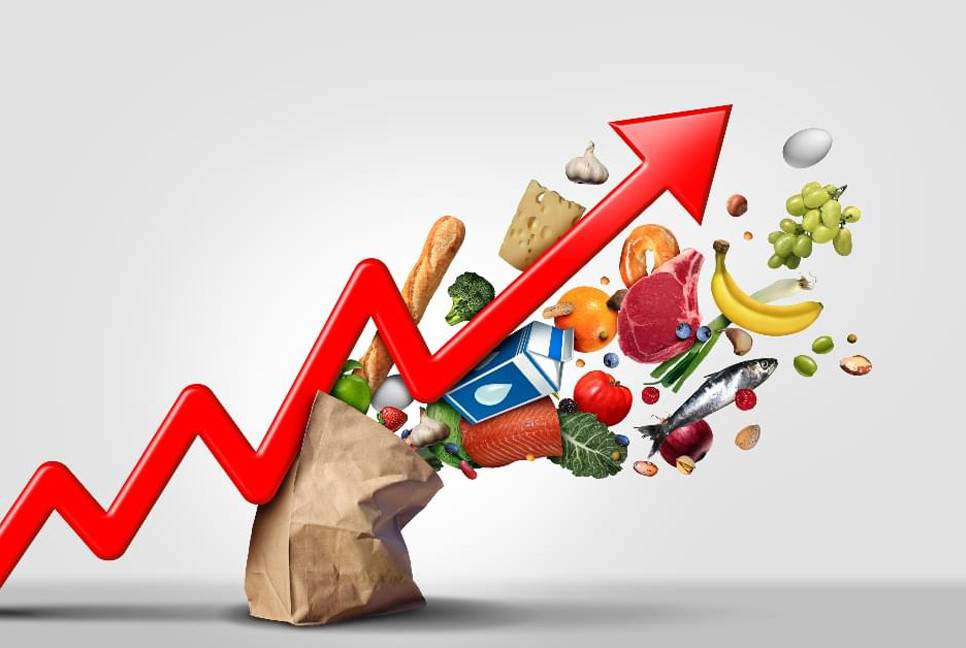
Recent data from the Bangladesh Bureau of Statistics (BBS) said that inflation has remained at a high level in the last three months. Overall inflation rose to 8.58 percent in January. Inflation also rose in December and November. Food inflation is on the rise. Food inflation was 8.29 percent in January. And non-food inflation is 8.81 percent. Food inflation has increased for four consecutive months. The average inflation in 2025 was 8.77 percent. The prices of rice, pulses, edible oil, sugar and vegetables have increased, putting pressure on the purchasing power of the common man.
To control inflation, the previous government (interim) adopted a contractionary monetary policy, which is still ongoing. According to the monetary policy, the policy interest rate was increased and efforts were made to reduce credit flow. But it did not yield the expected results. Rather, analysts believe that the impact of the decrease in credit flow in the private sector has had an impact on investment and production. Although the International Monetary Fund emphasizes a tight monetary policy, the issue of increasing production and supply in the domestic reality is gaining equal importance.
All in all, the new government is now facing the test of time. If some relief can be restored to the market in the first three months, people's confidence will increase. And if there is no visible progress in controlling commodity prices, the economic pressure may deepen further. Therefore, the biggest question now is how quickly and effectively the decisions taken by the government are implemented in practice.
Bd-pratidin English/TR