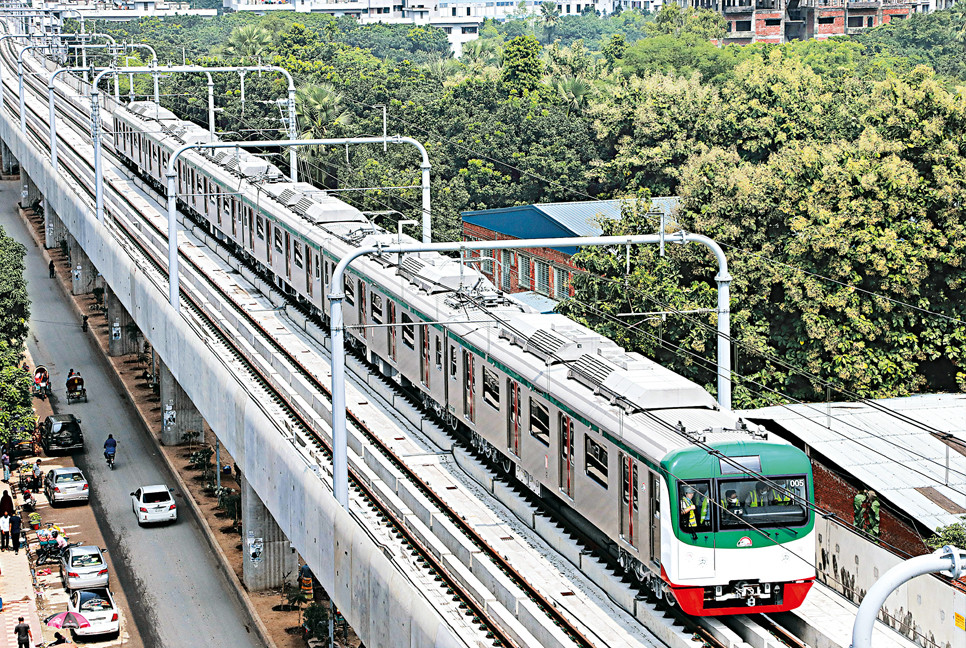
The cost of constructing two new metro rail routes in the capital will be more than double the per-kilometer expense of the Uttara–Motijheel line. The metro rail from Uttara to Motijheel cost Tk1,574 crore per kilometer. In contrast, the two new routes are projected to cost Tk3,618 crore per kilometer. The total estimated expenditure for the two new lines stands at Tk1.845 trillion (Tk184,500 crore), raising uncertainty about their implementation.
The interim government did not make a decision on proceeding with the high-cost projects. The responsibility now falls on the newly elected government led by the Bangladesh Nationalist Party (BNP).
One of the proposed routes, MRT Line-1, will run from Kamalapur to the airport and from Narda to Purbachal, covering more than 31 kilometers. The other, MRT Line-5 (North), will extend from Hemayetpur in Savar through Mirpur and Gulshan to Bhatara, spanning about 20 kilometers. Both lines will include elevated and underground sections.
Analysts say the sharp increase in construction costs is largely due to limited competition in the bidding process, which currently involves only Japanese contractors. They argue that increasing competition would help reduce expenses. Managing Director of Dhaka Mass Transit Company Limited (DMTCL), Faruk Ahmed, echoed this view, noting that the Japanese lender Japan International Cooperation Agency (JICA) has imposed several technical conditions that restrict competition in contractor selection, leading to significantly higher costs.
Japan is financing the metro rail projects through JICA loans, which include conditions that tend to favor Japanese companies in securing contracts.
The extended section of the Uttara–Motijheel line will reach Kamalapur, bringing the total length to 21.26 kilometers. Construction of the Motijheel–Kamalapur segment is still underway, with total costs for the entire route amounting to Tk33,472 crore.
MRT Line-1 was approved in December 2019 with an initial estimated cost of Tk52,561 crore. However, after analyzing contractor bids for 8 out of 12 packages, DMTCL estimates the cost may rise toTk 96,500 crore.
Similarly, MRT Line-5 (North), approved in October 2019 with an estimated cost of Tk41,238 crore, is now projected to cost Tk88,000 crore based on contractor bids received for five packages.
Originally, the government had set the per-kilometer cost of the two new lines at Tk1,839 crore, with a total approved budget of Tk93,799 crore. However, based on the current bid proposals, the total cost could rise to Tk184,500 crore.
Comparative analysis by DMTCL shows that in several Asian countries, excluding land acquisition and salaries, metro rail construction costs in India range between Tk150 crore and Tk450 crore per kilometer. Although India also implements projects with foreign loans, it does not accept conditions that limit bidding competition.
JICA, responding via email, acknowledged awareness of the increased costs but stated that under its procurement guidelines, no information can be disclosed from bid opening to contract signing, and therefore it cannot comment on specific evaluations at this stage.
In the 2024–25 fiscal year, ticket sales from the Uttara–Motijheel metro generated around Tk400 crore (unaudited). However, annual loan repayments between Tk465 crore and Tk740 crore will be required until 2030–31.
DMTCL sources said that in one underground section between Kachukhet and Bhatara, the lowest bid of Tk15,527 crore—submitted jointly by Japan’s Taisei and South Korea’s Samsung—was 391 percent higher than the official estimate of Tk3,968 crore. This would mean an additional Tk11,559 crore beyond the projected cost.
Under JICA conditions, contracts would go to the lowest bidders—Shimizu Corporation and the Taisei-Samsung joint venture—if no irregularities are found. However, DMTCL has decided not to accept the Taisei-Samsung proposal and is reconsidering appointing Shimizu as well.
Officials suspect possible collusion behind the unusually high bids in two packages. In both cases, final bids were submitted only by consortia led by Shimizu Corporation and Taisei-Samsung, with each company alternating as the lowest bidder in different packages.
The interim government had urged lenders and contractors to reduce costs but showed little interest in proceeding at such high expenses when no response was received.
The deadline for MRT Line-1 ends next December, while MRT Line-5 (North) runs until 2028. However, contractors have yet to be appointed. In late January, DMTCL wrote to the Road Transport Ministry and the Planning Commission outlining the massive cost increases and proposing revisions to the project plans, including removing restrictive JICA-imposed technical conditions to ensure open competition.
Professor Shamsul Haque of the Civil Engineering Department at Bangladesh University of Engineering and Technology (BUET) said that reports indicate a lack of genuine competition in contractor selection, which is driving up costs. He warned that undertaking mega projects at such expenses could push Bangladesh toward financial crisis. He emphasized that the new government’s priority should be ensuring competitive bidding and revising loan conditions.
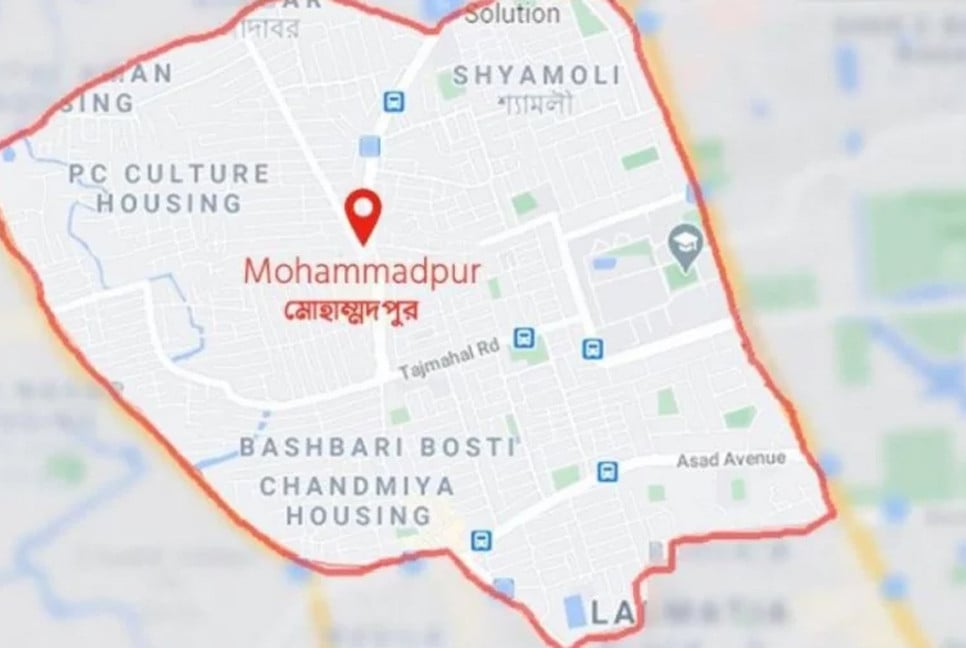
Before the national election, on January 20, BNP Chairman Tarique Rahman announced that if the BNP came to power, it would introduce monorail services in Dhaka alongside metro rail, connecting areas such as Mohammadpur and Banani to the metro network. Having taken oath as Prime Minister on February 17, it remains to be seen what decision the new government will make regarding the costly metro projects.
Source : Prothom Alo