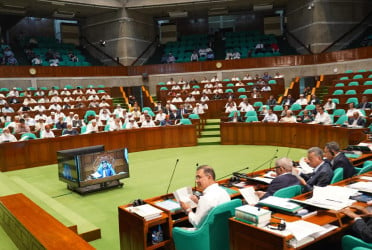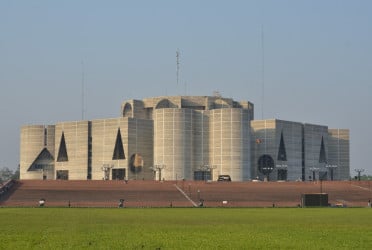
The most important issue for any government is transparency and accountability in its activities. Regardless of how an administration assumes responsibility for running the country, it remains accountable to the people, because they are the owners of the republic. In the case of an elected government, there are specific mechanisms of accountability. In a parliamentary system, the government is formed by representatives elected by the people, and parliament serves as the primary forum of liability and responsibility. The opposition and an independent media monitor their incumbent groups actions, raising issues both inside and outside parliament whenever anti-people measures occur. In this way, the transparency of an elected government can be guaranteed.
However, in the case of an unelected government, opportunities for accountability are limited. During such periods, parliament may not function, or even if it exists, the opposition is often nearly absent.
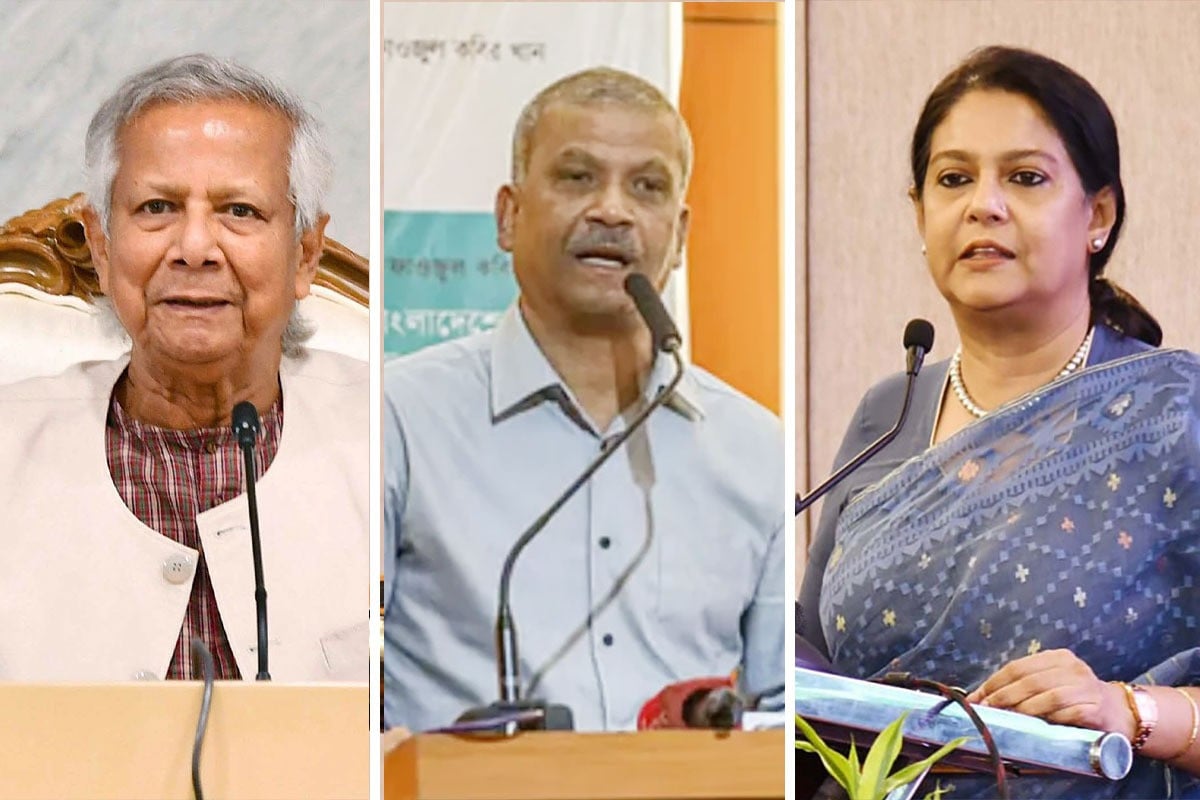
Voices of dissent outside parliament may be suppressed, and media freedom curtailed. Nevertheless, the interim government led by Prof Muhammad Yunus was of a different nature, having come to power through a mass uprising. Although it was not elected, it did not seize power by force and cannot be considered an occupying authority, but rather an administration that assumed responsibility according to the aspirations of the people. In simpler terms, it was the result of public demand, which placed upon it a moral obligation to remain transparent. While unelected governments typically disregard accountability or are reluctant to be held responsible, such an approach was not appropriate in this case.
Nonetheless, over its 18-month tenure, many activities, agreements, and decisions of the interim administration generated controversy. Serious allegations of corruption and abuse of power were raised against several advisers, and questions emerged about various actions. However, these were met with little visible response. Although it arose from a popular movement, the media often appeared hesitant to criticize it, and obstacles were reportedly created when criticism surfaced. Much of the reproval therefore shifted to social media, but similarly with not much reaction. After one year, segments of civil society began criticizing various policies and decisions of the interim administration, but a salient, peculiar characteristic of the outgoing government remained: it did not feel the need to acknowledge these comments.
As a result, although numerous allegations exist regarding those 18 months, it is essential to determine which are true and which are false, for this is a matter of national interest. Members of the government received salaries and benefits funded by taxpayers, and their performance must therefore be evaluated. There are claims that the Chief Adviser and several advisers abused their authority for unlawful gain; these allegations require verification. A full list of tax exemptions and other facilities reportedly received by Prof Yunus and institutions connected to his interests should be published. Over the same period, accusations of corruption were raised against multiple advisers and staff members, and reports suggest that at least six individuals are under investigation by the Anti-Corruption Commission, including three who served as personal officers to former advisers. These inquiries appear to have stalled and should be concluded promptly, because leaving such matters unresolved undermines public trust and weakens efforts to combat corruption.
Furthermore, allegations circulating on social media claim that one adviser assisted in the sale of assets belonging to a powerful minister from the ousted government. In the interest of transparency, such claims should be investigated impartially. Those who served in the interim administration were prominent figures from various sectors of society, and for their own credibility – as well as for an objective public assessment of civil society itself – clear findings are necessary.
The interim government also signed several significant agreements during its tenure, many of which have drawn discussion and criticism. Distinguished Fellow of CPD Dr Debapriya Bhattacharya has argued that all known and unknown agreements concluded with foreign entities should be reviewed to determine whether they align with the current government’s plans, even suggesting that some may need to be discarded. Critics have described certain agreements as contrary to national interests, raising the additional question of whether the interim government possessed the authority to enter into them in the first place.
Such investigations are not intended to defame Prof Yunus or his advisers; rather, they are required in interest of the nation itself. The highest court of Bangladesh has reinstated the non-partisan caretaker government system, and the upcoming 14th National Parliamentary Election will be held under such an arrangement. As the interim administration was also formed on that model, examining its powers, responsibilities, and shortcomings can help establish a framework for future caretaker governments. It is, as a result, necessary to assess where mistakes were made or limits exceeded so that similar problems can be avoided.
From now on, a caretaker government will assume responsibility every five years. A neutral post-mortem review of the Yunus administration is essential for both accountability regarding the outgoing entity but also for clearly defining the boundaries within which future caretaker governments must operate. To prevent recurring allegations of irregularities or corruption, a commission should be formed to evaluate this period and set precise guidelines. Investigating those 18 months of governance would help assure the public transparency regarding the chief adviser and his colleagues, while strengthening institutional standards for the political future of Bangladesh.
Audite Karim is a writer and playwright. Email: [email protected].