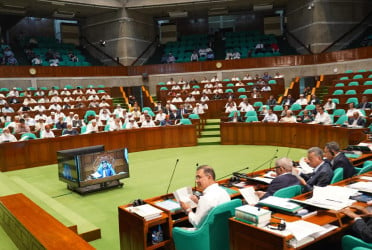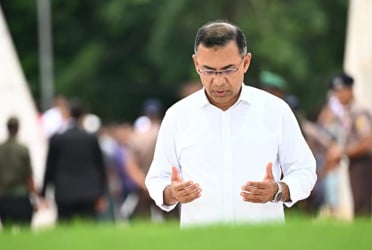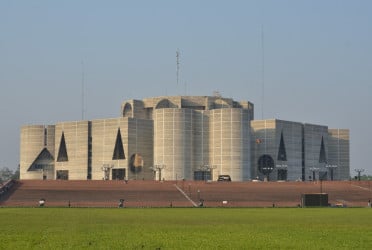
12 February marks the long-awaited national parliamentary election. This contest is set to be one of the most widely discussed elections in Bangladesh’s history.
Speculation is rife about who will win and who will lose. Who will the people entrust with the responsibility of running the country for the next five years? The answers to these questions will emerge after the votes are counted.
However, we ordinary citizens are anxious for another reason: will all political parties accept the election results? If the defeated parties refuse to accept the outcome, will the country once again fall into political uncertainty? Will violence erupt anew? These fears are not unfounded.
In Bangladesh’s history, no defeated side has fully accepted an election result. An analysis of the country’s electoral history shows that none of the 12 elections held so far has been accepted by all political parties.
Three parliamentary elections in Bangladesh – 1991, 1996, and 2001 – are generally considered relatively free, fair, and credible. Nationally and internationally, these elections are regarded as good examples.
Yet even in these cases, the losing parties raised objections. After the 1991 election, the Awami League alleged subtle electoral manipulation.
After losing in 1996, the BNP claimed the election was rigged. Following the 2001 election, the defeated Awami League accused the authorities of “election engineering”. So what will happen after this election?
This time, the election campaign has been intense and confrontational. The two main political camps have both expressed fears of vote rigging.
The BNP and Jamaat have called on the public to guard polling centres. Both have warned that electoral manipulation will not be tolerated. As a result, there is uncertainty about how the losing side will react if the outcome goes against them.
In a democratic state, such a situation is almost unimaginable. After a heated campaign, once the results are announced, all parties accept them. The losing side congratulates the winners and attends the swearing-in ceremony of the new government. But that culture has not developed in Bangladesh.
Instead, post-election periods are often marked by renewed debate and instability. Defeated parties raise new issues and inflame the political environment, damaging the economy and increasing public suffering.
This time, we want something different. We want the losing parties to congratulate the winners. We want leaders of the losing side to approach the winning leaders with flowers. Let this culture begin in a new Bangladesh – this is the hope of all.
Such a culture can only take root if the Election Commission conducts a visible and credible election. To achieve this, the Commission must act impartially.
At present, the Election Commission has been granted extensive powers. To ensure a free and fair election, it must properly discharge its responsibilities. An analysis of past election controversies shows that elections became disputed due to the Commission’s inefficiency, bias, and the overzealous actions of field-level election officials.
There have even been instances in the past when the Commission appeared biased towards a particular party and signalled field officials to favour that party. This time, the Commission must be vigilant and prove its neutrality through action.
Generally, elections become controversial for five main reasons. First, violence on election day – forceful takeovers of polling centres, obstruction of voters, and intimidation.
Second, fake voting and manipulation. Third, presiding officers and other officials acting under influence in favour of specific candidates. Fourth, manipulation during vote counting or delays in announcing results. And finally, failure to ensure the security of ballot boxes and polling centres after voting.
If the Election Commission takes a firm stand, such situations can be easily avoided. The Commission has repeatedly stated that it will conduct the election with complete neutrality. The people of this country want to see that promise fulfilled in practice.
Only a neutral Election Commission can deliver an acceptable election. If the election is recognised as free and fair by both the public and the international community, allegations of rigging by defeated parties will not stand. Even if they attempt to mobilise protests, the people will not respond.
Political parties themselves also bear responsibility. They must move away from the old habit of crying “rigging” whenever they lose. While parties are enthusiastic about elections, they are extremely reluctant to accept defeat.
There are two kinds of defeat: losing individual constituencies and failing to secure enough seats to form a government. Often, when a party fails to form a government, it questions the entire election and destabilises the transfer of power.
This has happened even under caretaker governments. Political parties must abandon the mindset of “free and fair if we win, rigged if we lose”. Ensuring that this election marks a new beginning in the democratic journey is the responsibility of all political parties.
Political parties must also understand that the country is not in good shape. People are deeply worried about the deterioration of law and order. Mob violence and extortion have created widespread fear.
Over the past 18 months, unemployment has increased, thousands of factories have shut down, and new investment has stalled. Businesspeople and industrial entrepreneurs are waiting, hoping that conditions will normalise after the election.
But if the losing side launches new movements after the election, public suffering will intensify and the economy will deteriorate further. Bangladesh urgently needs stability, an end to mob rule, renewed investment, and guaranteed public safety.
We hope that after the election results are announced, everyone will accept the people’s verdict. The ruling party and the opposition must work together in unity to move the country forward.
It must be remembered that in a democracy, the opposition is just as important as the ruling party. A strong and effective opposition contributes to good governance and ensures government accountability. In advanced democracies, the opposition forms a shadow government that monitors every action of the ruling administration, criticises its mistakes, and raises public awareness.
This allows citizens to evaluate government performance. With a strong opposition, the media can also express opinions freely and criticise the government constructively, creating a free and democratic environment nationwide.
Therefore, those who emerge as the opposition after this election will have an extremely important role to play. A strong opposition is indispensable for parliamentary democracy.
The country moves forward because of it. Failing to form a government does not mean everything is lost. There is no need to reject the election results or launch movements demanding their cancellation simply because a party lacks the numbers to govern.
What the people truly want is a strong opposition. Those who form the government and those who sit in opposition – both are winners. The real winner is the people.
The people of this country no longer want revenge or conflict. Let this election bring an end to the politics of fear and hatred. Differences of opinion may exist, but they must be expressed with civility. We must respect dissent and work together to move the country forward. Let 12 February mark the beginning of a new Bangladesh.
Audite Karim is a writer and playwright. Email: [email protected]