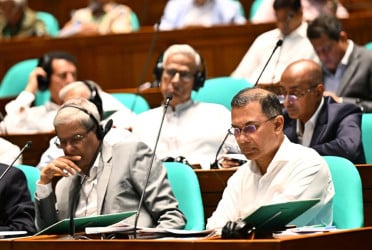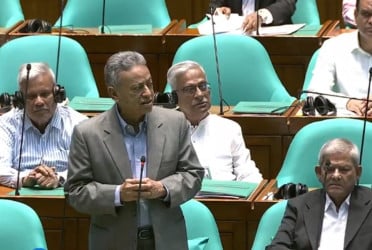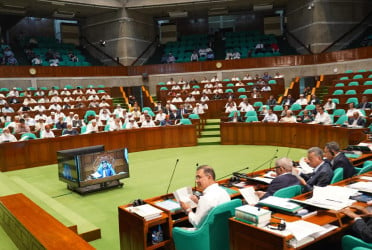
Only four days remain before the national parliamentary election. On 12 February, the people of this country will decide whom they will entrust with governing the nation for the next five years. There is no shortage of discussion about which party will emerge victorious. Everywhere, conversations revolve around the election – calculations of victory and defeat dominate public discourse. This election is more uncertain than any in recent times, and so far no one can confidently predict which party will win on 12 February.
While it is important who wins this election, it is equally significant which party will become the opposition. People hope that democracy will finally appear in its true form. Through this election, Bangladesh is expected to gain a strong and effective opposition party in parliament – one that can ensure democracy, transparency and accountability.
Democracy cannot function without an opposition. In the absence of a strong opposition, those in power tend to become arbitrary and authoritarian, acting without restraint. As a result, the rule of law, human rights and justice are undermined. Without a capable opposition, rulers may engage freely in corruption, paving the way for plunder and the misuse of state power. Constitutionally guaranteed fundamental rights can be easily eroded, media voices silenced, and state institutions used for partisan interests. Administrative bodies, the police and government officials become politicised, ultimately weakening state institutions.
Bangladesh itself stands as a powerful example. Over the past 17 years, citizens have witnessed how the absence of an effective opposition can enable authoritarian governance. Public rights have been curtailed and democracy weakened. One major reason for this has been the lack of a strong, functioning opposition. Through electoral manipulation, parliaments were allegedly rendered opposition-free, allowing the ruling party to operate without meaningful resistance.
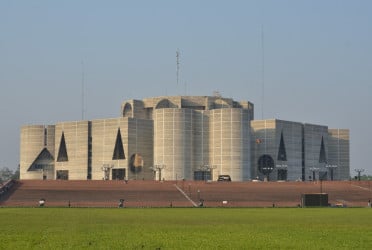
A strong opposition is a cornerstone of democracy. A parliamentary system thrives when both government and opposition function actively. Without an opposition, parliament becomes ineffective and governance risks sliding towards authoritarianism. One reason democracy has struggled to develop in Bangladesh is the recurring absence of a robust opposition. Only the parliaments of 1991, 1996 and 2001 saw vocal opposition participation, making those assemblies comparatively dynamic and effective. Governments then faced consistent scrutiny, the media expressed views more freely, and transparency and accountability improved.
After 2008, however, politics in Bangladesh increasingly became opposition-deficient. Critics argue that the trajectory following that election paved the way for an accountability-free, centralised model of governance. The 2014 parliament was formed without competitive voting in many constituencies, blurring the line between government and opposition. By 2018, allegations of irregularities further weakened opposition presence. Without a meaningful opposition, governance became more intolerant of criticism. Since many media outlets are business-owned, critics contend that pressure extended into the private sector, reinforcing centralised authority and diminishing dissent.
Public movements emerged in response to what many perceived as democratic backsliding. The protests of 2024, while initially centred on quota reform, grew into a broader expression of demands for civil and democratic rights.
In democratic policymaking, while the government leads, the opposition plays an equally vital role. A strong, people-centred opposition makes it difficult to pass policies that run contrary to the public interest, as sustained opposition pressure can influence public opinion and electoral outcomes.
Global history shows that after revolutions or mass uprisings, the absence of an effective opposition often allows authoritarian tendencies to resurface. For this reason, post-uprising Bangladesh faces a renewed need for a strong, public-oriented opposition to sustain democratic transformation. Without it, there is no guarantee that centralised rule will not re-emerge. Constitutional reform alone cannot prevent an authoritarian relapse; a political culture committed to democratic norms is equally essential. Therefore, regardless of which party wins the 12 February election, citizens want to see a strong opposition party in parliament. For the sake of democracy and accountability, this is indispensable.
Bd-pratidin English/TR