24 July marks “International Private Security Officer Day.” Bangladesh, too, observes this day annually. The emergence of private security services or companies in Bangladesh dates back to between 1988 and 1990, when companies like Securex, Atandra, Nishchit, and Shields began small-scale operations. By 1994–95, several other companies had also entered the sector.
After the tragic 9/11 attack on New York’s World Trade Center in 2001, the security industry experienced a massive global boom, including in Bangladesh. The threat of fundamentalist, militant, and extremist violence became a major global concern.
In response, Bangladesh saw a surge in private security firms set up to work on a broader scale. The outdated image of the lone “darowan” (guard) quickly evolved—uniformed guards began working under company banners, with many of these firms led by retired high-ranking military and police officials.
These professionals helped transform the industry into a professional and well-organised sector.
After the brutal 1 July 2016 Holey Artisan Bakery attack in Dhaka’s Gulshan, where 18 foreign nationals were killed, Bangladesh’s global standing suffered a severe blow. The country lost its reputation as a moderate nation, prompting major reforms in the national security apparatus.
A full-fledged Counter Terrorism Unit equipped with modern tools and gadgets was established. Massive operations were launched to root out terrorism, which proved successful. Bangladesh soon reclaimed its position on the global stage as a determined fighter against terrorism.
In 2006, the government introduced the Private Security Services Act 2006 to regulate private security companies—a blessing for the industry. The law recognised the private security sector as an essential national service and a vital complement to the efforts of formal law enforcement agencies.
Today, over 800 private security companies operate across Bangladesh, employing more than 1.2 million people. Their clients include embassies, high commissions, UN agencies, international organisations, NGOs, industries (including garments and pharmaceuticals), educational institutions, offices, and apartments. Every day, they manage the secure transportation of billions of taka in cash. Without their services, operations at over 20,000 ATM booths across the country would come to a standstill.
Private security companies have diversified their services to include investigations, executive/close protection, due diligence, emergency evictions, crisis zone operations, event security, logistics support, electronic security, maritime security, K9 (dog squad) assistance, and more.
However, the sector still requires government support to grow stronger. There is almost no institutional infrastructure for quality training. Over 1.2 million individuals support regular law enforcement agencies as complementary forces, yet their contributions remain largely unrecognised. They need both proper training and formal acknowledgement.
Despite their significant contributions to the country, society, and public safety, private security personnel still do not enjoy social respect or status. There is limited appeal in joining the profession. One major reason is the low pay scale. For example, a girl from a rural area would often avoid marrying a security guard, knowing he earns little and lacks the prestige of other uniformed services.
Large companies, banks, conglomerates, and major CSR performers in the country often pay just the minimum wage—Tk 8,000 per guard per month—for 8-hour shifts. How can quality service be expected at such low wages?
During the Covid-19 pandemic, these underpaid security guards served with the same dedication as other frontline workers—yet no one saluted them or offered any incentives. They remain an overlooked and underappreciated workforce.
Still, private security survives as a business. In developed countries, it is a massive industry. There is hope that in future, Bangladesh will also see this sector thrive, and it will be recognised as a legitimate industry.
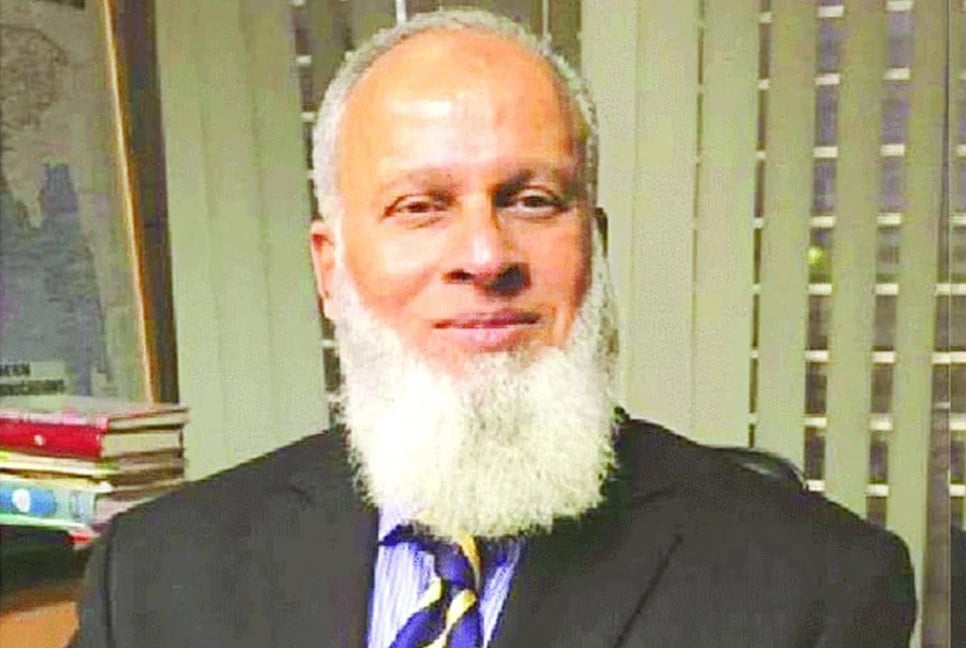
The writer is Managing Director, Elite Force, Elite Security Services Ltd.