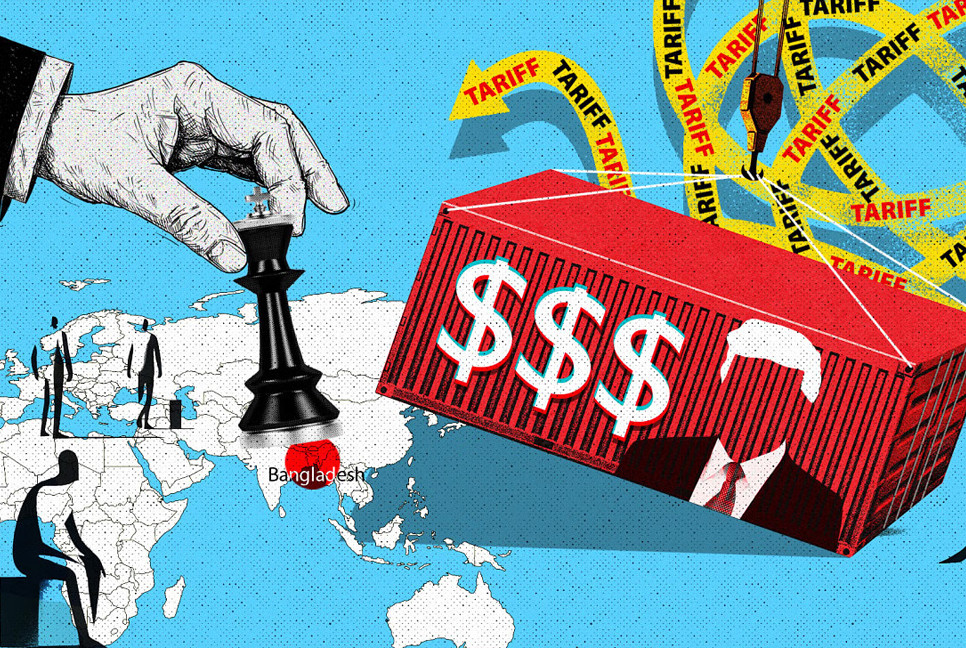
Bangladesh’s export sector is bracing for a major shock as the United States is set to impose a 35 percent counter-tariff on imports from the country starting August 1. Industry leaders warn the move could trigger a nationwide employment and trade crisis, with over one million jobs immediately at risk and 5 million livelihoods under threat in the long run.
Stakeholders across sectors, particularly in ready-made garments (RMG), leather, plastics, agriculture, logistics, and finance—have described the tariff decision as a “national emergency.” They caution that without swift diplomatic and political intervention, Bangladesh may permanently lose its competitiveness in the US market.
“This is not just a trade issue, it is a national emergency”, Shovon Islam, Managing Director of Sparrow Group, told Bangladesh Pratidin, “Those who think that only garment products exported to the United States will be affected are making a serious mistake. Big buyers buy products from one country for multiple markets; This will have a ripple effect.”
A country manager of a European clothing brand, who asked not to be named, said, “If this tariff issue is not resolved, our investment in Bangladesh will lose its rationale. We may be forced to consider alternative sources. Currently, 4 million workers are directly employed in the RMG and textile sectors, and another 1 million jobs are available in related sectors.”
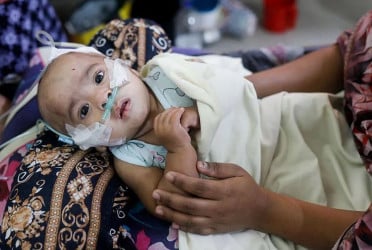
Industry leaders said that if orders decrease, more than 1 million jobs could be lost in just two months.
Sparrow Group exports goods worth $300 million a year, half of which goes to the United States. The company pays wages of more than Tk 400 million per month.
“If this market collapses, we will not be able to survive for even two months,” said Shovon Islam.
Khandaker Belayet Hossain, Executive Director of Asian Group, a leading garment exporter in Chattogram, said, “93 percent of exports go to the United States. If the government cannot reach a favorable agreement, we will not be able to survive.”
He said that our company pays wages of Tk 600 million per month, and the total operating expenses are around Tk 700 million.
“One of our customers, Walmart, has continued to place orders, but is uncertain about the future,” he said.
Major brands including Walmart, Gap, Levi’s, American Eagle and C&S buy more than $5 billion worth of products from Bangladesh annually. They are currently reconsidering future orders. Many buying houses have already asked factories to suspend production and shipments.
The monthly wages of top garment exporter Ha-Meem Group are Tk 900 million. More than 70,000 jobs are at risk in Ha-Meem alone.
According to the National Board of Revenue (NBR), 2,377 companies exported products to the United States in the 2024-25 fiscal year. Of these, 801 companies export more than half of their total exports to the United States, making them particularly vulnerable.
Backward linkage sectors such as spinning, dyeing, accessories and chemical industries are export-dependent. If orders decrease, production in these sectors will also be disrupted, and workers will be laid off.
However, the transport and logistics sector, C&F, warehousing business are all related to exports. If orders decrease, their revenues will also suffer a big collapse.
According to a bank official, those who do business in back-to-back LC and factoring will be under great pressure.
Small and medium suppliers are most at risk: Small and medium enterprises associated with export factories may close as soon as orders decrease. These enterprises mainly depend on one or more large factories.
Bangladesh lags behind in diplomacy, India-Vietnam ahead: Experts said that Bangladesh still does not get any commercial concessions in the US market, whereas many countries including India, Vietnam, Indonesia have obtained concessions with the US through strategic diplomacy.
Shovon Islam said, “China has lost more than $100 billion in exports due to tariffs imposed during the Trump era. Bangladesh may also face similar dangers.”
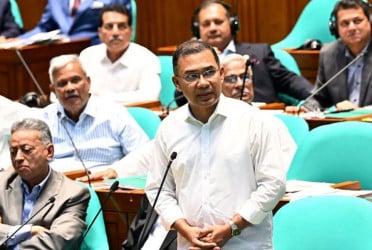
Call for diplomatic initiatives to resolve: BNP Standing Committee member Amir Khasru Mahmud Chowdhury said in a meeting with business leaders, “The issue must be resolved through political consensus in the national interest. Failure to adopt the right diplomatic and political strategy will have a devastating impact on the country’s exports, economy and employment.”
He warned that more than $8 billion in exports and more than 1.5 million jobs are at risk.
(Translated by Tanvir Raihan)