On 16 July, the National Citizens’ Party (NCP) organised a march in Gopalganj. What transpired around this “March to Gopalganj” programme has shaken the entire nation. As a result, not only did Gopalganj turn into a battlefield, but a new climate of unrest has emerged throughout the country.
Who is responsible for this?
It was publicly announced in advance that the NCP would go to Gopalganj. Everyone is aware of Gopalganj’s political sensitivity. It is widely known to be a stronghold of the now-banned Awami League. Just as certain areas in Bangladesh are traditionally loyal to specific political parties—Bogura is known as a BNP stronghold due to the late President Ziaur Rahman’s birth there; Rangpur has historically supported the Jatiya Party because of Ershad’s birthplace; and Feni is known for Khaleda Zia’s association—the people in such places tend to remain loyal to their local leaders, regardless of those leaders’ national image.
This trend isn’t new—it has been part of Bangladesh’s political landscape for decades. Even after the 1971 Liberation War, Muslim League’s Sabur Khan remained highly popular in Khulna. In Chattogram, the enduring popularity of Fazlul Quader Chowdhury and Salauddin Quader Chowdhury was widely known.
Gopalganj is no different. Therefore, when the NCP announced its plans to go there, it was the government’s responsibility to ensure heightened security and caution.
But now the question arises: did the government truly fulfill that responsibility? The NCP alleges that the police failed to perform their duties properly. The possibility of such an incident had already been anticipated. So, what preparations did law enforcement agencies have in place? In this context, many are now questioning whether this incident in Gopalganj was allowed—or even orchestrated—to happen in order to create a sense of national uncertainty.
Disturbing Parallels with Sohag’s Murder
There are unsettling similarities between the Gopalganj incident and the murder of Sohag at Mitford Hospital. In both cases, law enforcement stood by as mere spectators. In Gopalganj, when the situation got out of control, the army had to step in as saviors. Had the army not intervened in time and rescued the NCP leaders, the consequences could have been catastrophic.
Bangladesh’s law and order situation appears to be rapidly deteriorating. A state of instability is being manufactured. BNP leader Salahuddin Ahmed rightly remarked that a “mobocracy” is emerging. This instability seems to be deliberately engineered to create the public perception that a fair electoral environment does not exist. Is a certain group intentionally disrupting the democratic process to prevent elections? Has the government fulfilled its responsibilities?
The Role and Responsibility of the NCP
The NCP is a newly formed, youth-driven political party made up of veterans of the July Revolution. This is undisputed. However, political analysts believe the party should have taken a more strategic approach before proceeding to Gopalganj. There is no room for impulsiveness or emotional outbursts in politics. Politics is a calculated science; every step must be taken with thoughtful planning. The question now is: did the NCP really go to Gopalganj with a well-thought-out strategy?
The incident has ushered in a new dynamic in the country’s political landscape. It is also noteworthy that other parties such as Jamaat and Hefazat—who have shown support for the NCP—did not step in during the chaos. Why they didn’t support the NCP at such a crucial moment is something the NCP must now consider. As a result, the banned Awami League may now feel emboldened. They may believe that if such tactics are replicated elsewhere, they can begin to reorganise themselves.
This event has exposed the fragile state of our law enforcement agencies. It proves that the police are still not up to the task. Personally, I do not believe the Gopalganj incident was an isolated one. The role and failure of law enforcement must be thoroughly investigated. Why wasn’t early caution exercised? Why weren’t additional police deployed? Why didn’t the police initially seek support from the BGB or the military? Could it be that someone wanted this crisis to unfold?
Shadowy Forces Undermining Elections
For some time now, there has been a game of hide-and-seek surrounding the elections. The National Consensus Commission had promised to announce the “July Charter” this month, but instead continues to introduce new reform proposals that only complicate and obstruct the process. Every political party has its own agenda and ideology. Forcing a party to abandon its core principles in the name of reform violates democratic values.
Over the past three months, the Commission has held back-to-back meetings. Many now believe that its primary objective is to make the elections uncertain—or to delay them indefinitely. But who benefits from postponing elections indefinitely?
Who Wants to Prolong Power?
It is now evident that a certain faction within the government does not want elections to take place. They want to remain in power indefinitely. But to do so, they must earn public trust and serve public needs—something they are failing to do. The public is exhausted by mob violence and judicial abuse. Law and order has severely deteriorated. The economy is struggling, and businesses are nearly at a standstill. The government is doing little to correct these issues. They merely issue statements after each incident, when in fact they should be uncovering the truth, punishing the guilty, and preventing future occurrences.
Instead, some factions within the government are fueling blame games. After Sohag’s murder, one group targeted a particular political party, blaming them with inflammatory rhetoric. This kind of incitement is dangerous to a healthy political culture.
Two Political Streams—and a Dangerous Divide
At present, two distinct currents are shaping Bangladesh’s political reality. One wants a swift democratic transition and the protection of public rights. The other is not yet ready for democracy—they aim to reorganise internally while crushing their main political opponents. This has led to division, disunity, and escalating political violence—fueled by invisible forces. The Gopalganj incident is stark evidence of this divide.
It could have been avoided. If all parties had acted responsibly, the NCP rally could have ended peacefully. But emotion, provocation, overconfidence—and the total failure of law enforcement—have created a new crisis. This crisis now threatens to destabilise the entire nation. And the biggest victim will be democracy itself.
If democratic transition is obstructed, law and order will deteriorate even further. The government may lose control. Could it be that some within the government are intentionally creating this situation? If so, they are setting the stage for a disaster—for which they themselves will pay the highest price.
The Only Way Forward: Elections
Anyone who believes that delaying elections will benefit one party while harming another is living in a fool’s paradise. Each major political party in Bangladesh has a loyal voter base that believes in its ideology and will continue to defend it. These bases cannot be dismantled through coercion. A political party must connect with the people gradually, through engagement—not through force or rash decisions.
Gopalganj must serve as a lesson for all. It proves two things:
First, when political parties are divided, defeated autocratic forces can re-emerge and regain influence.
Second, the longer democratic transition is delayed, the more organised and powerful these forces become.
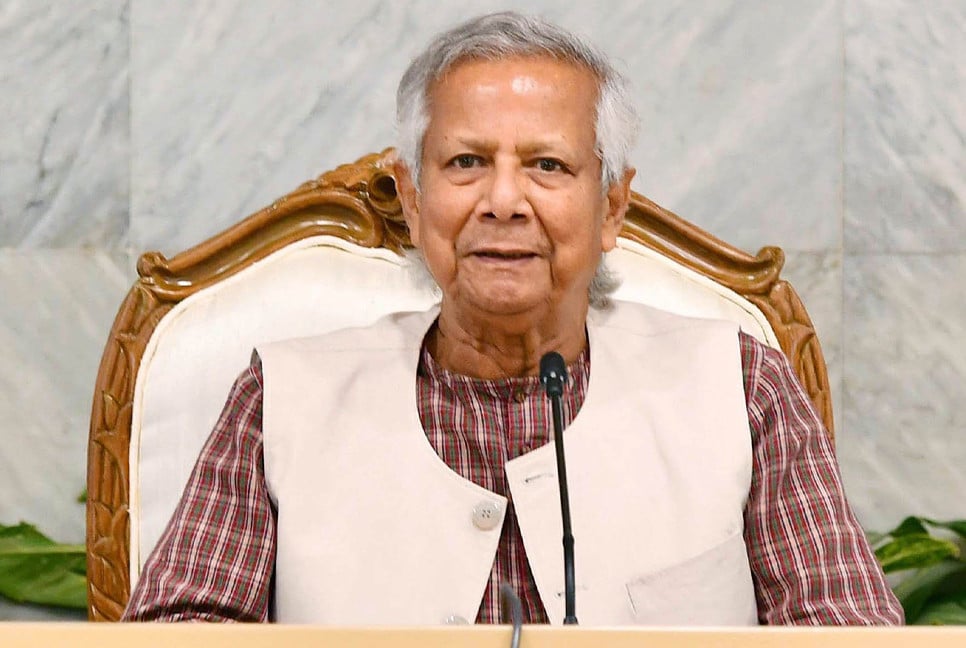
The only way to stop the rise of this “mobocracy” is to hold elections. The Chief Advisor has assured the public that elections will be held by February next year. If this promise is kept, instability may be reduced. But if elections become uncertain, the situation will spiral out of control. Unfortunately, it appears that a powerful faction within the government does not want those elections to happen. If they succeed, Bangladesh is heading toward a dark and dangerous future.
Audite Karim, Playwright and Columnist
Email: [email protected]