In 1947, India and Pakistan were partitioned based on the two-nation theory. A prominent slogan during the partition was “Pakistan Zindabad.” Later, the movements of ’52, ’69, ’70, and ’71 brought many more powerful slogans. Among the most resonant was “Pindi or Dhaka—Dhaka, Dhaka,” which became a chant on everyone’s lips in ’69. It continued to stir the nation through the Liberation War.
Now, 54 years after independence, the word “Pindi” has resurfaced in a slogan—this time paired with “Rajakar” (collaborator). Both Delhi and Pindi are extremely sensitive terms for Bangladesh. On Monday, a widely heard slogan by BNP leaders and activists across Dhaka and the country was: “The autocrat has gone to Delhi, the collaborators will go to Pindi.” While it may seem like just another slogan, there is deep political meaning within it. Even if belatedly, BNP—the party of Ziaur Rahman, the proclaimer of independence; Begum Khaleda Zia, the last bastion of nationalism; and Tareque Rahman, the heir of freedom fighter and sector commander Major Ziaur Rahman—has grasped that political reality. That is BNP’s current political breakthrough.
However, if this realisation remains confined to street slogans, it will not suffice. Every BNP member must embrace this consciousness and become skilled in modern technology to effectively counter all misinformation in the digital world. Otherwise, the BNP may fall victim to digital propaganda in the upcoming electoral battle.
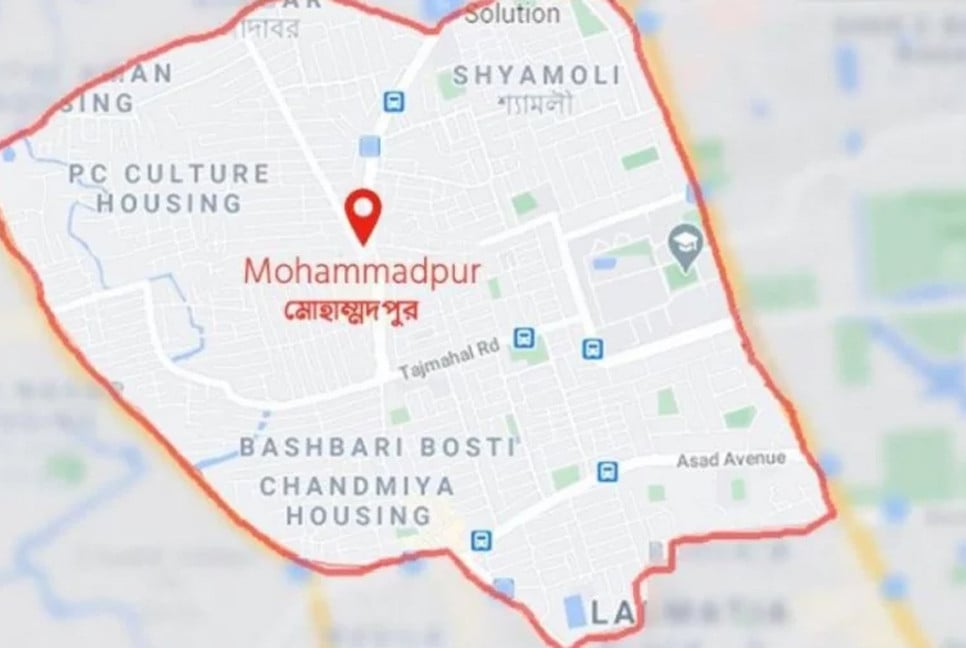
A few days ago, the political fallout from Sohag’s murder in Old Dhaka triggered a wave of character assassination among political leaders. It’s an unfortunate situation. Meanwhile, concerns are growing over the Bangladesh–US tariff agreement. After two rounds of discussions, Trade Adviser Sheikh Bashir Uddin gave little away in a press conference on Monday, stating only that he would not disclose the non-disclosure agreement. His statement has raised suspicions and doubts about the government’s intentions among concerned quarters.
BNP’s alliance with Jamaat-e-Islami has historically been short-lived. At every political turn, the nature of this relationship changes—its path shifts and its character transforms. Due to its anti-liberation stance, Jamaat’s politics were banned first by Sheikh Mujibur Rahman and later by his daughter, Sheikh Hasina. However, under Ziaur Rahman’s multi-party democracy, Jamaat found new life in politics. Since then, a cordial understanding developed between BNP and Jamaat. Yet, the foundation of trust has repeatedly faltered.
Over the past 16 years under Sheikh Hasina’s rule, both parties have faced various forms of repression. BNP Chairperson Begum Khaleda Zia was imprisoned and even denied advanced medical treatment. She was not allowed to travel abroad for care. Acting Chairman Tareque Rahman was exiled. Thousands of leaders and activists have been killed, disappeared, or imprisoned. Jamaat leaders were hanged or jailed. These 16 years have been harrowing for both parties.
Despite all this, the revolution and uprising by students and the masses have ignited a renewed determination to build a new Bangladesh. The people expected a breath of fresh air in post-July revolutionary politics, and inter-party harmony began to take root. On 13 April in London, Jamaat-e-Islami’s Ameer Dr Shafiqur Rahman and Nayeb-e-Ameer Dr Syed Abdullah Mohammad Taher met with former Prime Minister and BNP Chairperson Begum Khaleda Zia. On Armed Forces Day, three government advisers—Nahid, Asif, and Mahfuz—exchanged pleasantries with Khaleda Zia at the Sena Kunja. Both events had a profoundly positive impact in political circles.
Then, on 28 February, a grand event on Manik Mia Avenue saw the launch of the new revolutionary party, the National Citizen Party (NCP), attended by leaders from BNP and other political parties. All quarters welcomed the new party. However, within months, the gap between BNP and Jamaat, as well as NCP, widened. Following Sohag’s murder in Old Dhaka, the rift deepened further. Leaders from Jamaat and NCP began making disrespectful remarks and character attacks against BNP and its leader Tareque Rahman. This intensified online even more than offline, and it continues. The end is not yet in sight. Monday’s slogan is seen as a response to Jamaat’s anti-BNP propaganda.
As long as Bangladesh exists, there will be discourse around forces supporting and opposing independence. The country’s birth demanded immense sacrifice and bloodshed—this is a historical truth that cannot be denied. It is undeniable that Sheikh Mujibur Rahman and his party, the Awami League, led the Liberation War. It is also true that Sector Commander Major Ziaur Rahman declared independence. On the other hand, it is equally undeniable that Jamaat-e-Islami and its allies opposed Bangladesh’s independence. To their credit, even after 54 years, the party has never denied its anti-liberation role. This reflects a kind of political transparency.
After Sheikh Mujibur Rahman and his family were assassinated in 1975, his ideals and his party survived. But in the last 16 years, his daughter Sheikh Hasina has engaged in what many view as a commercialisation of her father’s legacy and Liberation War sentiments—erecting statues of her father at street corners, setting up Mujib Corners in offices and educational institutions, and naming hundreds of institutions after her family members with public funds. Ultimately, Sheikh Hasina has become the most authoritarian ruler in Bangladesh’s history. Her despotic behaviour led her to destroy her father’s legacy and the Awami League itself on 5 August, before fleeing to Delhi. The July revolution buried the memory of her father, and the monopoly over independence came to an end.
Since independence was never the exclusive property of the Sheikh family or the Awami League, the pro-independence force will always remain in Bangladesh. BNP, founded by Zia—the proclaimer of independence—has always been committed to protecting the country’s independence and sovereignty.
Political analysts believe that the political dynamics following Sohag’s murder have clarified BNP’s position—helping the party finally realise who its open and hidden adversaries are. Even if belatedly, BNP has understood that pro- and anti-independence forces can never be truly like-minded, although it had long considered Jamaat a kindred ally.
Just as a new unease has emerged in Bangladesh’s domestic politics, discomfort is also growing in Bangladesh–US trade relations. Trade analysts, political observers, and the business community believe that the tensions go far beyond tariffs. The government's negotiations aren’t just about commerce. Multiple non-trade issues are holding up progress.
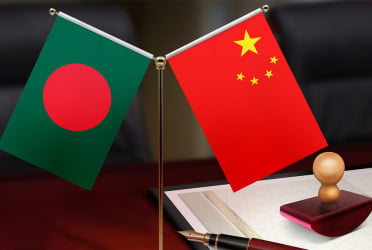
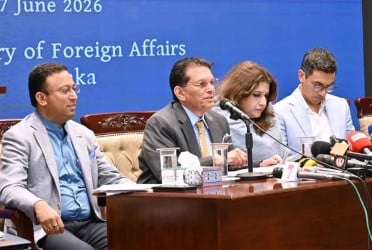
Next week, a Bangladeshi delegation will travel to Washington for a third round of talks. But no matter how much discussion occurs, the crux lies in the Non-Disclosure Agreement (NDA) with the US. The government has said very little about it. On Monday, government adviser Sheikh Bashir Uddin held a press conference. His body language suggested he held the conference merely to say nothing. This tendency to withhold information has led trade and business experts to believe that the US interest extends beyond trade—it is about geopolitical strategy. Washington wants to involve Bangladesh to ensure it doesn't lean too far towards China, expand business ties excessively, or allow major Chinese investments.
Reportedly, the US is seeking one or more framework agreements, including on security. To maintain not just commercial but also political and strategic influence in the region, the US—especially under the Trump administration—wants to ensure control over key issues like security. Given the current state of relations, the pressing question is: what sort of constraints will Bangladesh be bound by ahead of the election?
________________________
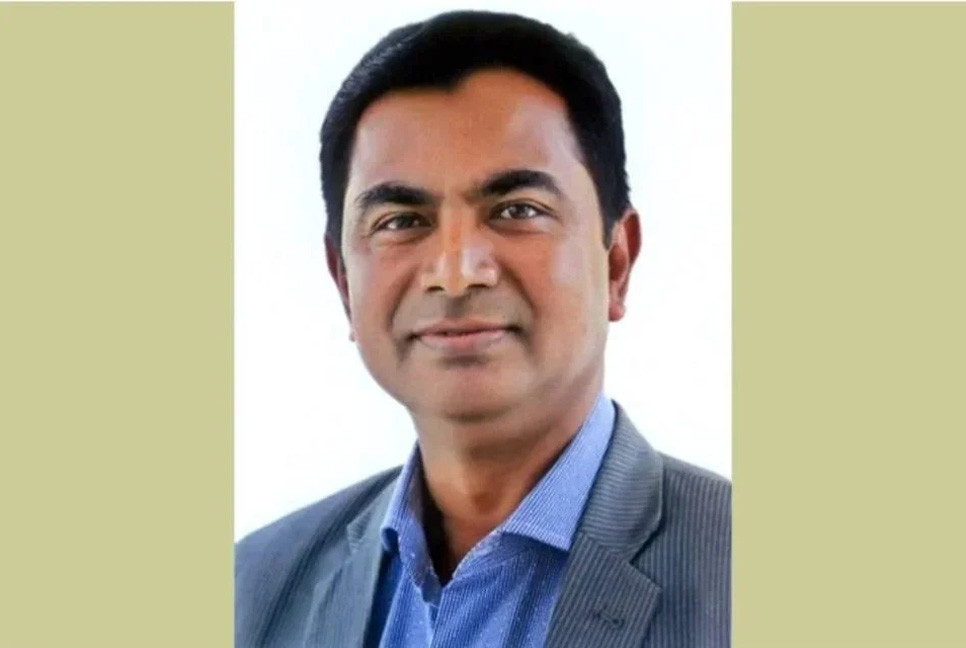
The writer is the Executive Editor, Bangladesh Pratidin. He can be reached at [email protected]