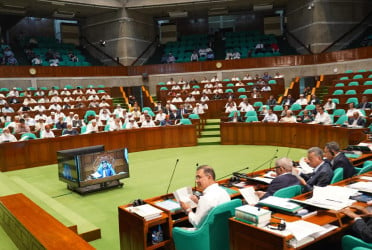
The political climate in Bangladesh is once again being marred by personal attacks, deepening rifts, and a growing culture of revenge — especially online — raising concerns about the future of democratic discourse in the lead-up to national elections.
Despite hopes that the mass uprising of students and workers would usher in a new era of respectful, constructive politics, observers said the situation is deteriorating. Political opponents are now targeting each other with increasingly harsh rhetoric, slander, and digital smear campaigns. At the center of recent controversies is the barbaric killing of Jubo Dal activist Sohag, which has intensified political mudslinging, an organized group is systematically targeting BNP acting chairman Tarique Rahman and spreading propaganda.
Political analysts said that the differences between political parties may hinder the path to democracy. They should reduce their differences quickly.
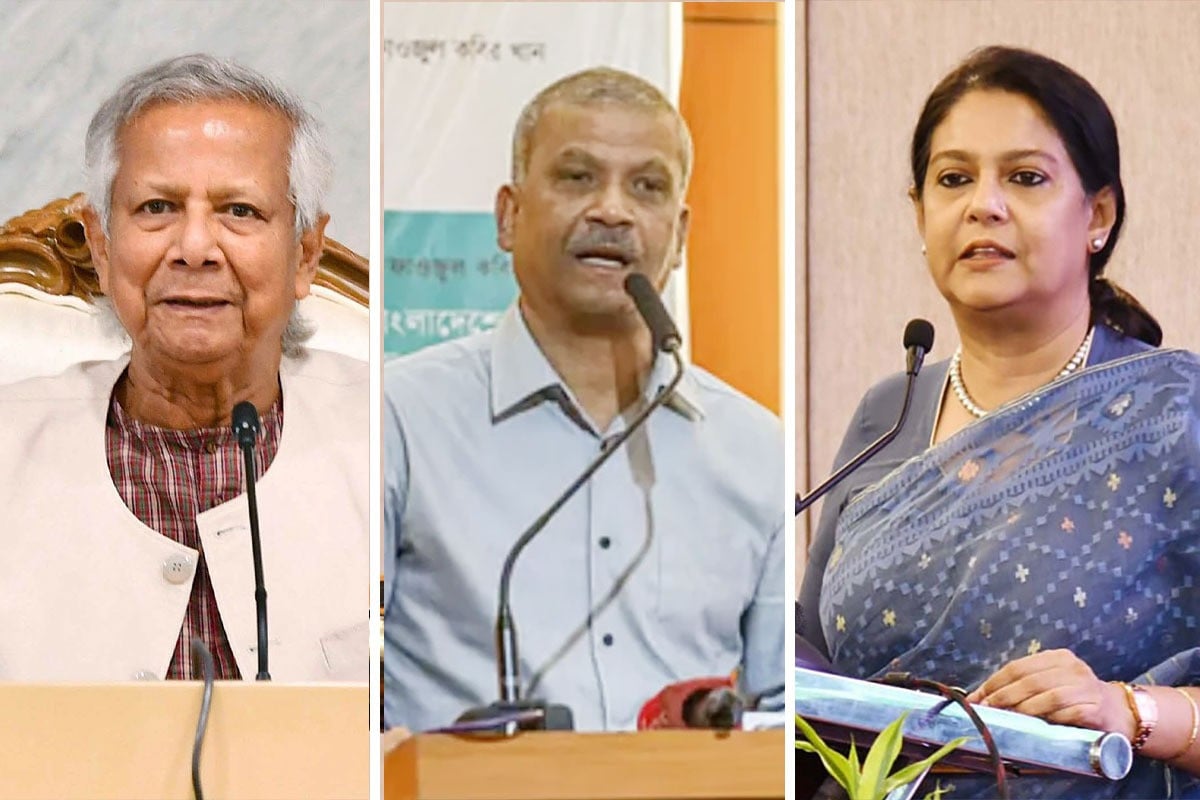
Political analyst Professor Dr. Mahbub Ullah told Bangladesh Pratidin that the politics is not free from conflict. In a democratic country, there are multiple political parties. Having many parties means there will be many opinions. There will be differences with opinions.
He said, “There is no point in making a big deal out of differences. It would have been better if the differences that have arisen at the moment had not arisen. There is a fear that the transition to democracy may be hindered as a result of differences. It would be reasonable for political parties to reduce their differences as soon as possible.”
Concerned people said that the tone of disagreement in the political field surrounding the next national parliament election is gradually intensifying. As the election approaches, the conflict is becoming more and more public.
Those who have been fighting shoulder to shoulder for a long time to restore democracy including the right to vote are now targeting each other after only 11 months. Even the conflict between the coordinators who led the successful mass uprising of students and the public in July-August and senior leaders of BNP, including the opposing statements, is becoming clear.
Long-time political allies BNP and Bangladesh Jamaat-e-Islami are making statements against each other.
Although BNP-Jamaat and other like-minded political parties have made great contributions and sacrifices in the 15-year movement against the autocratic Hasina. But with the issue of setting the election date and necessary reforms not being resolved, the question of the neutrality of the interim government has now been added.
BNP is saying that there are efforts to delay the election by deteriorating the law and order situation.
Meanwhile, some are trying to take special advantage of such hostile relations by spreading various rumors. It is natural that the Awami League in particular will take advantage of such a situation. Already, many fugitive leaders of the party are giving speeches through various media while abroad.
Political analysts are calling such a situation a complex equation. They said that after the debates about how much electoral reform will be done, when it will be done, and when elections will be held after the reform, the question of the neutrality of the interim government has now been added.
In addition, the abrogation of the 1972 constitution, the writing of a new constitution, the formulation of a declaration in the context of the July-August movement, and even the organization of a referendum could increase conflict more.
In a word, it can be said that the national unity of the July Revolution is breaking down due to conflicts of interest. However, for the sake of the country, it is important to have national unity among the fascist anti-Hasina forces first and foremost.
Political analysts believe that the cracks in the understanding between the government and the political parties are becoming clearer day by day. The ousted Awami League and its allies will benefit the most from this.
They said that the national elections are coming up. The elections will be held in this country in six months or a year. The closer the elections get, the clearer the conflicts will become. The attempt to outdo each other without compromising their own interests will continue. Attacks and counter-attacks will increase. If BNP sees that students are their rivals in the upcoming elections, they will not spare the students either. This is natural. This is politics.
On the other hand, students also see that their main rival is now BNP. That is why they are also talking about BNP. These signs have already started to appear.
Political analysts believe that the current tone of disunity is not at all beneficial for the future of the country. Therefore, any distance or misunderstanding between the political parties of the country and the forces of the mass uprising is not desirable. Nor is it desirable to have contradictory statements between each other that incite conflict. If that happens, those who are opposed to the ongoing reform process in the country may become encouraged and reckless.
(Translated by Tanvir Raihan)