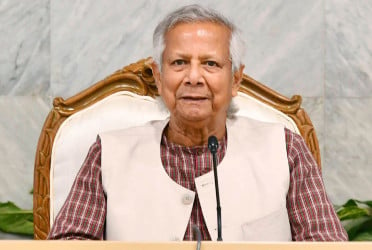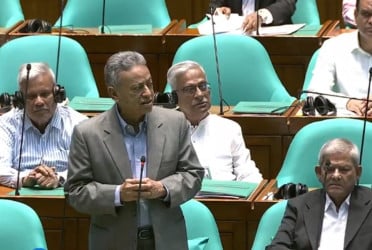
Golam Dastagir Gazi—terror of Rupganj in Narayanganj, a fearsome criminal. Over the past fifteen years there is scarcely a crime he has not committed. Although outwardly a “businessman,” in truth he is a ruthless looter. On one side stands his mild face, forever pretending to be ill to win sympathy; behind the mask of a “good man” he is a land‑grabber, terrorist, drug‑trafficker, and many‑faced philanderer.
There is hardly any wrongdoing in Rupganj with which Gazi is not involved. Just outside Dhaka, he has turned Narayanganj’s Rupganj into a sanctuary of crime, establishing there a literal family monarchy in which Golam Dastagir Gazi reigned supreme. Under fifteen years of Awami League misrule, life in Rupganj became even more unbearable—because of Golam Dastagir Gazi.
Land‑grabbing, terror, narcotics, murder, enforced disappearance, looting, persecution of minorities—he is the “Qazi” of every crime. Yet the remarkable fact is that Gazi’s rule over Rupganj was not solo; he turned it into a family enterprise in which his wife, son, mistress, even his APS all competed in plunder—calculating who looted the most over the past fifteen years would be difficult indeed.
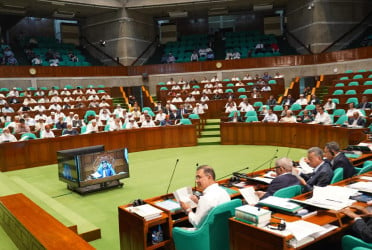
Throughout those fifteen years of Awami autocracy, nothing happened in Rupganj outside Gazi’s word. He became the sole sovereign; any refusal to obey his will drew the sword of oppression. No one dared whisper a protest. Under Gazi’s reign the local Awami League itself became a “Gazi League,” with every position captured by members of the Gazi family, thereby installing a family monarchy. In Rupganj a saying spread: no matter what the crime, Gazi is involved.
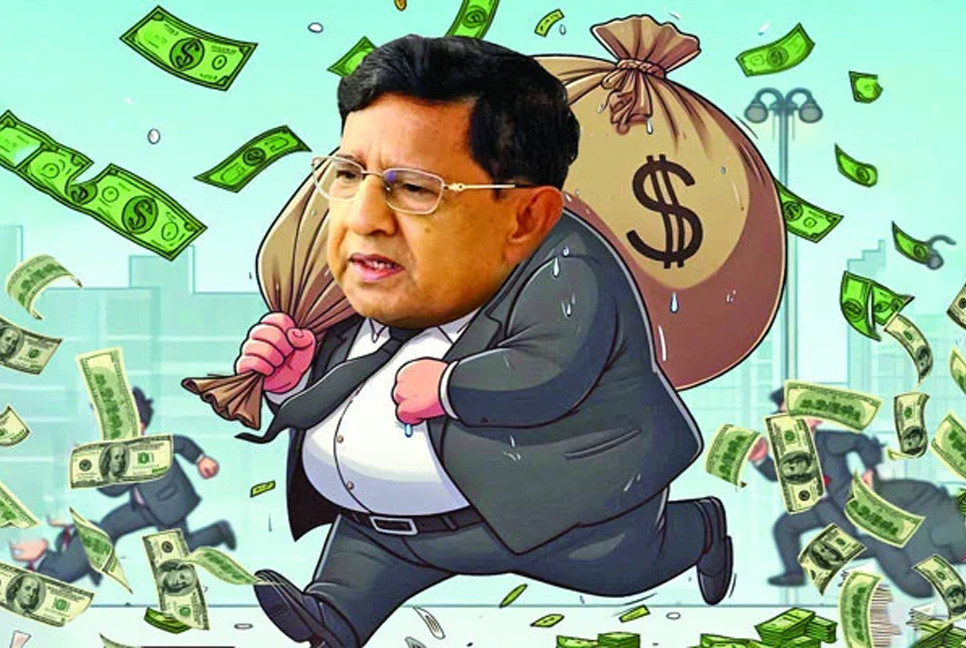
After the Awami League’s fall, the Anti‑Corruption Commission (ACC) is now probing Gazi’s illegal wealth. The ACC has launched an inquiry into allegations that Golam Dastagir Gazi amassed and laundered thousands of crores of taka in illicit assets through abuse of power and corruption. While the Awami government was in office, Gazi allegedly built this fortune in his own name and benami, siphoning money abroad via hundi, under‑invoicing and over‑invoicing.
It is alleged that Gazi laundered money to the U.K., U.S., Canada, Singapore, and Dubai, purchasing luxury houses, cars, and businesses, even using Malaysia’s “My Second Home” programme. ACC’s preliminary findings show that in 15 years his assets and debts both exceed 1,000 crore taka. He now holds roughly Tk 1,446 crore in movable and immovable assets against bank loans of Tk 935 crore—total liabilities Tk 1,022 crore.
Over the same 15 years his wife Hasina Gazi—former mayor of Tarabo Municipality—saw her movable wealth rise from Tk 21.9 million to Tk 69 million, and her immovable property from Tk 38.7 million to Tk 46.2 million. The gold jewellery she lists is valued at just Tk 24,000. The minister’s wealth grew twenty‑five‑fold, and bank loans twenty‑one‑fold; since August he is a loan defaulter for failing to repay instalments.
Beyond declared statements lies a vast trove of undeclared illegal wealth. From harbouring armed thugs and terrorists to drug trade, killings, disappearances, and land grabs—Gazi’s name is attached. These illicit enterprises were the main source of his black money, maintained by a special force he created.
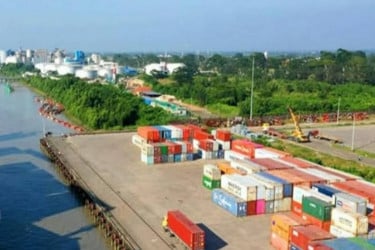
Anyone daring to protest his wrongdoing faced lawsuits, assaults, and torture. He is accused of grabbing land, deploying gangs for murder and disappearance. Almost every government facility built in 15 years was named after Gazi, often on farmland seized from ordinary people, later filled with sand and sold to companies. Whole industrial plants and housing projects have gone up on grabbed land; many minority families were driven out by his tyranny.
Investigations reveal that in areas such as Kaeria, Porshi, Bariyachhni, and Kumarpara, hundreds of Hindu families lived; Gazi fenced off 80 percent of their land for his “G‑Park,” filling it with sand. The grab was overseen by land‑grabber Iman Hasan Khokon, one of Gazi’s henchmen. In Khadun he built Gazi Tyre Factory, grabbing about 80 percent of the land—detailed lists cite scores of bighas seized from named owners. Pasha Group alleges the factory’s staff quarters stand on 139 shatak of its land; lawsuits followed, employees were beaten.
Exploiting party post and ministerial power, Gazi and family grabbed some 1,500 bighas of Hindu, Muslim and state land across many unions. Drug trafficking flourished under his control, as did rape and murder. Rupganj became a depot of legal and illegal arms and drugs, controlled by his son “Pappa” and APS “Dada Emdad.” His wife too wielded unchecked power, while a supposed mistress “Neela” extended the criminal empire.
Since the 5 August fall of the Awami government, locals have begun to speak: Gazi’s land‑grabs, drug trade, and murders have turned Rupganj into a criminal haven. Grabbing party posts also: father a minister and upazila AL president; son senior vice‑president; mother AL women’s president and municipal mayor. Gazi, his son, wife, and mistress openly competed in terror, drugs, and land‑grabs—protected by the “Gazi Bahini.”
Though Golam Dastagir Gazi was arrested after 5 August, many of his thugs remain active, still running the Gazi family’s criminal empire.
Bd-pratidin English/TR