
The political consensus forged during the July uprising now appears to be crumbling. Once united in their stance, key actors in that unity are now sharply divided—hurling insults and accusations at one another in a manner that is not only unbecoming but often unprintable and deeply disturbing. This political disarray, critics argue, has created space for a surge in lawlessness and mob violence.
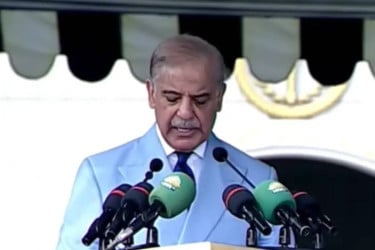
Back on 25 February, during the National Martyrs’ Day of Armed Forces, Chief of Army Staff General Waker-uz-Zaman delivered a pointed message at a remembrance event at RAOWA Club. Without mincing words, he warned that if political groups continued their infighting—engaging in mudslinging, clashes, and destructive competition—the country’s freedom and sovereignty could be put at risk. “This country belongs to us all,” he stressed. “We want peace, not conflict. We may differ in opinion, but at the end of the day, we must remain united for the sake of the nation.”
His speech, unusually detailed and emphatic for the typically reserved General Waker, was widely discussed in both political circles and among the general public. He used the word “caution” repeatedly and declared unequivocally: “We are moving toward a free, fair and inclusive election,” adding, “If you heed my advice, you will benefit—I assure you.”
However, nearly five months on, many seem to have forgotten that warning. The political landscape is now mired in arguments over whether reform or elections should come first, over proportional representation, and over countless other policy distractions. A toxic culture of character assassination has re-emerged, undermining the unity that once defined the July movement.
After the fall of Sheikh Hasina’s regime on 5 August and the formation of an interim government, the army chief reiterated his concerns. But in the 9–10 months since then, political actors—especially some student leaders of the July uprising—have sown discord, contributing to growing public unease. Meanwhile, the Ministry of Public Administration has extended the army’s deployment with magisterial powers for another two months, a sign of the state’s ongoing reliance on military stability in the face of political fragmentation.
Despite the renewed mandate, the army has shown restraint. Observers note that the army is not aggressively using its judicial powers. This reflects not only professionalism but an understanding of the public pulse. Unlike many armies in the region, Bangladesh’s military enjoys a unique relationship with its people—born not from force, but from solidarity with the public during the Liberation War of 1971.
That historic bond has grown stronger over time. In the eyes of many, the Bangladesh Army today is not just a military institution but a vital organ of the people. Its members are deeply engaged in national service—responding to natural disasters, rescuing flood victims, rebuilding infrastructure, and bringing education and welfare to remote hill regions.
The army’s role in the Chittagong Hill Tracts is a case in point. There, they are not only ensuring security but also building schools, supporting poor students, and upholding harmony. On the global stage too, Bangladesh’s troops have earned honour in peacekeeping missions, contributing not just with force, but by teaching, farming, and humanitarian assistance.
It is precisely this reputation that makes the army unpalatable to some political quarters. These actors were hoping for the withdrawal of the military from the field—only to see those hopes dashed by the latest government order. As political discord deepens, speculation abounds and public anxiety mounts. In this environment, the army remains one of the last institutions the public still trusts.
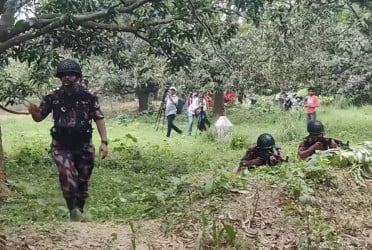
Given their magisterial authority, the army can now arrest criminals without prior approval, enforce warrants, disperse unlawful assemblies, and detain suspects. But their reluctance to overstep that authority is telling. It speaks of professionalism, restraint, and respect for civilian space. They act only when needed.
As the country faces serious regional and domestic security challenges, the burden on the army continues to grow. Alongside their primary duties, they are filling gaps left by a weakened and politicised police force and other security agencies still struggling to regain credibility. From securing strategic sites and highways to protecting foreign diplomats and embassies, the army is holding the line.
That line, however, could be threatened by further political infighting. The very fate of the July alliance hangs in the balance. If unity breaks down, the consequences—warned of so clearly by General Waker—could be severe.
The political leadership must realise that the luxury of division is one the nation can no longer afford. To preserve national security, protect democratic transition, and avert further chaos, they must come together—just as they did in the wake of the July uprising.
Writer: Journalist and columnist; Deputy Head of News, Banglavision