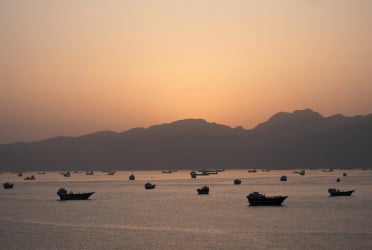
Located in the remote southern region of Kalapara in Patuakhali, the Payra Seaport stands as both a beacon of promise and a subject of debate. Around Tk 14,000 crore (140 billion BDT) has been invested in the project so far, but it has generated only Tk 2,000 crore in revenue. Progress has been slow, with profitability expected by 2043. While some view the port as a stepping stone for southern Bangladesh’s economic growth, others argue it's an expensive misstep that will ultimately burden the nation’s citizens.
The project, which began in 2013, has reached approximately 90% completion. The goal is to commence full operational activities by July 2026. However, many question how sustainable the future of the port truly is.
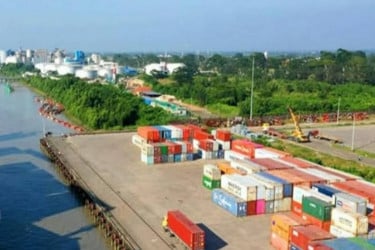
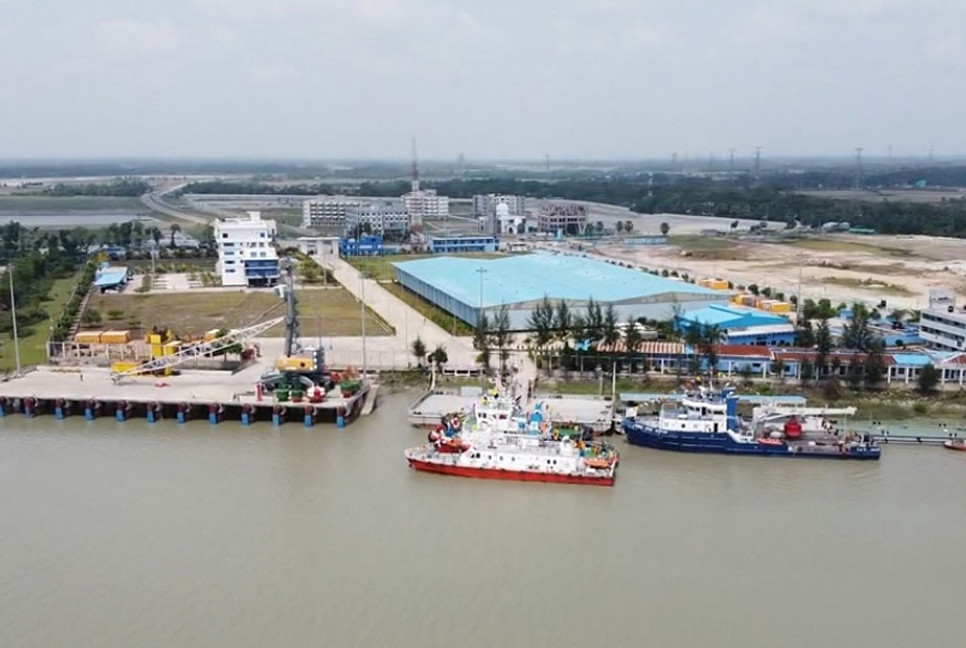
On-site observations show that the construction of a modern jetty has been completed. Road widening is ongoing. A 1.2-kilometer bridge is currently under construction across the Andharmanik river. Around the port, numerous shops, hotels, motels, transportation services, and construction-related work have engaged thousands of workers. Once deserted land is now bustling with activity.
According to Mustafa Ashique Ali, Executive Engineer (Jetty) of the Payra Port Authority, 90% of the work is done. A 650-meter-long jetty is ready. Once the bridge and highway work is completed, a fast and smooth connection with Dhaka will be launched.
He said, “We aim to begin full operations from July next year. Ships carrying coal and stone have already docked. Preparations are in place to handle all types of cargo, including bulk goods and vehicle-carrying cargo.”
The executive engineer also noted that approximately Tk 14,000 crore has been spent so far, with revenue exceeding Tk 2,000 crore. The channel depth is over 6.5 meters, allowing mother vessels carrying 40,000 to 50,000 metric tons of goods to dock. If dredging increases the depth to 10.5 meters, it would become the country’s deepest channel. The port has already initiated the procurement of two hopper dredgers.
Due to silt transportation, sediment accumulates in the channel. However, with its own dredging system, costs would decrease. Earlier, the cost per cubic meter was €2.88, but now it has been reduced to €1.60, he added.
He further informed that the river route from Dhaka to Payra is the easiest and cheapest. Unlike other ports, there is no need to wait for tides as the river is naturally deep. Recently, the government proposed three new projects worth Tk 5,312 crore to further develop Payra Port. Among them, Tk 3,174 crore will be spent on dredging the Rabnabad Channel to maintain a depth of 10.5 meters. Two hopper dredgers will be bought for Tk 1,400 crore. Projects worth Tk 161 crore and Tk 490 crore have been planned for digital systems and staff housing, respectively.
According to port officials, under the DISF project, administrative buildings, roads, a rehabilitation area, and the jetty have been built. Under the PPFT project, work is underway on cargo handling, terminal, and power connections. These two projects have achieved 85% to 93% progress. However, two container terminals, an LNG terminal, a railway connection, and a ship repair facility are still incomplete. Equipment like mobile harbor cranes, trailers, and tractors have arrived.
Economist Dr. Moinul Islam said, “Payra cannot become a deep-sea port; it will remain a river port. The government has engaged in unreasonable spending trying to create an alternative to Chattogram Port. It may handle coal, but large vessels cannot dock directly.”
Research shows that the channel's depth varies between 5 to 15 meters in different areas. To maintain the 60-kilometer-long Rabnabad Channel, 100 million cubic meters of sediment must be dredged annually, costing around Tk 8,000–10,000 crore. Environmental experts warn that a major cyclone or tidal surge could shut the channel down.
Despite these challenges, there are grand plans for Payra Port. Under public-private partnerships, two container terminals, a multipurpose terminal, and a liquid bulk terminal are being planned. Additionally, there are plans to generate 400 megawatts of renewable energy on 1,200 acres of land. The goal is to make the port profitable by 2043.
The port authority envisions that this initiative will spur industrial growth in the southern region, generate jobs, and bring new momentum to the country's export trade.
Several business conglomerates, including Bashundhara, TK, PRAN-RFL, Madina, and ACI, have already expressed their interest in investing. Additionally, countries such as China, Japan, Denmark, Saudi Arabia, the UAE, Kuwait, and Qatar have shown a willingness to invest in Payra Port.
(Translated by Afia Nanjiba Ibnat)