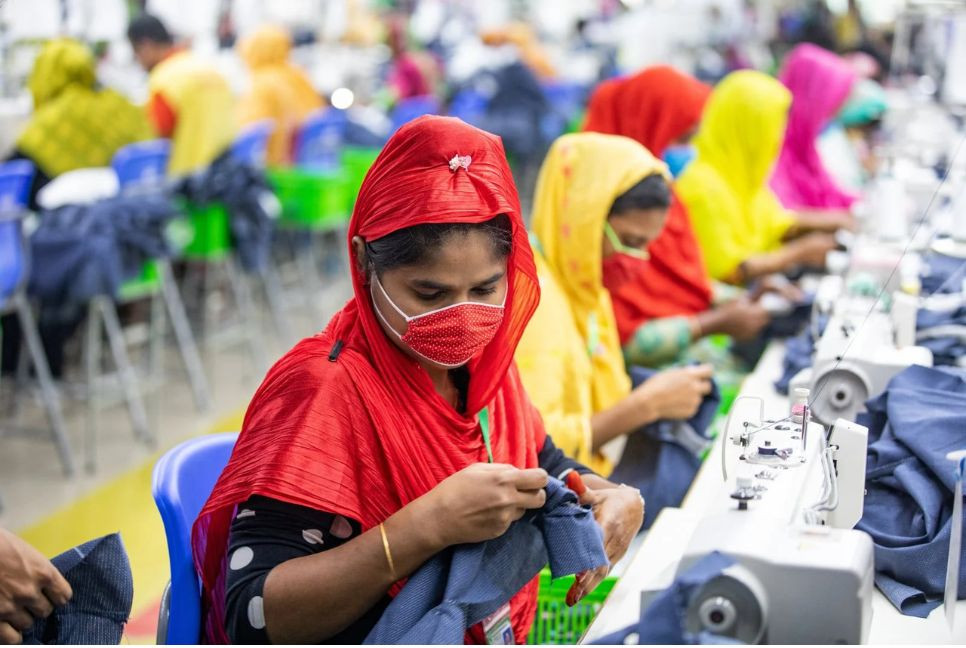
Bangladesh’s textile sector — home to the country’s largest single private sector investment totalling over Tk 2.5 lakh crore — is now facing a deep crisis, with industry owners looking to sell factories at bargain prices.
The previous year, more than 20 textile mills shut down, putting at risk the livelihoods of approximately four million people directly and indirectly linked to the sector.
Industry leaders report that despite being the backbone of Bangladesh’s export economy, the textile sector has received little policy support from the government.
Over the last 25 years, prices of gas and electricity have increased several-fold, significantly raising production costs while decreasing output.
Meanwhile, dollar shortages, taka devaluation, working capital shortfalls, soaring bank interest rates (up from 9 percent to as high as 16 percent), and a sharp decline in cash incentives for exports have left the sector reeling.
Compounding the crisis are complications in importing capital machinery and opening Letters of Credit (LCs), along with burdens such as advance income tax (AIT), including a 2 percent AIT on imported cotton. These issues have created a sense of uncertainty, provoking many industrialists to seek exits.
According to the Bangladesh Textile Mills Association (BTMA), which represents 1,858 spinning, weaving, and dyeing-printing-finishing mills under the primary textile sector, at least 20 mills have closed over the last year alone.
With investments totalling nearly $23 billion, the textile and apparel industry accounts for around 85 percent of Bangladesh’s total export earnings, with the textile sector supplying nearly 70 percent of the raw materials.
BTMA Vice President Md Saleud Zaman Khan remarked, “Gas was our strength, once. Low gas prices allowed us to stay competitive. Now, gas prices have more than doubled, and incentives are being withdrawn. In contrast, neighbouring countries are offering production-linked incentives. We’re being forced to pay advance taxes before even making any income, which is not adjusted later.”
BTMA Director Abdullah Al Mamun added, “Textile mill owners are now desperate to sell off their factories. There’s no gas, no funds in the banks, and the AIT burden is crushing us. Even though we pay advance income tax, it's never adjusted. That’s why we’re considering fire sales of our factories.”
BTMA Director and engineer Razeeb Haider warned of a looming chain reaction: “If textile mills close, the garments sector will be next. Our yarn and fabric factories are shutting down due to gas, electricity, and tax issues, while neighbouring countries are increasing their support. The garments sector may survive another year, but not much longer if this continues. Our financial situation is dire.”
Is this a systemic policy failure?
BTMA President Showkat Aziz Russell cited rising gas prices (more than doubling), higher electricity tariffs, dollar scarcity, and sharp taka devaluation as key contributors to working capital shortfalls and escalating borrowing costs. "Bank interest rates have jumped from 9 percent to 15-16 percent, and cash incentives on exports have declined drastically," he said.
Russell also warned about duty-free yarn imports from neighbouring and other countries, which are now undermining domestic mills. “This unfair competition adds another dimension to our already critical challenges. Unless addressed, many mills may soon be forced to shut down,” he said.
Although a meeting on July 7 saw a government assurance that the 2 percent AIT on cotton and fibre imports would be removed, no concrete step has yet been taken. "Producers in neighbouring countries are benefiting at our expense because of policy inaction," Russell said. "Globally, no country imposes duties on raw materials for intermediary industries like ours."
Industry stakeholders are now calling on the government to provide immediate relief through policy reforms — including the withdrawal of advance income tax (AIT) on raw cotton and fibres, restoration or enhancement of export cash incentives, stable utility pricing, relaxed LC-related import restrictions, and access to affordable working capital.
Unless swift and meaningful action is taken, stakeholders warn, the very survival of the country’s most vital industry is at stake — along with millions of jobs and the long-term health of the export economy.
Bd-pratidin English/FNC