Over the past 16 years, Bangladesh has plunged into a deep political darkness marked by the rise of authoritarian rule and the shrinking of civil liberties.
In an atmosphere thick with fear, harassment, and repression, most citizens chose silence. It was during this time that both domestic and international human rights organizations stood firm—unflinching in the face of an oppressive regime, committed to truth. This column is written in honor of their courage.
Even before the international community formally recognized the oppressive atmosphere, its signs had become increasingly evident within Bangladesh.
In June 2010, BNP-backed Dhaka City Corporation councillor Chowdhury Alam went missing—an early example of enforced disappearances under the fascist Awami League regime. But it was the mysterious disappearance of influential BNP leader Ilias Ali in 2012 that shook the nation’s conscience. That incident became a symbol of state cruelty and impunity—the beginning of a long, dark chapter.
On the night of May 5, 2013, thousands of activists and supporters of Hefazat-e-Islam gathered at Shapla Chattar in Motijheel, Dhaka. This conservative Islamic group presented 13 demands, claiming to protect religious values. That night turned into one of the darkest episodes in Bangladesh’s history. In a joint operation by RAB and police, countless scholars and orphans were killed. This horrific crackdown later became known as the Shapla Chattar Massacre. Amnesty International called for an independent investigation. Local human rights group Odhikar reported the death toll as 61—significantly higher than the government's numbers. The consequences were dire: Odhikar’s secretary Adilur Rahman Khan was arrested, their office raided, and eventually, the organization's NGO registration was revoked—an act of vengeance by authoritarian Hasina for revealing the truth.
Then came January 2014—one of the most controversial national elections in Bangladesh’s history. The main opposition party BNP boycotted the vote, resulting in over half the 300 parliamentary seats being uncontested. Election day was marred by violence, arson, and widespread voter intimidation. International observer groups refused to monitor due to lack of transparency. Human Rights Watch and Bangladesh’s prominent rights group ASK (Ain o Salish Kendra) condemned the process as "devoid of voters and hostile to democracy." A dirty politics of vengeance followed, involving smear campaigns, harassment of activists, and administrative hurdles designed to cripple civil society organizations.
In 2018, a wave of student protests emerged—first for quota reform in government jobs, then for safer roads. University students demanded merit-based recruitment over quota-based systems. After a tragic road accident killed two school students, mass protests erupted across the country. Though both protests began peacefully, they quickly transformed into widespread movements.
The 2018 national election—later notoriously dubbed the “midnight election”—became a monument to the death of democracy. The opposition, especially the BNP, faced relentless obstacles during their campaign: arrests, bans on rallies, and even violence. Though the vote was held on December 30, reports indicated that many ballot boxes were already filled the night before. There were allegations that results had been decided before polls opened. Human rights groups like Amnesty and Human Rights Watch condemned the election unequivocally, calling it neither free nor fair.
In August 2018, world-renowned photographer Shahidul Alam was arrested after criticizing the government in an Al Jazeera interview. He spent over 100 days in jail and later testified to physical and psychological torture.
In 2020, cartoonist Ahmed Kabir Kishore was arrested under the Digital Security Act. After 10 months in jail, he alleged brutal torture. His co-accused, writer Mushtaq Ahmed, died in custody in February 2021. His repeated bail applications were denied. Mushtaq’s death sparked outrage both domestically and internationally. The brutality and repression drew global condemnation.
I, too, became a victim of this repressive legal machinery. As a university professor and columnist, I was punished simply for expressing my views. I was wrongfully dismissed from the University of Dhaka and deliberately defamed in the media. My character was assassinated. But amidst this darkness, Amnesty International’s steadfast and swift response provided a glimmer of hope. Their international advocacy brought attention to my case, and eventually, I was reinstated by the highest court.
Amnesty International called the Digital Security Act a “tool of fear” and demanded its immediate repeal. Human Rights Watch labeled it repressive and accused the government of using it to silence media and political expression. Reporters Without Borders ranked Bangladesh the worst in South Asia for press freedom, blaming this law’s misuse as the main culprit.
Between 2013 and 2019, cases of enforced disappearances and extrajudicial killings surged, targeting opposition members and critics of the regime. The affected families—especially mothers—first began informal networks and later formed a solidarity platform named “Mayer Daak” (A Mother’s Call). By 2014, they had started connecting. On March 12, 2016, the platform was formally launched. Through press conferences, human chains, and public hearings, they shared heart-wrenching stories of the disappeared. In December 2016, more than 20 families shared their stories at a large public gathering.
These heart-rending narratives drew international attention. Amnesty International, Reporters Without Borders, and Human Rights Watch echoed their voices—exposing a grim reality the state had long denied. The global case against RAB (Rapid Action Battalion) was built on tireless year-round documentation, fearless reporting, and the tearful testimonies of victims’ families.
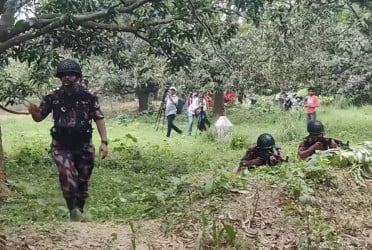
One particularly tragic case was the killing of Teknaf municipal commissioner Ekramul Haque in 2018. RAB claimed he died in a “crossfire.” But a leaked audio recording later captured Ekram’s final phone call with his family—clearly proving he was alive, unarmed, and terrified. The "shootout" narrative was exposed as a deliberate fabrication. Local groups like Odhikar and ASK have maintained unbiased records of “crossfires” and arbitrary arrests for years. For this, they have faced threats, state surveillance, and legal harassment.
Ahead of the 2024 national elections, Bangladesh witnessed a wide-scale crackdown aimed at eliminating political opposition. Thousands of BNP leaders and activists were arrested in police raids. Peaceful protests were crushed using water cannons, rubber bullets, and mass detentions. Human Rights Watch described this as an “organized assault on opposition politics” and warned that such actions made free and fair elections virtually impossible. Amnesty International echoed these concerns and highlighted how the judiciary was being weaponized as a tool of oppression.
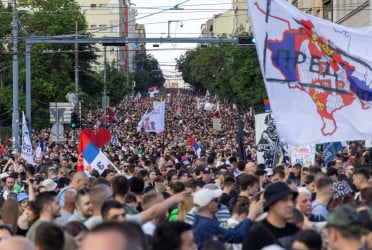
After the one-sided “dummy election” in January 2024, Bangladesh reached a crossroads in July. Years of repression, denial of political rights, enforced disappearances, economic hardship, and suppression of free speech finally erupted. University students first took to the streets. Garment workers, rickshaw drivers, teachers, and citizens joined in a unified mass movement. Their demands were for accountability, dignity, and civil rights.
The state's response was brutal. Live ammunition was fired at unarmed protesters. Mobile networks were cut, ambulances blocked, hospitals warned not to treat the injured. Snipers were placed on rooftops, and mass arrests and abductions began at night. Reporters Without Borders confirmed that in just the first three weeks, 31 journalists were arrested, 12 were tortured, and 3 disappeared—still missing to this day.
The state had declared war on its own people—merely to silence them. Yet amid this terror, the courage of ordinary people wrote a new chapter in history. Many were teens or youth. Armed only with placards, but driven by an unbreakable will for truth. They turned fear into resistance. Their stance was not just against a tyrannical regime but against a longstanding system of impunity.
In February 2025, the United Nations Office of the High Commissioner for Human Rights (OHCHR) released a fact-finding report. It stated that at least 1,437 people, including children, were killed during the protests. The report labeled the violence as a “potential crime against humanity” and called for an independent international investigation.
What happened in July 2024 was not just a protest—it was a response, a national awakening. The struggle is not yet over. Authoritarianism does not end merely with a change in leadership—it recedes, hides, and returns wearing a new mask. Institutions weakened over years must now be rebuilt—not only structurally, but with ideals, justice, and trust.
The wounds on the minds and bodies of the people will take time, courage, and collective remembrance to heal. And yet, for the first time in many years, a new hope lies ahead. We are no longer alone. We are joined by the brave organizations and individuals who, despite losing their lives, dignity, or facing injustice, never abandoned the truth—Amnesty International, Human Rights Watch, Reporters Without Borders, Odhikar, ASK, and countless unnamed human rights defenders.
Your courage has given us the chance to rebuild our future. We must not let it go in vain.
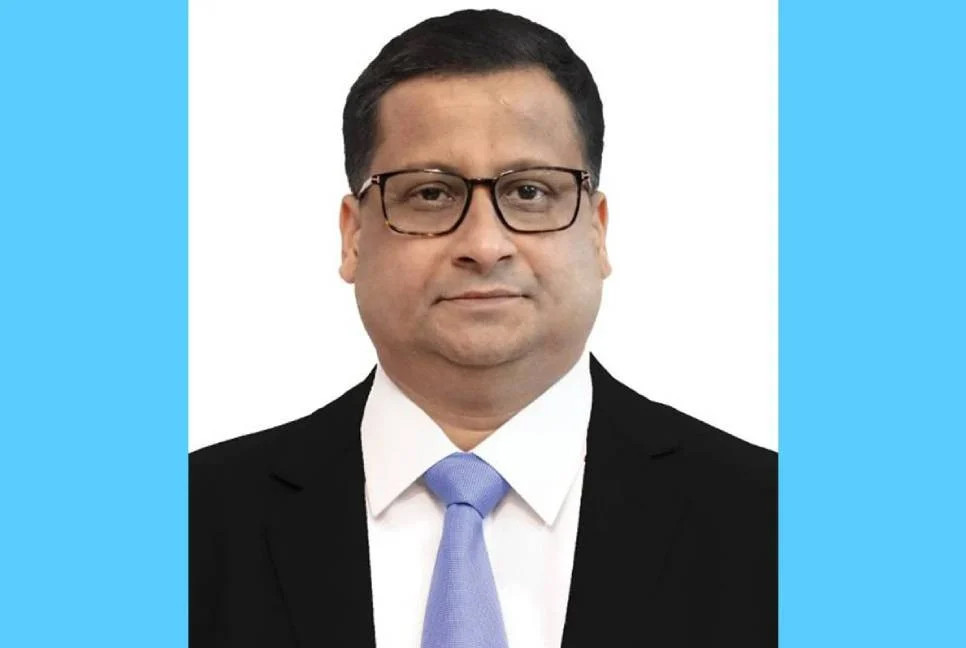
Author: Professor, University of Dhaka; Convener, Shada Dal