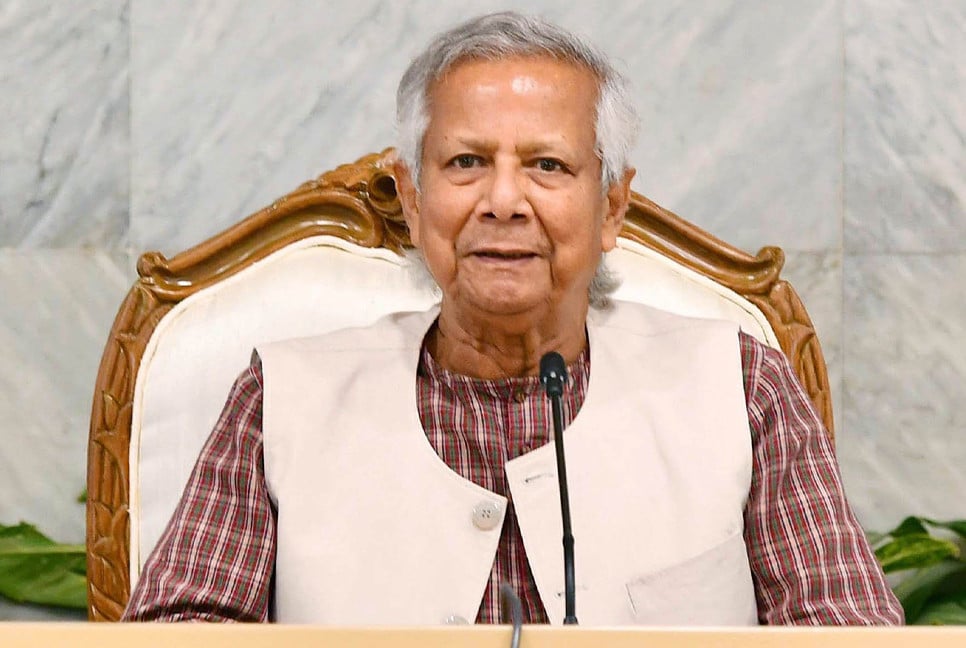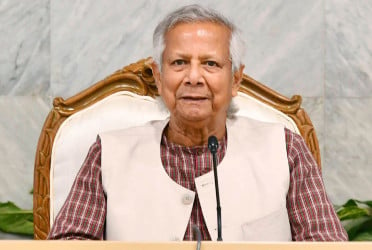
As time flies, along with hopes for the “most beautiful election in history” promised by Chief Adviser Dr. Muhammad Yunus of the interim government, the BNP (Bangladesh Nationalist Party) continues to demand the immediate transfer of power to an elected government.
BNP has not hesitated to label the interim government under Dr. Yunus as "unconstitutional" and even advocates for keeping the current president in office. The party has also rejected any kind of reform before the election.
Now, with the absence of the Awami League and a nearly uncontested path to power, BNP is unwilling to let go of such a golden opportunity. Since 2006, BNP has remained out of power for 19 years, and for the last 16 years, under the domination of the Awami League, they’ve been unable to get close to authority. Now, power is finally within reach.
Even before the election, BNP’s local leaders and activists and its affiliated organizations have assumed that BNP is already in power, with the interim government being merely a formality. Since August 5 of last year, BNP supporters have begun seizing control of extortion and racketeering empires abandoned by the Awami League.
In order to secure these newly claimed territories, they have engaged in violent clashes, leading to numerous deaths and injuries.
There have been incidents where law enforcement, when attempting to take legal action, were met with resistance—BNP members have stormed police stations, snatched convicted extortionists, vandalized facilities, and assaulted officers.
According to a report in a national daily, since August 5, over 4,500 BNP activists have faced internal disciplinary action due to involvement in violence, extortion, and land grabbing. But has this stopped the illegal activities? Are these now being carried out by other parties? Certainly not. Awami League’s extortionists haven’t returned—BNP is simply indulging its hunger after 16 years out of power. If power is attained, these criminal activities will at least gain political legitimacy.
Therefore, BNP is in far more of a hurry than any other party to see an election held. Despite lacking full organizational committees in districts and subdistricts, and facing internal conflicts over committee formation and alleged sales of leadership posts, BNP is desperate to proceed with the national election—regardless of the circumstances.
If elections were the sole measure of national prosperity and public welfare, then the governments elected over the last 54 years, led alternately by the Awami League and BNP, should have made Bangladesh a model of development. If "free, fair, and impartial elections" were as easy as picking sweets, then every election wouldn't be followed by accusations of vote rigging.
However, each election brings claims of fraud, ballot-stuffing, and booth capturing. Except for the winning party, all others reject the results and demand re-election. This has become a norm in Bangladesh.
After every election, the Election Commission never hesitates to claim it was the most fair in history. This includes even the 2014 election without opposition participation, the 2018 “midnight vote,” and the 2024 opposition-free, leader-centric election, which have reduced the country’s electoral process to a farce.
Therefore, Dr. Muhammad Yunus’s promise of a “historic election” is destined to fail. BNP has no concern about how the election will unfold—their only goal is to get it done quickly.
The daily violence, killings, and lawlessness across the country, much of which involves BNP’s local leaders, is evident in daily media reports. No other party possesses such strength and audacity. The people are once again trapped in a culture of fear, reminiscent of the Awami League’s rule.
After the July uprising, Bangladesh Jamaat-e-Islami has reemerged as the country’s second-largest political force. No other party in the country's history has faced the level of repression Jamaat has suffered under Awami rule. From 2009 to June 2024, the Awami regime saw only Jamaat as its real opponent.
Top Jamaat leaders were executed or sentenced to life through politically motivated trials. Their offices were shut down, businesses seized, and thousands of members, including women, were arrested.
Killings and disappearances were rampant. For years, Jamaat activists couldn’t sleep at home or appear in public. Their citizenship rights were stripped, and the Awami regime tried to take a breath of relief after banning the party.
However, fate turned against Sheikh Hasina and the Awami League. Like a phoenix rising from the ashes, Jamaat played a pivotal role in the July movement that led to the fall of Hasina’s regime.
Jamaat-e-Islami remains more election-oriented than other Islamic parties. From 1979 to 2001, it had representation in parliament. In preparation for the upcoming interim-government-held election, Jamaat began announcing candidate lists even before the BNP. They declared that they would nominate candidates in all 300 parliamentary seats.
Yet, Jamaat has a history of grave political mistakes. In 1986, it legitimized Ershad’s dictatorship by participating in his elections. In 1991, they supported BNP in exchange for revoking Golam Azam’s citizenship ban—but BNP broke that promise, jailed Azam, and angered Jamaat.
In 1996, seeking to “teach BNP a lesson,” Jamaat contested all 300 seats, effectively helping Awami League return to power after 21 years. This move was like cutting off one’s nose to spite someone else.
In trying to prove it could both install and remove a government, Jamaat ended up damaging the country and planting the seeds of its own destruction. After realizing its mistake, it rejoined BNP for the 2001 election. But even as ministers in the coalition government, Jamaat leaders failed to prevent BNP’s rigging or stop it from extending the chief justice’s term to manipulate the next caretaker government. They may have maintained personal integrity but could not avoid complicity in BNP’s misdeeds.
Now, it appears Jamaat may be on the verge of repeating history. Since the July uprising, the old BNP–Jamaat alliance has begun to fracture. BNP believes the upcoming 13th parliamentary election will be the easiest in its history, and that it can easily win power.
According to their analysis, Jamaat may win a few seats at best and remain a weak opposition. BNP’s Standing Committee Member Salahuddin Ahmed has openly stated that BNP has no intention of forming an alliance with Jamaat this time.
Recognizing BNP’s attitude, Jamaat has decided to contest independently in all 300 seats. But it still fears that the election will not be fair due to the unrest created by BNP. Jamaat has raised concerns about the absence of a level playing field, and disagreements remain on reforms and proportional representation, issues that likely won’t be resolved soon.
All things considered, the political atmosphere is becoming murky. Despite this, the people of Bangladesh still hope that a free, fair, and credible election will take place—and that it won’t once again become a distant dream.
________________________________________
The author is a senior journalist based in the United States.