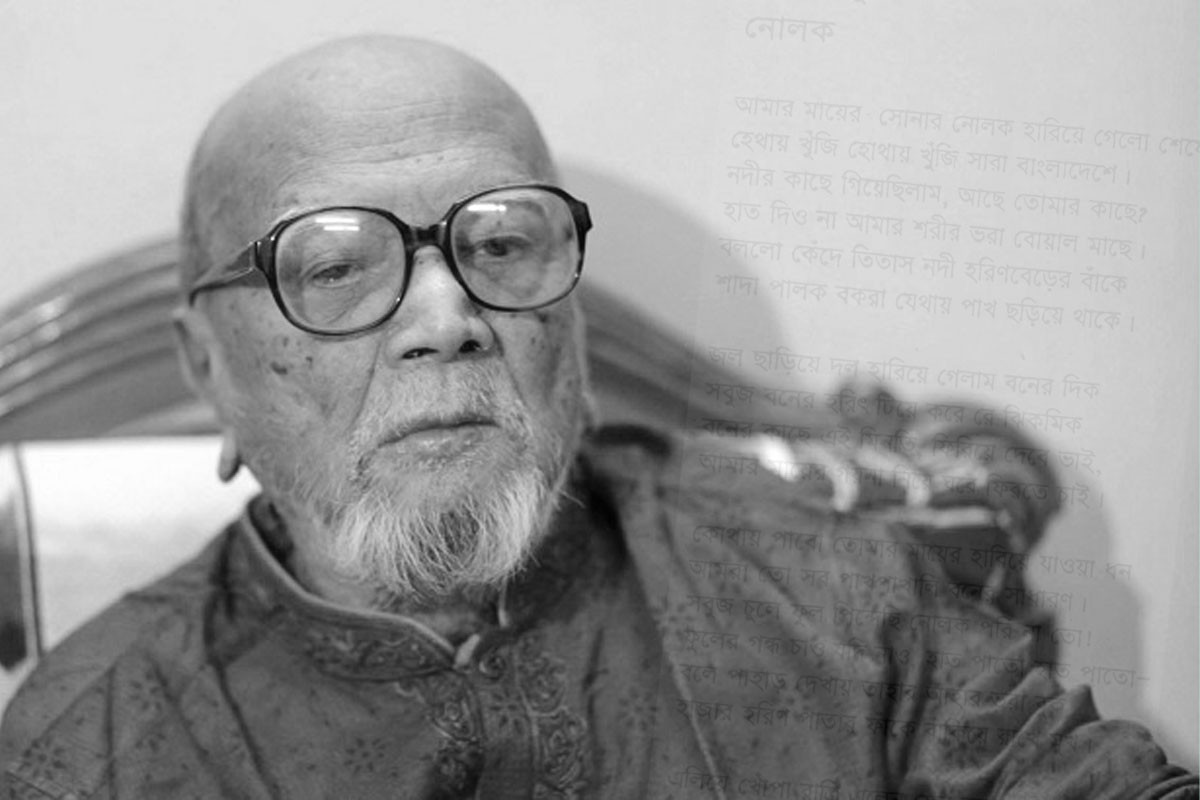
The 89th birth anniversary of Al Mahmud, one of the most significant figures in modern Bangla poetry, is being commemorated today with literary tributes and national reflection.
Born on July 11, 1936, in Brahmanbaria, Al Mahmud—whose full name was Mir Abdus Shukur Al Mahmud—helped define a new era in Bangla poetry in the post-Tagore period. His iconic work Sonali Kabin (Golden Dowry) blended themes of love, rural life, history, nationalism, and spirituality in a uniquely lyrical voice that resonated deeply with readers across generations.
In observance of the day, Bangla Academy shared a commemorative post across its social media platforms, recalling Al Mahmud’s enduring literary legacy and the prestigious Bangla Academy Literary Award he received in 1968. The tribute included rare archival photographs of the poet at the Academy, along with a solo portrait shared by Photoseum, the visual archive curated by eminent photographer and Bangla Academy Fellow Nasir Ali Mamun.
Mamun also posted a heartfelt message, recalling personal memories of Al Mahmud and highlighting the poet’s marginalization during his lifetime. “Even during his lifetime, Al Mahmud was forcibly erased,” Mamun wrote, referencing their joint incarceration in 1974 and the societal neglect the poet endured. He emphasized the sorrow and cultural silence that surrounded the poet's later years, calling for renewed celebration of Al Mahmud’s legacy.
Throughout his prolific career, Al Mahmud produced a vast collection of poetry, fiction, essays, and memoirs. His works include Lok Lokantor, Kaler Kalosh, Mayabi Porda Dule Otho, Arobbo Rojonir Rajhash, and Bokul Chokh in poetry; Kobi O Kolahol, Purusher Jobanbondi, and Upomohadesh in fiction; and the memoir Jiboner Jolchhobi.
Even after his death on February 15, 2019, Al Mahmud’s influence remains a cornerstone of Bangladeshi literary identity. His writings continue to inspire new generations of poets and readers alike, reminding the nation of both the power of language and the resilience of truth in poetry.
Source: UNB
Bd-pratidin English/ Jisan