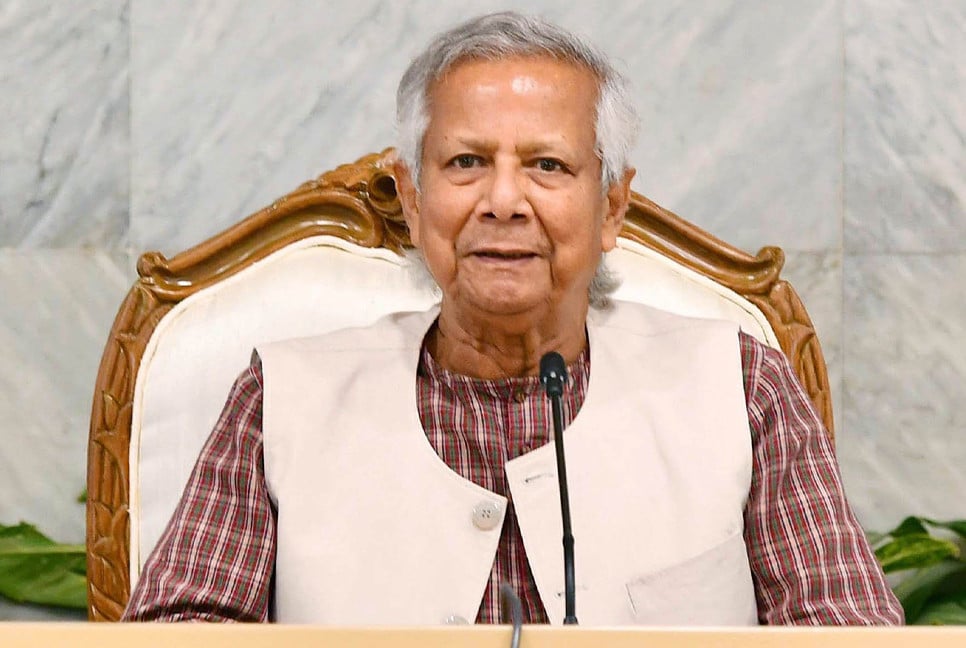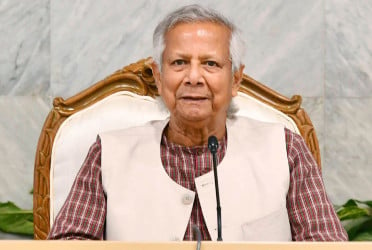
Chief Adviser Dr. Muhammad Yunus has suddenly ordered to prepare for the upcoming national elections. He has directed the home adviser to ensure that law enforcement agencies are fully ready by December.
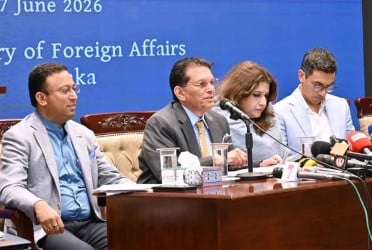
Press secretary to the chief adviser, Shafiqul Alam, confirmed this information during a press conference on Wednesday night.
With this announcement, much of the uncertainty surrounding the election has been dispelled. It is now hoped that elections will take place within the timeframe promised by Prof Yunus.
The people of the country are prepared and eager to participate in the vote. However, political parties are yet to reach a consensus on the electoral system.
Article 7(1) of our Constitution states, “All power of the Republic belongs to the people.” And it is these very people who form the raw material of politics.
For the past 54 years, every political activity has been conducted in the name of public welfare. Since the July uprising, a new struggle to build a "New Bangladesh" has begun. Even now, leaders are worried about the people's wellbeing — how to ensure their security and human rights has been under meticulous discussion for the last 11 months.
But ironically, some of the so-called well-wishers of the people are now demanding power without a vote—undermining the very sovereignty of the people.
In our current electoral system, there are provisions for reserved seats for women in the parliament. In the last parliament, 50 women became MPs without direct elections under the Proportional Representation (PR) system based on party representation.
Now, some political parties wish to expand this system and secure their parliamentary presence before any votes are cast. But if that happens, what does the public gain as the “true owners of the state”?
They are already burdened by many pressures. Now, with US President Donald Trump’s new tariff policy, another external pressure is about to be added to their lives.
Bangladesh follows the Westminster system of governance, modeled after the British Parliament. In this system, elections are constituency-based. The candidate who receives the highest number of votes—whether from a party or an independent—wins the seat.
On the other hand, the Proportional Representation (PR) system is now being actively discussed in political circles. About 80 out of 170 countries, including Israel, follow this method. In this system, the number of parliamentary seats a party receives is proportional to the number of votes they get nationwide.
Out of the 50 registered political parties in Bangladesh, many now support the PR system. These include:
Jamaat-e-Islami, Islami Andolan Bangladesh, Khelafat Majlis, Bangladesh Islami Front, Bangladesh National Party, Bangladesh Kallyan Party, National People's Party (NPP), Trinamool BNP, Amar Bangladesh Party (AB Party), Gono Odhikar Parishad, Bangladesh Minority Janata Party (BMJP), Bangladesh Congress, and the newly formed National Citizens Party (NCP).
Conversely, several major parties support the existing electoral system:
BNP, Liberal Democratic Party (LDP), Jatiya Samajtantrik Dal (JSD), Bangladesh National Party (BJP), Bangladesh Muslim League, Gono Forum, Bangladesh NAP, Revolutionary Workers Party (lower house existing system, upper house PR), BML, National Democratic Movement (NDM), Bangladesh Jasad, Bangladesh Nationalist Movement (BNM), Bangladesh Supreme Party (BSP), Nagorik Oikya, and Gono Songhoti Andolon.
Many other parties have yet to express a definitive opinion.
Traditionally, voters in Bangladesh cast their votes not just for political parties but also for individual candidates. Candidates are usually well-known within their constituencies and strengthen their campaigns through rallies, posters, and face-to-face contact.
On election day, their campaign workers assist voters in reaching polling centers. Despite party symbols carrying weight, the identity of the individual candidate often plays a crucial role. However, over the past 16 years, elections have largely revolved around party symbols alone.
Now, during the tenure of the interim government, the debate over electoral systems is creating confusion among ordinary citizens. Many believe the push for PR is not so much about empowering the people but rather about allowing parties to secure parliamentary power beforehand. Some of these parties might not win a single seat in a direct election but could gain several seats through PR based on their vote share.
Supporters of PR argue that it will strengthen democracy and reduce the influence of money and muscle power in elections.
But the real question is: What will the people actually gain from the PR system?
Will they get representatives of their choice?
Will their rights be fully secured?
Will it eliminate the influence of money in elections?
If candidates are selected by the party, can we be sure money won’t simply move from the public to the pockets of powerful party leaders?
These questions are weighing heavily on the public mind.
Over the past 11 months, people have faced relentless pressure. No one is at peace. Law and order are deteriorating. Mob violence has spread terror, targeting everyone from university professors to mosque imams.
Teenagers and youths now control neighborhoods, and the elderly stay silent out of fear. Businesspeople, who play a vital role in the economy, are sitting helpless. To quote from the play Siraj-ud-Daulah, “Who will give the businesspeople hope? Who will give them courage?”
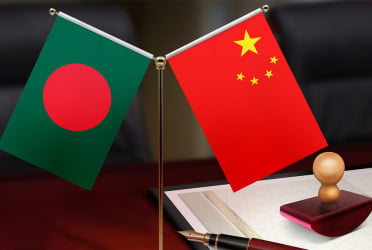
Amid all this, a new blow to the nation has arrived: Trump’s trade war.
US President Donald Trump has announced a 35% tariff on all Bangladeshi goods starting August 1, citing long-standing trade imbalances. The announcement was made via his social media platform, Truth Social, in a letter to Dr. Muhammad Yunus, the Chief Adviser of Bangladesh’s interim government.
Products rerouted through third countries will also face the same tariffs. However, Bangladeshi companies operating within the US may be exempt and fast-tracked for approvals.
Dr. Salehuddin Ahmed, the finance adviser, called this tariff hike unexpected, saying, “With only a $5 billion trade deficit, such a tariff is disproportionate and unethical. We hope to negotiate and reduce this rate.” The government may try, but the impact will undoubtedly hit ordinary citizens. The garment sector—the backbone of our exports—faces grave risk.
The people of Bangladesh are now under tremendous pressure—from both political uncertainty and international trade threats. This double burden is crushing. Bangladeshis have always had a sharp political instinct. Whether Dr. Yunus will hold the election on time, what was discussed in the London meeting, whether the NCP is receiving undue favoritism—all these topics are being debated even in rural tea stalls.
Thanks to social media, both truths and rumors are spreading like wildfire, adding to public anxiety. To relieve this pressure, mob violence must be brought under control, businesses must be supported, and foreign relations and trade stabilized. If not, the suffering of the people will only deepen.
The writer is the Executive Editor of Bangladesh Pratidin
Email: [email protected]