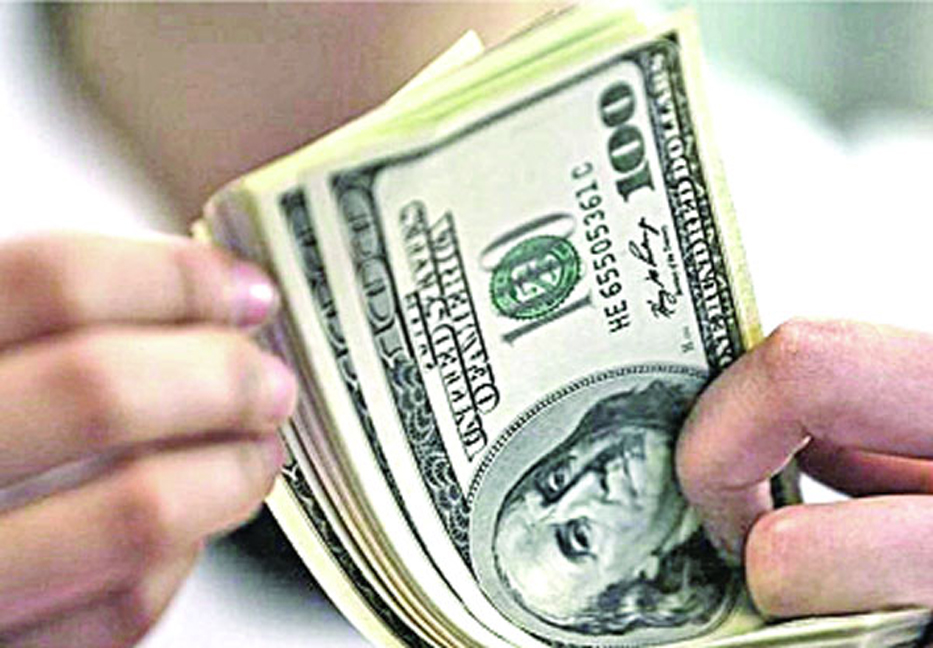
Last year saw dollar crisis due to non-escalation of export and remittance income compared to import and the country seems to not overcoming from the crisis. Exploiting this crisis, many banks are selling dollars in excessive price. Hence, the businessmen wanted long-term planning in upcoming budget to mitigate the crisis. The government also took some positive accord to control dollar price and Bangladesh Bank informed that the situation was improving.
According to the sources, Bangladesh bank has been selling dollar to public and private banks for importing necessary goods like foods, fuel oil, fertilizers. In the current 2022-23 fiscal year, goods amounted to 5,383 crore dollar have been imported. On the other hand, the export revenue and remittance revenue haven’t been increasing accordingly.
However, after a gap of six months, the remittance income has overpassed 200 crore dollar. Due to the decreasing demand of goods in western market and high inflation, the export income was decreased by 2.49 percent in last March. According to the information of Export Promotion Bureau, in March the export target was 5.02 bl. US dollar, but the achieved income was less than the targeted amount by 7 percent. However, between the times of July 2022 to March 2023, the total income was increased by 8 percent to 41.72 bl dollar.
According to the analysts, the pressure is on for settling many unsettled imports, along with prospective ones. Huge money will be spent to pay off the short-term loans taken from abroad. Meanwhile, the investment in the country is not increasing. The amount of money siphoned off to abroad ahead of national election is also increased. For all these reasons, the dollar crisis isn’t going to be resolved soon.
According to central bank data, the price has increased by 25 percent to Tk 108 per dollar in the last one year to meet import obligations. The central bank has sold more than $1 trillion so far in the current fiscal year to control prices. Last fiscal year, it was 662 million dollars. Banks have been fixing the maximum dollar rate at all levels since September 11 last year through the mediation of the central bank. However, many banks don’t comply with fixed rates. All banks have announced to buy remittances at a maximum price of Tk 107, but some banks are buying at a rate of up to Tk 113. At least 12 banks are involved in buying dollars at inflated prices. Those banks are selling dollars which they bought at higher prices to importers. This time the price is Tk 114 to Tk 115. The bank shows the excess amount declared as income or expenditure in other sectors. In many cases, transactions are taking place through informal channels.
In this regard, executive director and spokesperson of Bangladesh Bank Mejbaul Haque told the reporters, "The banks involved in the sale of dollars will be inspected. If the complaint is proved, strict action will be taken against the concerned bank.
Meanwhile, to prevent transactions in informal channels, the dollar price of export income has increased by 1 rupee. Last Thursday, the Bangladesh Foreign Exchange Dealers Association (BAFEDA), the association of executives of commercial banks dealing in foreign exchange, increased the price per dollar from Tk 104 to Tk 105 for buying export bills. This price was effective on last Sunday. As a result, the banks bought the export bill at Tk 105 that day. In the case of sale of dollars in the import sector, the price has also increased by an average of 1 rupee. Currently, the dollar is being sold at Tk 107 to Tk 108 in this sector. Earlier it was Tk 105 to Tk 107.
Bangladesh Petroleum Corporation (BPC) has sent a letter seeking the cooperation of the Department of Energy and Mineral Resources to continue the process of importing fuel oil considering energy security as the highest priority. In the letter sent on March 14, the BPC chairman said the payment of import price of fuel oil is delayed due to shortage of dollars. Fuel oil is an essential product for maintaining the dynamics of overall economic activities including transportation, agriculture, and power generation across the country. BPC has urged to take emergency measures in coordination with Bangladesh Bank, Ministry of Finance and other related institutions, if necessary.
Meanwhile, businessmen have asked for a long-term plan in the budget of next financial year 2023-24 to solve the dollar crisis. Chittagong Chamber President Mahbubul Alam proposed to the Chairman of the National Board of Revenue (NBR) on March 15 to adopt a long-term plan to resolve the ongoing dollar crisis.
In the bankers' meeting held on Sunday, the Governor of Bangladesh Bank told the bank MDs working in the country, “we’ve taken the right decision to solve the dollar crisis. It will be a little softer in a few days.”
Prohibiting the MDs present in the meeting from buying and selling dollars at higher prices, the governor said that the situation had become easier than before and it would gradually become easier.
In this regard, Ali Reza Iftekhar, the former chairman of Association of Bankers Bangladesh (ABB), the association of private bank MDs, and current MD of Eastern Bank, said, “Everyone knows that the dollar crisis will not be solved in a day. However, the critical condition that was prevailing six months ago has become much better now. The dollar situation is gradually softening.”
Ahsan H. Mansoor, Executive Director of Policy Research Institute, said, "Many unsettled LCs, high import liabilities and short-term foreign loans must be settled now. A large amount of dollars will go out for this purpose. As a result, the dollar crisis will continue this year. Another major cause of the dollar crisis is money laundering. Money laundering is likely to increase in election years compared to previous periods. The dollar amount of foreign investment in the private sector that used to come in every year has now come down drastically.”
@The report was published in Bengali on print and online versions of The Bangladesh Pratidin on April 4 and rewritten in English by Lutful Hoque