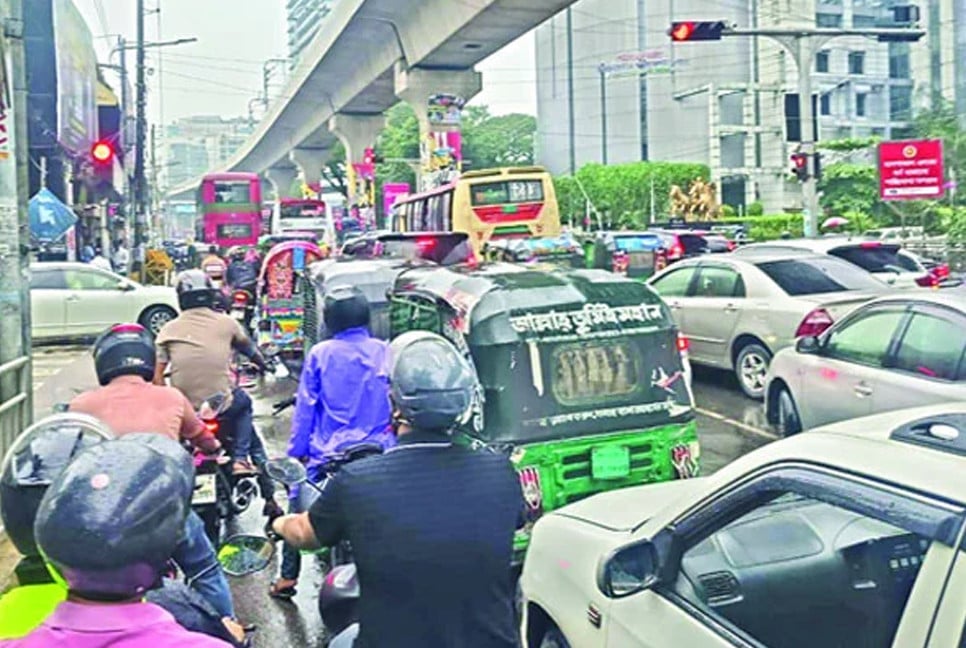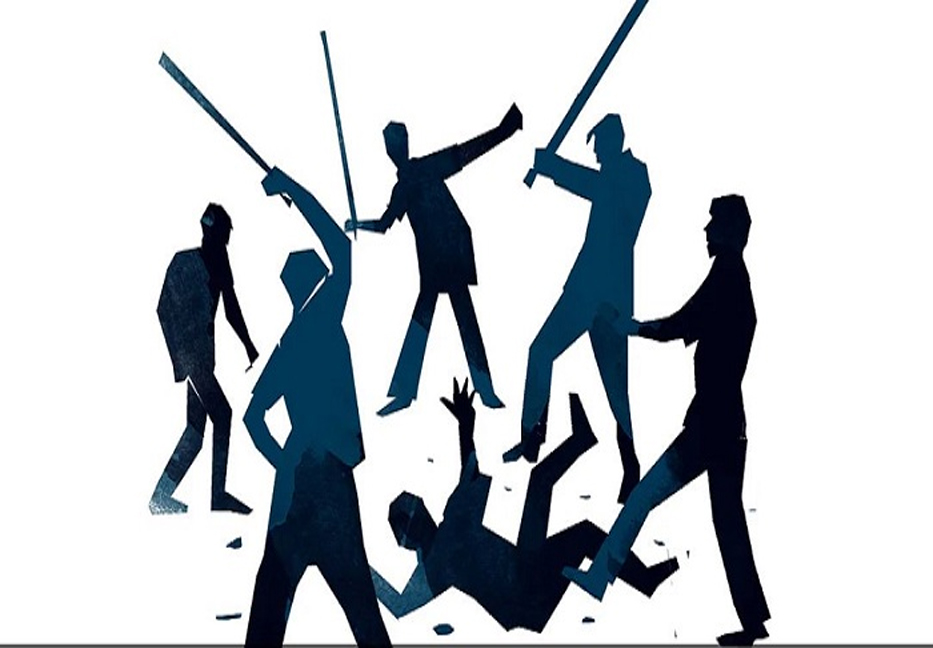
Four people out of five in the country are engaged in reciprocal conflict or some kind of rivalries. Most of the criminal conflicts were rose from land-related matters or chaos with the neighbors. Besides, incidents of small conflicts are also taking places.
The above information was revealed by Ministry of Law, Justice and Parliamentary Affairs in an evaluation meeting over legal assistance and verdict assurance. They provided the information based on the statistics of last four years.
Providing information came out of another survey, the ministry of Law said only 13 percent people are going to the concerned authority or entity with a view to get a legal solution. Besides, 68 percent people keep trust on the formal judiciary system.
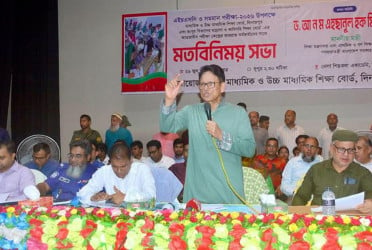
This information was revealed on the meeting titled ‘Strengthening Access to Justice and Legal Reforms’ arranged by special project evaluation committee on technical assistance projects. The meeting was held on February 5 on ‘Physical Infrastructure’ division of Planning Commission.
To know about this survey, The Bangladesh Pratidin tried to contact Runa Nahida Akter, the solicitor of ministry of law. She replied that she was busy and cut the call and didn’t respond further.
Dr Sadeka Halim, the dean of social science faulty of University of Dhaka, told The Bangladesh Pratidin, “Multi-dimensional conflicts are visible among people. In addition, to land-related conflicts, many conflicts of interest take place among them. Even that kind of conflict may occur with family members, relatives and close people.”
She said, “The ministry of law stated that the most frequent conflict occurs in case of land-related matters. I’ve worked in right to information commission where the right to information act was mostly used to land-related issues. Various applications were submitted to us regarding ledger, record and types of the lands.”
Sadeka Halim emphasized on digitalization of land related services along with legal and judicial process to deal with such disputes. He said socio-economic conditions and behavioral problems of people are major determinants in the escalation of conflict; however, to reduce this conflict, coordination and transparency should be brought in the work of other ministries and organizations including land information.
Former Dean of Dhaka University Law Faculty, Md Rahmat Ullah told The Bangladesh Pratidin that this is a time when there are a lot of disputes regarding the accounts of property due to problems with neighbors or inheritance incurred. This is because our land system is not accurate and clear.”
The professor of DU expressed doubts about the information of the Ministry of Law regarding the trust of 68 percent of the people in the formal judicial system. He said, "I don't know how accurate the trust that the ministry is talking about."
The authorities concerned say that the dispute is not limited to land and neighbors. Disputes are also increasing in urban life. Incidents like loss of life are also taking place due to various disputes including mobile phones, secret videos etc. Activities of youth gangs are another source of conflict in urban areas. According to sociology theory, the control and supervision system that was earlier in the family and society has now disappeared. Earlier, if teenagers smoked in public, the neighborhood or seniors of the locality would discipline them. Now even if drugs are consumed in front of the eyes, the elders are afraid of them or avoid them thinking that they may be dangerous.
Dhaka University Psychology Department Chairman Professor Dr. Md. Kamal Uddin said that it is true that most of the people of the country are involved in disputes. However, when four of the five are related to the dispute, then there are questions about how the law ministry has conducted the survey and did it in which area. He said that behind the creation of so many conflicts between people, the socio-economic conditions of the country, the changing culture and the behavioral changes taking place under the influence of social media are the main reasons.
Dr. Kamal Uddin said, 'From birth, we are getting some elements like religion, caste, education, which are fueling the conflict in our present socio-economic system. We have adopted an education system which increases competition among people. In addition, social media is also having an adverse effect on the psyche of people, which is acting as a catalyst for creating a kind of unrest and conflict.”
@The report was published in Bengali on print and online versions of The Bangladesh Pratidin on March 3 and rewritten in English by Lutful Hoque