Although there has been no official announcement on whether the Bangladesh-India Ganges water-sharing treaty will simply be renewed or replaced with a new agreement, sources indicate that technical teams from both countries have already begun preliminary preparations on the issue.
Amid these preparations, India has informally floated the idea of introducing a new formula for a future agreement — a proposal that Bangladeshi water resource experts describe as “unreasonable”.
They also warn that recent remarks from the Indian side could complicate the renewal process.
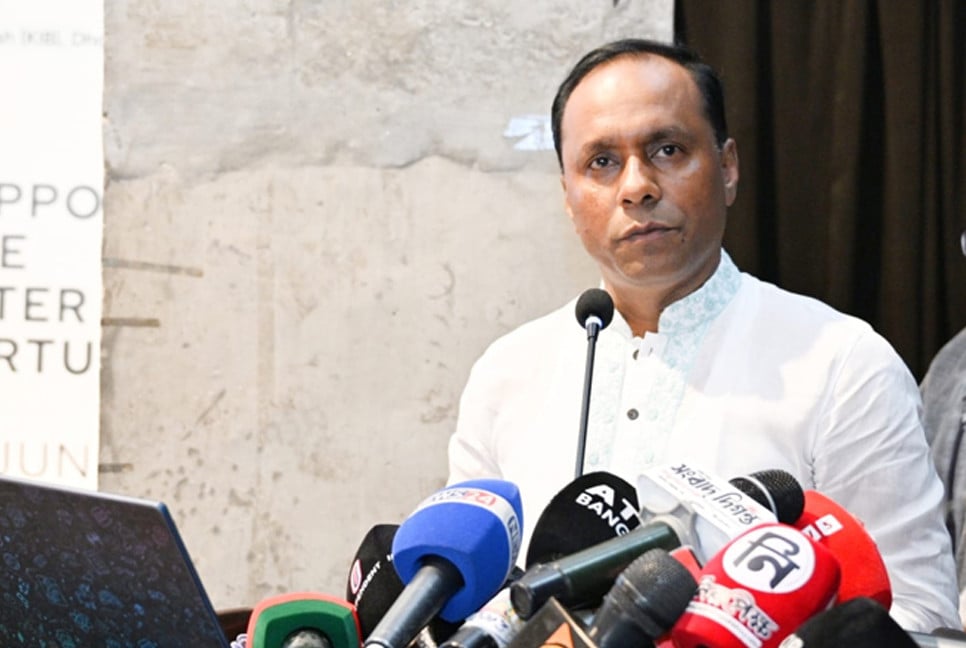
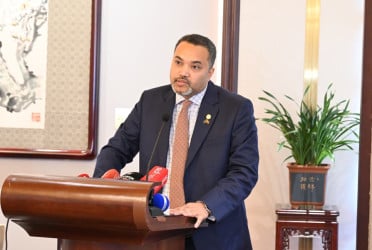
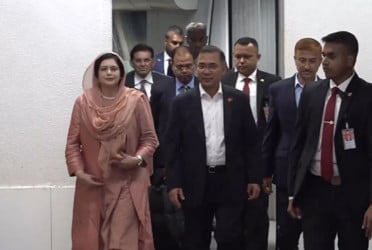
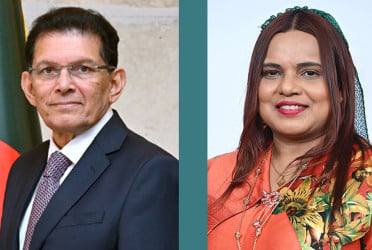
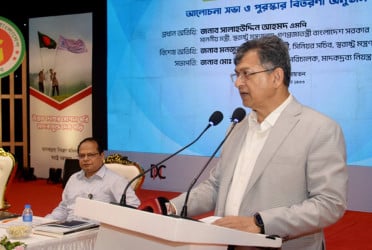
Responding to questions on whether preliminary work has begun for renewing the treaty or drafting a new one, Bangladesh’s Water Resources Adviser Shahid Uddin Chowdhury Annie said the government has formed an expert committee on the matter.
“We hope the expert committees of the two countries will reach a solution through discussions. After that, we expect a final decision to be taken at the ministerial-level meeting of the Joint Rivers Commission,” he told BBC Bangla.
Officials from relevant government agencies have also hinted that technical teams from both countries have initiated early-stage activities regarding the issue.
Following detailed discussions within the Joint Rivers Commission (JRC), formal positions from both sides may eventually be announced.
The current Ganges water-sharing treaty is set to expire in December this year. Bangladesh and India signed the 30-year agreement in 1996 — more than two decades after the commissioning of the Farakka Barrage.
Why Is a New Formula Being Discussed?
Under the existing treaty, the amount of water allocated to Bangladesh and India depends on rainfall upstream, water flow and discharge velocity.
The agreement stipulates that when the river’s flow falls to 70,000 cusecs or below, both countries will receive equal shares. If the flow remains between 70,000 and 75,000 cusecs, Bangladesh receives 40,000 cusecs and the remainder goes to India.
If the flow exceeds 75,000 cusecs, India receives 40,000 cusecs while the remaining water flows into Bangladesh.
With the treaty nearing expiry, discussions have intensified over the past few years regarding either renewing the deal or formulating a new agreement.
During a meeting of the joint committee on the Ganges treaty in March 2025, held under Bangladesh’s interim government, questions were also raised over the terms on which the agreement would be renewed.
Sources say India now wants the framework of any renewed agreement to be based on water flow at the Farakka point.
Bangladesh, however, argues that because average water flow at Farakka remains low, the entire river system should be taken into account when determining water-sharing arrangements.
During a recent visit to India by a delegation of Bangladeshi journalists, Indian Foreign Secretary Vikram Misri said on May 4 that water has always remained an important issue in bilateral relations with Bangladesh.
Journalist Mustafizur Rahman, who was part of the delegation, told BBC Bangla that Vikram Misri said India was prepared to discuss all bilateral issues — including water — with Bangladesh’s new government led by Tarique Rahman.
“Vikram Misri said the JRC would participate in the renewal process of the Ganges treaty at the appropriate time,” Mustafizur Rahman said.
At a separate event on May 5 attended by the same delegation, former Indian High Commissioner to Bangladesh Pankaj Saran said the earlier formula for water sharing may no longer be effective.
The 1996 treaty had relied on water flow data recorded between 1949 and 1988.
According to Mustafizur Rahman, Pankaj Saran argued that the same formula would not remain workable three decades later and suggested considering water flow data from the past 40 years instead.
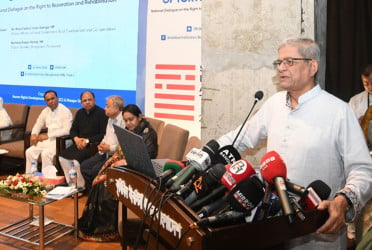
However, former Joint Rivers Commission member and river expert Ainun Nishat dismissed such thinking as unjustified.
“The Ganges does not originate at Farakka. Moreover, India’s unilateral upstream withdrawal has already reduced water flow there significantly. So averaging the flow at that point to determine sharing would not be fair,” he told BBC Bangla.
He added that both countries had earlier agreed that Ganges water distribution would be based on the river’s overall flow volume.
Ainun Nishat also said Bangladesh and India are both speaking about maintaining good relations, and water remains the most important issue in that relationship.
“We hope the matter will be resolved through discussions and reasonable conduct,” he added.
Farakka Barrage and the Ganges Water Treaty
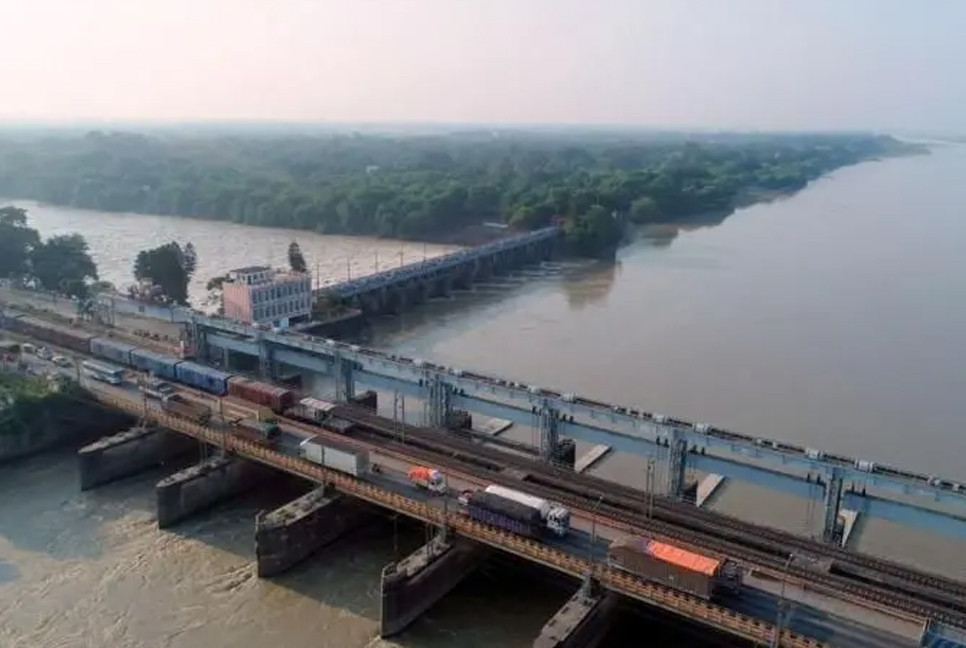
India constructed the Farakka Barrage at Manoharpur, around 18 kilometres from the Bangladesh border. Since before its inauguration in April 1975, the issue has remained a major factor in bilateral relations and politics between the two countries.
India’s primary objective behind the project was to divert excess Ganges water into the Bhagirathi River in order to preserve the Kolkata Port. For this purpose, a nearly 40-kilometre-long link canal was excavated.
Bangladesh, however, has long argued that the Farakka Barrage caused the once-mighty Padma River to dry up, severely affecting livelihoods across vast areas of the country.
Bangladeshi politician Abdul Hamid Khan Bhashani drew national attention in 1976 by leading a “Long March” towards Farakka in protest against the barrage.
Located in India’s Malda and Murshidabad districts of West Bengal, the barrage lies 18 kilometres upstream of Bangladesh’s Chapainawabganj district.
More than two decades after the barrage became operational, Bangladesh and India signed the historic water-sharing treaty in 1996, which is now approaching expiry.
Under the agreement, during the dry season Bangladesh is entitled to receive 35,000 cusecs every ten days, while India receives 40,000 cusecs depending on water levels.
As a result, discussions on renewing the agreement have been ongoing for several years and have surfaced in virtually every bilateral meeting between the two countries since the final phase of the Awami League government.
In March 2025, experts from Bangladesh and India held discussions on renewing the treaty and related issues. Technical specialists from both countries also carried out field-level surveys over two days to assess the current flow condition of the Ganges at Farakka.
Later, during the 86th meeting of the Indo-Bangladesh Joint Committee under the Joint Rivers Commission in Kolkata, both sides discussed findings from the survey conducted around the Farakka Barrage area.
However, after diplomatic ties between the two countries deteriorated during Bangladesh’s interim government period, little progress was made regarding the renewal process.
Following the BNP government’s return to power in Bangladesh in February this year, the issue of renewing the Ganges water-sharing treaty has once again gained momentum.
In February, replying to a question in India’s Lok Sabha, Indian Minister of State for External Affairs Kirti Vardhan Singh said formal discussions with Bangladesh on renewing the treaty had not yet begun. However, a delegation from the West Bengal government had participated in several inter-ministerial meetings on the matter.
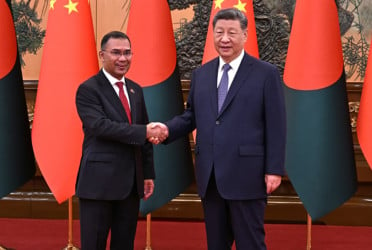
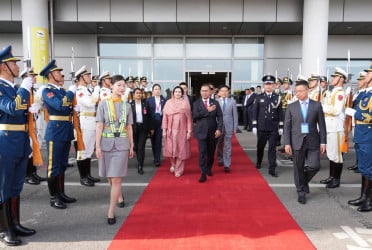
Meanwhile, ahead of Bangladeshi Foreign Minister Khalilur Rahman’s official visit to Delhi in early April, officials in Dhaka indicated that the Ganges treaty issue would feature prominently in the discussions.
During the visit, Khalilur Rahman told NDTV that a fair and climate-resilient Ganges treaty would be the “first test” in rebuilding relations between the two countries.
“The current agreement will expire within months. We want a revised agreement that can address people’s urgent needs,” he said.
However, neither side has officially announced whether any decision was reached during the visit or what shape the future of the treaty may take.
Source:BBC Bangla
Bd-pratidin English/ ANI