The war in the Middle East has plunged the economy into deep uncertainty. The strain of an energy crisis is beginning to affect growth. At such a challenging time, the new government’s first budget is approaching. Amid internal structural weaknesses and global instability, the government is preparing a budget of nearly Tk900,000 crore for the 2026–27 fiscal year.
The budget must be balanced while addressing challenges such as energy shortages caused by the Middle East conflict, a shortfall in revenue collection, and high inflation. Maintaining economic stability amid pressures from subsidies, development expenditure and rising liabilities will be the most difficult task for Finance Minister Amir Khasru Mahmud Chowdhury.
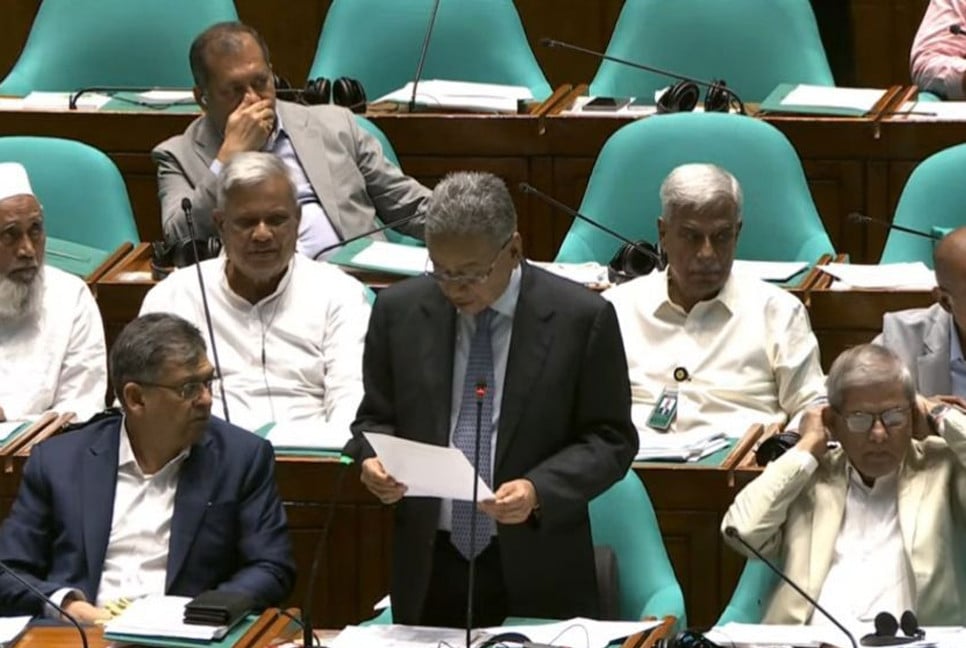
The budget for the 2026–27 fiscal year is likely to be presented in the first week of June in the National Parliament. Discussions with business organisations, economists and research institutions have already begun.
Ensuring energy security, controlling inflation, increasing investment and employment, and maintaining macroeconomic stability will be the main objectives of this budget. Relevant stakeholders warn that when increasing revenue itself is a challenge, a large budget risks increasing the tax burden, which would place additional pressure on both businesses and consumers.
Probable size of the budget
According to preliminary estimates by the Ministry of Finance, the budget size may reach Tk883,000 crore, nearly Tk93,000 crore higher than the current fiscal year.
Against this, if revenue income is targeted at Tk636,000 crore, the deficit will stand at Tk247,000 crore, or 3.6 percent of GDP. To finance this deficit, the government plans to mobilise Tk241,000 crore (2 percent of GDP) from domestic sources. Of this, Tk120,000 crore will come from bank borrowing, while Tk 106,000 crore will be sourced from foreign funding.
Under the proposed structure, total revenue income is likely to be set at around Tk636,000 crore. Of this, revenue sector earnings may account for Tk571,000 crore (8.4 percent of GDP), with the National Board of Revenue (NBR) expected to collect nearly Tk550,000 crore in taxes. However, economists believe achieving this target will be extremely difficult given current trends.
The Annual Development Programme (ADP) may be set at around Tk253,000 crore, nearly Tk23,000 crore higher than the current fiscal year. Planning officials say greater emphasis will be placed on project selection, effectiveness and implementation capacity this time.
Economists warn that excessive borrowing from the banking sector could crowd out private sector credit, negatively affecting investment and industrialisation. Dr Fahmida Khatun, Executive Director of the Centre for Policy Dialogue (CPD), said: “Bangladesh’s economy is currently facing multiple challenges, including high inflation, slow revenue mobilisation, weak budget implementation, pressure on foreign exchange, low investment and limited employment. Alongside short-term targeted measures, it is essential to strengthen the foundations for medium-term structural reforms.”
Rising energy and import costs due to the war
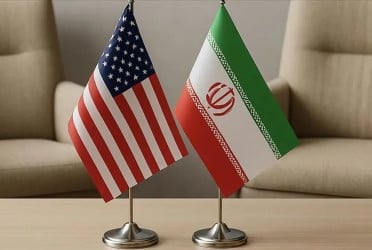
On 28 February, following attacks on Iran by the United States and Israel, Iran shut down the Strait of Hormuz—one of the main oil transit routes—in retaliation. This led to oil shortages in many countries, including Bangladesh.
A policy analysis by the South Asian Network on Economic Modelling (SANEM) suggests that the imposed war on Iran could reduce Bangladesh’s GDP growth by up to 3 percent over the next two years.
Economists and analysts note that a $10 increase in global oil prices per barrel would raise Bangladesh’s annual expenditure by nearly $1 billion. If prices remain above $120 for an extended period, additional annual costs could reach $4–5 billion—equivalent to about Tk61,000 crore (at Tk122 per dollar).
Although the government has said it will not increase fuel prices, instability in the global market would raise import costs and subsidy pressures, posing a major challenge to budget implementation. Moreover, a decline in employment opportunities in the Middle East could reduce remittance inflows. In such a context, economists advise lowering growth expectations and maintaining expenditure discipline.
However, Finance and Planning Minister Amir Khasru Mahmud Chowdhury has said the government faces three major challenges: restoring a fragile economy inherited from the previous administration, implementing electoral commitments, and managing additional costs arising from higher fuel prices due to the Middle East conflict.
Risk of revenue shortfall exceeding Tk1 trillion
The biggest challenge for the upcoming budget is revenue collection. The National Board of Revenue (NBR) has consistently failed to meet its targets. In the first eight months (July–February) of the current fiscal year, there was a shortfall of Tk71,472 crore in tax collection. By the end of the fiscal year, the deficit could exceed Tk100,000 crore.
Dr Mustafa K. Mujeri, Executive Director of the Institute for Inclusive Finance and Development and former Director General of BIDS, said: “Revenue collection cannot be increased without expanding the tax base and undertaking administrative reforms. Modernising the NBR, increasing automation and ensuring accountability are essential. A large budget alone will not be effective without addressing weaknesses in the financial sector.”
Inflation and pressure on the middle class
In recent years, inflation has placed significant strain on people’s livelihoods. Rising food prices, higher fuel and transport costs, and weaknesses in the supply chain have caused market instability. Dr Mujeri said: “Inflation has remained persistently high, severely affecting living standards, particularly for low-income and poor populations.”
Economists recommend stabilising interest rates and expanding programmes such as family cards and agricultural support to control inflation. However, they warn that rising fuel and import costs could further increase inflation, and lowering interest rates at such a time could exacerbate the situation.
Private investment remains a concern
Due to prolonged political uncertainty and high interest rates, private sector credit growth fell to a historic low of 6.03 percent in January. According to Bangladesh Bank, it declined further from 6.1 percent in December. This marks a significant drop from 10.13 percent in July 2024.
Business leaders say investment fell to its lowest level during the interim government period, while government projects also stalled. As a result, imports of industrial raw materials have declined significantly. Reviving domestic industry and investment will be a key challenge for the budget.
Economic analyst and Chairman of Financial Excellence Limited, Mamun Rashid, said: “Government revenue and overall income are declining. More funds will be needed to implement the new government’s commitments and plans, while pressure is mounting to increase public sector salaries. The Middle East crisis is driving up fuel prices, and higher shipping costs could increase the prices of essential goods and industrial raw materials.”
Focus on employment and human resource development
The labour market is also under significant pressure. Each year, a large number of educated young people enter the workforce, but sufficient employment opportunities are not being created. Both unemployment and underemployment are rising. Sources at the Ministry of Finance say the upcoming budget will prioritise job creation, skills development and investment in human capital.
Ambitious growth target despite challenges
The GDP growth target for the next fiscal year may be set at around 6 per cent. Accordingly, the size of the economy could reach nearly Tk6,870,707 crore, equivalent to about $544 billion. However, economists stress that achieving this target will require not only increased public spending but also higher private investment, export expansion and financial sector stability.
They argue that transforming Bangladesh into a $1 trillion economy will require sustained high growth, with an average GDP growth rate of around 8 percent annually. Currently, growth stands at around 3.69 percent, significantly below the target and a cause for concern.
Pressure from public sector wage increases
The government is moving to implement a new pay scale for public employees. As a result, allocations for salaries and allowances in the revised budget for the current fiscal year have been increased by nearly Tk22,000 crore to Tk106,684 crore. Expenditure in this sector is expected to rise further in the upcoming budget, adding additional pressure on the government.
What the Finance Minister says
Finance Minister Amir Khasru Mahmud Chowdhury has said the current government assumed office in a very weak economic environment. It faces the dual challenge of stabilising the economy while fulfilling electoral commitments. The ongoing war in the Middle East has added further pressure.
He emphasised that the government aims to move away from a debt-dependent economy towards investment-led growth. It does not intend to pursue short-term solutions such as printing money. Restoring the economy to a sustainable path is the government’s top priority.
Economists urge caution
Economists stress that the next budget must be formulated based on realistic assumptions. Revenue targets are not being met, while the economy faces both external shocks and internal structural weaknesses. Therefore, the government must exercise restraint in spending.
Dr Fahmida Khatun added that graduation from the Least Developed Country (LDC) category is another significant policy challenge ahead. She said: “Alongside short-term targeted measures, it is crucial to strengthen the foundations for medium-term structural reforms to address these challenges in the upcoming budget.”
Bd-Pratidin English/ AM