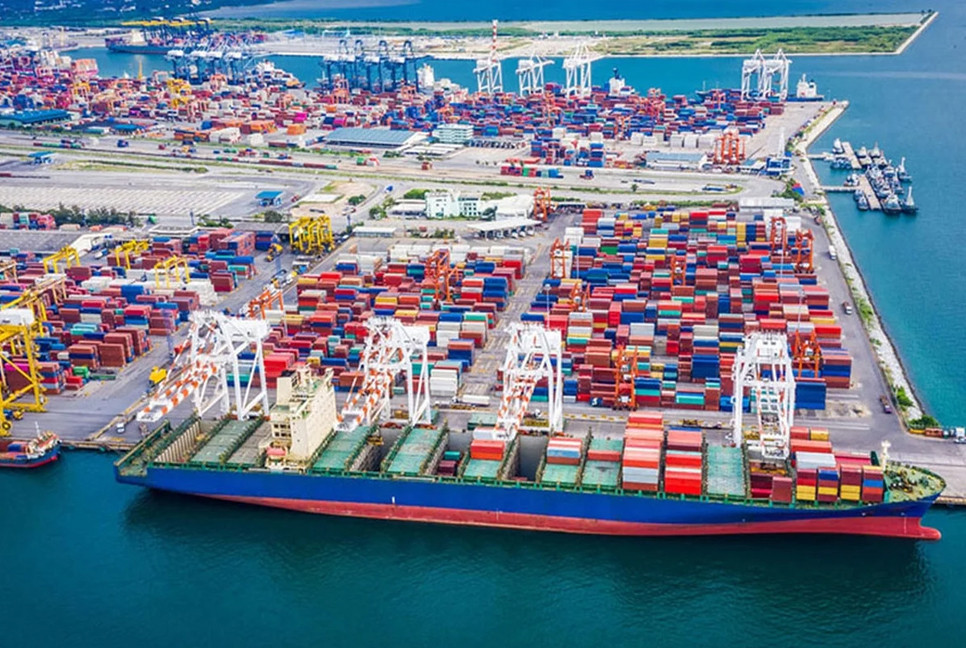
Twelve ships that passed through the Strait of Hormuz and the Gulf of Oman before the start of Iran's war with the United States and Israel have arrived at the outer anchorage of Chattogram Port. The remaining three will arrive this week.
Four of the ships carry liquefied natural gas (LNG), two carry liquefied petroleum gas (LPG) and nine carry clinker, the raw material for the cement industry.
Goods are brought to Bangladesh from Iran, Qatar, Kuwait, Bahrain, the United Arab Emirates and Saudi Arabia using the Strait of Hormuz.
Former director of the Bangladesh Shipping Agents Association, Khairul Alam Sujan, told the media that the ships that left before the start of the war in the Middle East, especially before the closure of shipping in the Strait of Hormuz, have arrived in Chattogram Port. A few ships are on their way. One or two ships are in ports inside or near the Strait of Hormuz.
He said, “The government, shipping lines, ship owners, cargo owners, and mariners are monitoring the war issue. If there is no threat in the Strait of Hormuz, shipping will return to normal soon.”
According to Chattogram Port sources, two ships named 'Al Zor' and 'Al Jasasiya' carrying 126,000 tons of LNG from Qatar have already arrived at Chattogram Port. In addition, a ship named 'Sevan' carrying LPG is scheduled to arrive on Sunday. Two more ships named 'Al Galayel' on Wednesday and 'Lusail' on Monday are scheduled to reach the port's waters. In total, these four ships carry about 247,000 tons of LNG.”
Several more ships carrying clinker, gypsum, limestone and stone, raw materials for the cement industry, have arrived at Chattogram Port. These ships carry about 515,000 tons of raw materials, which have been brought from the Gulf region.
In the 2024-25 fiscal year, nearly $6 billion worth of goods were imported from the Middle East using the Strait of Hormuz, a large portion of which were energy products.
Bd-pratidin English/Lutful Hoque