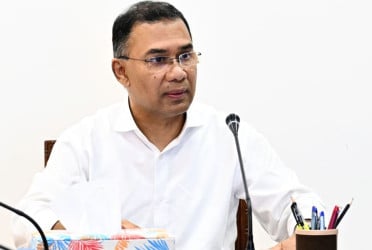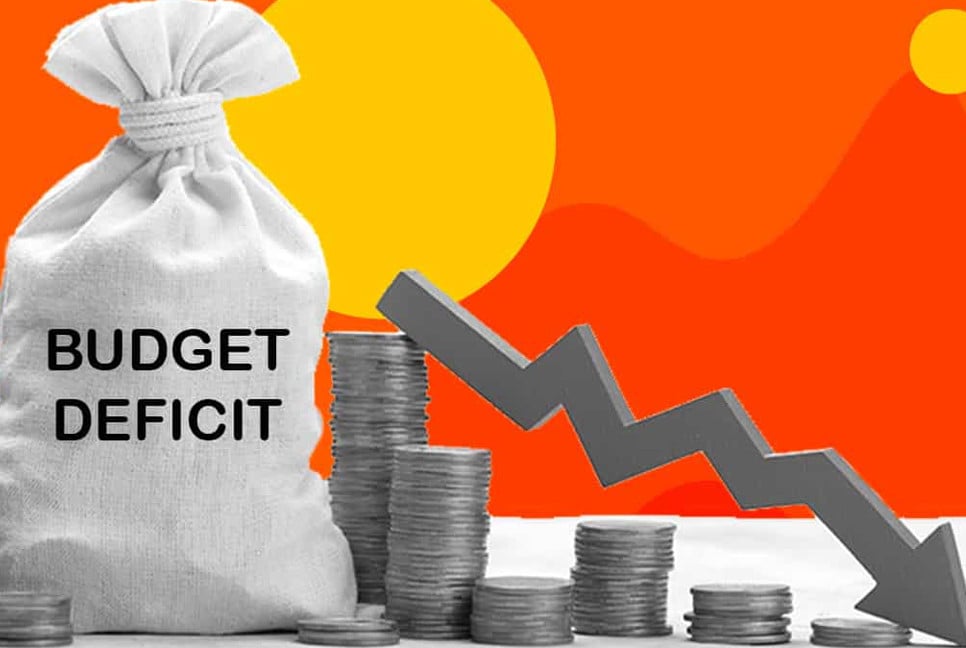
The government led by Tarique Rahman has begun implementing its election pledges, including the introduction of a new pay scale, Farmer Cards and Family Cards. Fulfilling these public-friendly commitments will require substantial funding. However, sluggish business activity, slow revenue growth and pressure to meet stringent IMF conditions have placed the government in a difficult position in preparing the national budget. Concerned sources say that amid this tension between expectations and economic realities, the government is likely to opt for presenting the largest deficit budget in the country’s history.
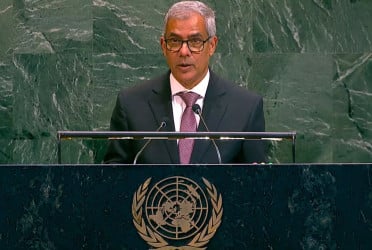
Finance and Planning Minister Amir Khasru Mahmud Chowdhury has stated that the upcoming budget will not follow a conventional approach; rather, it will be participatory, ensure a level playing field and be free from patronage politics. Nevertheless, economists warn that IMF conditions — including raising VAT, reducing subsidies and reforming the tax system — could impose additional burdens on the public.
According to Finance Ministry sources, the proposed budget for the 2026–27 fiscal year may range between Tk8.48 trillion and Tk8.50 trillion. The Annual Development Programme (ADP) allocation could stand at around Tk2.5 trillion.
The original budget for the current 2025–26 fiscal year was Tk7.90 trillion, later revised down by Tk20 billion to Tk7.88 trillion. The 2024–25 original budget stood at Tk7.97 trillion. This marked the first time in the country’s history that the budget size was reduced compared with the previous year.
The current fiscal year deficit has been set at Tk2.26 trillion, or 3.6 per cent of GDP. The initial revenue target was Tk5.64 trillion, later revised upward by Tk240 billion to Tk5.88 trillion. However, the deficit in the next fiscal year may exceed Tk2.60 trillion — the highest ever — with concerns it could surpass 4–5 per cent of GDP if revenue collection fails to gain momentum.
Mamun Rashid, Chairman of Financial Excellence Limited, said that financing the next budget would be extremely challenging amid revenue shortfalls and rising expenditure. He warned that increased government salaries, implementation of electoral pledges and higher energy and import costs due to the Middle East crisis could further strain the economy. A widening revenue gap and declining foreign aid have intensified budgetary pressures.
Despite the expansion in budget size, revenue collection — its fundamental pillar — has been weakening. National Board of Revenue (NBR) data show that in the first seven months (July–January) of FY2025–26, the revenue shortfall exceeded Tk600 billion. Against a target of Tk2.837 trillion for the period, revenue collection across three major heads fell short by Tk601.13 billion.
Implementation of Election Pledges
The government has announced that it will launch the ‘Family Card’ scheme on a pilot basis across the country from 10 March. Under the initial phase, each cardholder will receive Tk2,500.
Social Welfare Minister AZM Zahid Hossain said that, for the time being, a block allocation would be taken from the Ministry of Finance. However, regular budgetary allocations for the scheme will be included in the next national budget.
To implement a new pay scale for government employees, the revised budget for the 2025–26 fiscal year has increased the allocation for salaries and allowances by around Tk22,000 crore, bringing the total to Tk106,684 crore.
Taufiqul Islam Khan, Additional Director (Research) at the Centre for Policy Dialogue (CPD), said fulfilling such extensive expectations would leave little room for expenditure cuts, while revenue collection remains stagnant. As a result, the government may have to rely on foreign borrowing or money printing to finance the deficit, potentially fuelling inflation further.
He added that persistently high non-food inflation is eroding real incomes, while reliance on new borrowing to service existing debt is heightening long-term macroeconomic risks. He recommended policy rate adjustments, active foreign exchange reserve management, a market-based exchange rate, fiscal restraint, and rationalisation of cash incentives for exports and remittances.
IMF Pressure to Reduce Subsidies
One of the main obstacles to meeting public expectations is the conditionality attached to the International Monetary Fund’s (IMF) $4.7 billion loan programme. Bangladesh must implement structural reforms, including raising the tax-to-GDP ratio, reducing subsidies, reforming the banking sector, and adjusting electricity prices.
The requirement to cut subsidies has made it difficult to introduce major spending initiatives such as a new pay scale or a farmers’ card scheme. Failure to meet IMF conditions could delay the next loan tranche, increasing pressure on foreign exchange reserves.
Stagnation in the Private Sector
Private sector credit growth fell to a historic low of 6.03 per cent in January amid prolonged political uncertainty and high interest rates. According to Bangladesh Bank data, this marked a decline from 6.1 per cent in December and a sharp drop from 10.13 per cent in July 2024.
Business leaders say investment has slowed significantly during the interim government’s tenure, while public projects have stalled, leading to a notable fall in imports of industrial raw materials.
NBR Begins Pre-Budget Consultations
Amid these challenges, the National Board of Revenue (NBR) has initiated pre-budget consultations, inviting proposals from stakeholders and business bodies. The NBR said it seeks recommendations from taxpayers, trade bodies, professional groups, research institutions and members of the intelligentsia to formulate a participatory and equitable budget. Chambers and associations have been asked to submit written proposals to the FBCCI by 15 March.
Finance Minister Amir Khasru Mahmud Chowdhury recently said the government does not intend to prepare a conventional budget. He described the economy as “difficult and stagnant”, noting rising poverty, declining investment and shrinking employment. Structural reforms, a participatory budget process and a trust-based capital market will be prioritised, he said.
Economist Mamun Rashid advised strict fiscal discipline and improved governance in budget implementation, warning that conventional measures alone would not resolve the crisis amid pressure on foreign exchange reserves and imports. Strong engagement with development partners and well-planned financing, he suggested, could help the country navigate the challenging period.
Source: Kalerkantho
Bd-pratidin English/ ANI