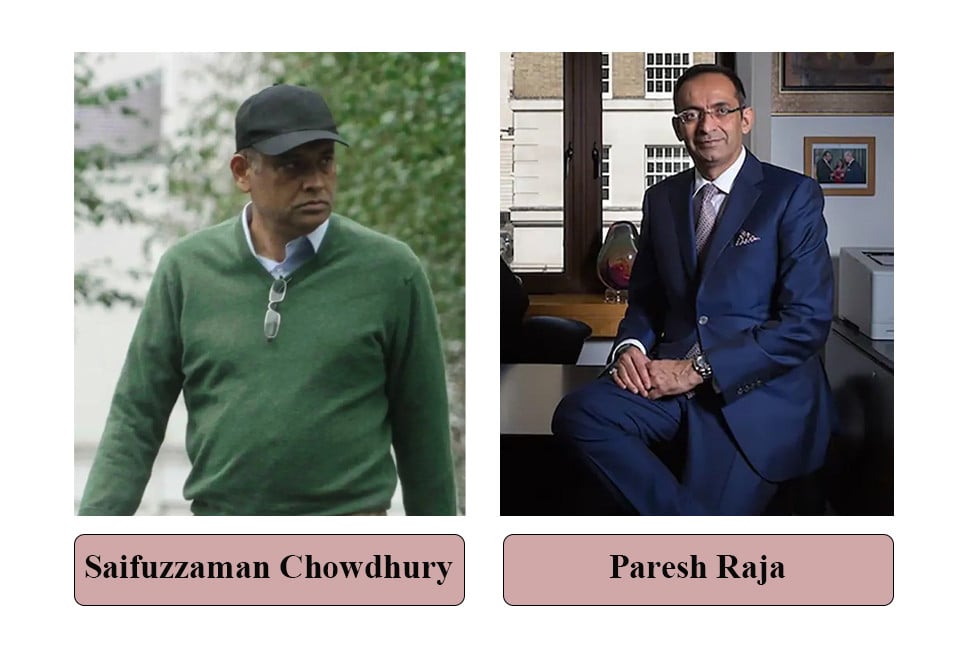
Asked by Asian Voice to name his idols, Paresh Raja picked the villain from Oliver Stone’s 1987 film Wall Street and a mob boss from The Godfather.
“I can appreciate some of the drive behind Gordon Gekko and Vito Corleone, setting aside what it’s used for,” Raja told the publication in 2023.
It is a comment that he may now regret. Raja’s company, Market Financial Solutions (MFS), tipped into administration earlier this week amid allegations of fraud. Court documents seen by Bloomberg show a £930m black hole on its balance sheet.
The sudden implosion of the Mayfair-based private lender, or “shadow bank”, has sent shock waves through Wall Street and the City of London as lenders that backed the business scramble to work out how much they stand to lose. Bankers are already on edge following the high-profile collapse of two other private credit lenders.
The case has also resurfaced the lender’s links to the Bangladeshi elite. MFS was a significant backer of property deals struck by Saifuzzaman Chowdhury, Bangladesh’s former land minister. His property empire is now the subject of an investigation by the National Crime Agency (NCA). Authorities have not accused Raja or MFS of wrongdoing.
Raja, 58, founded MFS with his wife, Tiba, in 2006. The lender provided what it called “complex, property-backed lending”. The company’s main products included buy-to-let mortgages and bridging loans – short-term debt that borrowers could use for various kinds of investments in real assets.
MFS’s website stated that Raja was “committed to supporting property investors who encounter difficulties with – or are simply not suitable for – the high street banks”.
“We find ourselves regularly supporting borrowers who have been turned away on the high street,” Raja told Asian Voice. “We’re always happy to hear from those who may have missed payments on their record, who are based overseas, or who are looking to invest in less common property types.”
An important client of MFS during its rise was Saifuzzaman, Bangladesh’s former land minister. Companies linked to Saifuzzaman built up an impressive portfolio of properties in the UK during his five-year tenure in power before he and the government he was a part of were ousted in August 2024.
According to the Financial Times, Saifuzzaman-linked businesses took out hundreds of secured loans from lenders linked to MFS following his appointment as land minister in 2019.
After the fall of prime minister Sheikh Hasina’s regime in 2024, it appears that nearly all of the MFS-linked mortgages were repaid.
However, the property empire has become the subject of a National Crime Agency (NCA) investigation in the UK. In June, the NCA froze UK property worth £170m belonging to the former minister. Authorities have not accused Raja or MFS of wrongdoing.
At the time, lawyers for Raja said that MFS had “a large underwriting team who scrutinise every loan and carry out detailed and thorough anti-money laundering and other checks”. They emphasised that Raja “has no connection to Bangladesh or the Hasina government”.
MFS differed in important ways from mainstream banks. It was a shadow bank, meaning it offered loans but did not take deposits. As a result, it was not subject to the strict regulations that high street lenders must adhere to.
Before its collapse, the business appeared to be going from strength to strength. As of last March, it said it had secured an additional £1bn in capital from institutional investors, boasting a loan book of nearly £2.5bn.
Just 11 months before MFS tipped into administration, Raja said it was targeting a loan book of £3.5bn over the next year.
A sports lover who “regularly carves out time in his busy schedule to attend important sporting events”, MFS’s website said Raja travelled the world to watch football, cricket, Formula 1 and tennis.
He also spoke frequently to specialist finance media, tweeting as recently as December about his various appearances in the press.
‘Serious irregularities’
However, insolvency practitioners from Alix Partners were appointed this week after two companies linked to Market Financial Solutions, Amber Bridging and Zircon Bridging, alleged that there were “serious irregularities” in its finances.
According to Bloomberg, the pair accused MFS of using the same assets to back multiple loans, which may have led to an “unaccounted-for deficiency” of more than 80pc on £1.2bn of debts.
Approving the administration application this week, Justice Briggs said: “The allegations of fraud are very serious.”
“Mr Raja has failed to comply with the court order to appoint administrators and there is a need to protect assets available for creditors quickly,” the judge said, according to a report by debt industry publication 9fin.
At the time of the administration, Raja said the process did “not reflect a failure of the underlying business or the quality of our assets, but rather a technical and procedural impasse that has temporarily limited our access to everyday banking facilities”.
He added that it was “an extremely difficult moment for everyone connected with Market Financial Solutions”.
As AlixPartners sifts through the wreckage, analysts are already debating the scale of the losses that some of the biggest banks might face.
A cast of high-profile banks, including Santander, Wells Fargo, Jefferies, and Barclays are understood to have funded MFS’s loans. Barclays, which has exposure of roughly £600m, had opened bank accounts for the company, but froze them in recent weeks.
Wall Street bank Jefferies is understood to have around £100m tied up in MFS, while Atlas, the structured-credit arm of Apollo Global Management, had £400m of exposure.
After MFS slipped into administration, shares of Jefferies slumped as much as 9.8pc, while Barclays fell by as much as 3.8pc and Apollo’s stock slid as much as 4.7pc.
Commentary from Citi suggested that losses for Barclays at least could be smaller than the initial figure of £600m, while BMO Markets noted that most of Jefferies’ loans weren’t processed by MFS itself, meaning losses could be lower.
Private credit fears
However, the crisis has shaken confidence at a time when the world of high finance is already on edge.
The allegations of fraud are reminiscent of two major collapses that rattled the private credit sector last year: US auto lender Tricolor Holdings and auto parts supplier First Brands Group.
Barclays has already booked losses on its loans to Tricolor, while Jefferies and Santander were both stung by the collapse of First Brands Group.
Credit markets have become increasingly spooked by a growing number of what Jamie Dimon, the boss of JPMorgan, described as “cockroaches”.
Dimon said earlier this week that he saw parallels between today’s markets and the era before the financial crisis.
“Unfortunately, we did see this in ’05, ’06 and ’07, almost the same thing – the rising tide was lifting all boats, everyone was making a lot of money,” he said. “I see a couple people doing some dumb things.”
Meanwhile, the fallout from property deals linked to Hasina’s Bangladesh government continues.
Authorities in Bangladesh are also looking into Saifuzzaman’s affairs amid a broader investigation into flats and houses bought by former allies and family members of the prime minister.
In Britain, Labour MP Tulip Siddiq, Hasina’s niece, resigned as Treasury minister in January last year amid growing pressure over the anti-corruption scandal in Bangladesh. Siddiq faces a corruption trial in Bangladesh over claims that she illegally received a plot of land from her aunt’s government. She denies the allegations.
Raja did not respond to a request for comment. The media was unable to reach Saifuzzaman for comment.
Courtesy: The Telegraph