With a new BNP-led government now in office, economic management has come under sharper scrutiny.
Yet beyond fiscal projections and reform pledges, many households remain focused on a more immediate concern: meeting daily expenses.
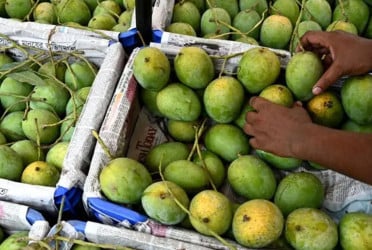
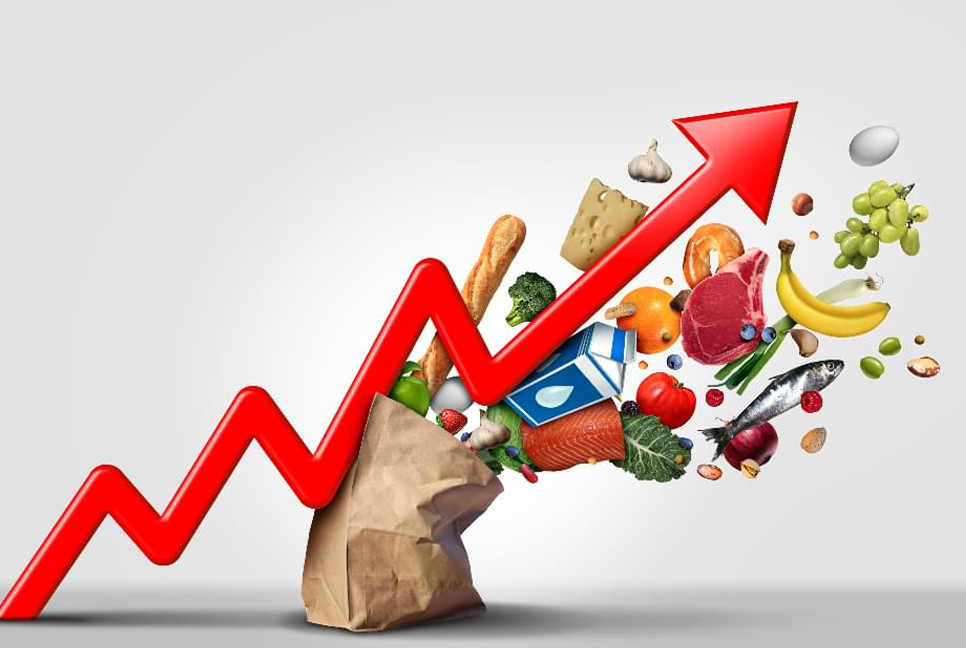
A visit to any neighbourhood market highlights the strain. Prices of rice, lentils, edible oil, vegetables, chicken and fish – staples for most families – remain high.
Although inflation has eased from its peak, purchasing power has yet to recover meaningfully for many.
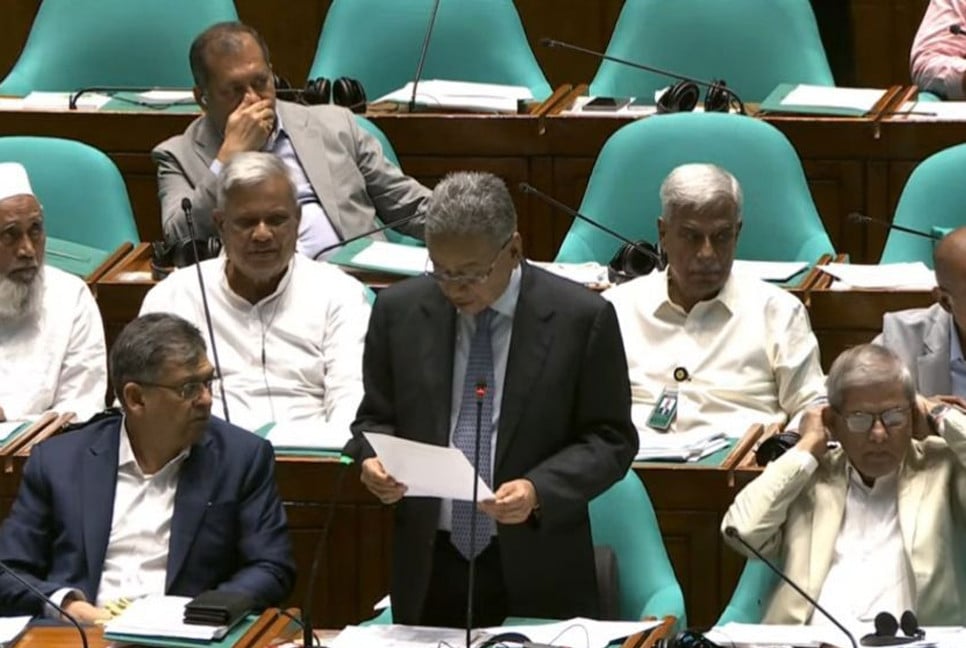
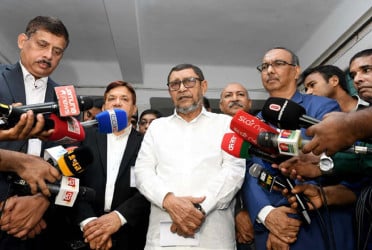
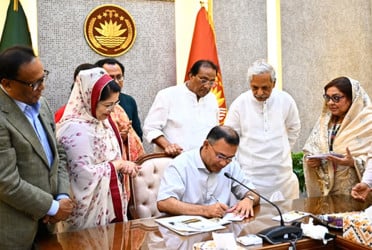
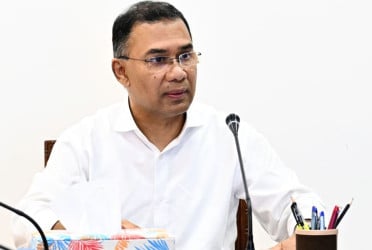
Against this backdrop, Finance Minister Amir Khasru Mahmud Chowdhury has stressed the need to boost tax revenue and stimulate investment to address the economic slowdown.
The central policy question is clear: would higher taxes now support recovery, or deepen pressure on already stretched households?
Household reality: costs rise, incomes lag
In a narrow lane in Kallyanpur, Dhaka, Rita and Ripon share a rented flat. Both work long hours.
Ripon is a truck helper by day and takes courier or ride-sharing jobs at night. Some months he earns between Tk16,000 and Tk18,000; other months less. Rita earns around Tk5,000 to Tk6,000 working in homes.
Even with two incomes, the family struggles to make ends meet. Rent, groceries, gas, electricity and school expenses consume nearly everything. By month’s end, nothing remains. Borrowing has become routine.
Their story is increasingly common. In many households, a single income no longer suffices. Even with two or three earners, families rely on informal credit, shopkeeper tabs or NGO loans to cover essentials.
Official data show inflation has outpaced wage growth in recent years. In the fiscal 2023-24, inflation stood at 10.33%, while wages rose by 7.94%.
Although the gap narrowed in 2025, real purchasing power has yet to recover. In practical terms, incomes may look higher on paper, but they buy less.
Slowing growth, weak investment
According to the Bangladesh Bureau of Statistics (BBS), GDP growth fell to 3.49% in FY25, the lowest since the pandemic.
Growth in agriculture and services has slowed, and the investment-to-GDP ratio has declined to 28.54%.
Each year, an estimated 20 lakh to 22 lakh people enter the labour market. Without stronger investment, job creation will falter. And without jobs, incomes will not rise.
The government argues that investment requires public spending, and public spending requires revenue. One of the quickest ways to raise revenue is through higher taxation.
What happens when taxes rise?
While raising taxes may be administratively straightforward, the economic consequences are more complex.
Higher corporate taxes are often passed on to consumers through increased prices.
Increases in indirect taxes reduce households’ disposable income, limiting spending. Even new fees and service charges, though less visible, ultimately add to the burden on ordinary citizens.
Bangladesh’s tax-to-GDP ratio remains relatively low, at around 7% – below many South Asian peers. Yet the issue is not only how much tax is collected, but who pays it and how effectively it is used.
Structural weaknesses
A key challenge is uneven tax compliance. Many high-income professionals, landlords and large business owners underreport income or avoid proper taxation, while salaried employees are taxed at source.
Public spending efficiency is another concern. Project costs frequently overrun, timelines stretch and expected returns fail to materialise.
Inefficiency, corruption and poorly designed projects inflate expenditure. Without tighter fiscal discipline, higher taxation alone may not close the deficit.
Economist Mustafa K Mujeri, a former chief economist of the central bank, has argued that sustainable stability depends on controlling food inflation and ensuring wage growth outpaces price increases.
The priority, he suggests, should be easing living costs and strengthening incomes, not merely expanding revenue.
A more balanced approach
A broader strategy would emphasise structural reform rather than simply raising tax rates.
Expanding the tax net through digital data systems could identify untaxed income and assets, ensuring a fairer distribution of the burden.
Improving transparency and efficiency in public spending would help ensure revenue is used effectively.
Strengthening food supply chains and market monitoring, particularly during high-demand periods such as Ramadan, could help stabilise prices.
Restoring discipline in the banking sector by reducing non-performing loans and ensuring policy stability would support investment.
Expanding well-targeted social protection for lower- and middle-income households would cushion economic shocks.
The bigger question
At a time when families are under severe strain, additional tax burdens, direct or indirect, risk fuelling further price increases or shrinking household spending power.
An economy cannot be judged solely by the size of its budget or GDP growth rate. A more telling measure is whether a family can save anything at the end of the month.
For households like Rita and Ripon’s, the crisis is not abstract. It is lived daily.
Before adding new burdens to already stretched budgets, closing loopholes and improving efficiency may prove both fairer and more effective.
Courtesy: The Daily Sun
Bd-Pratidin English/ AM