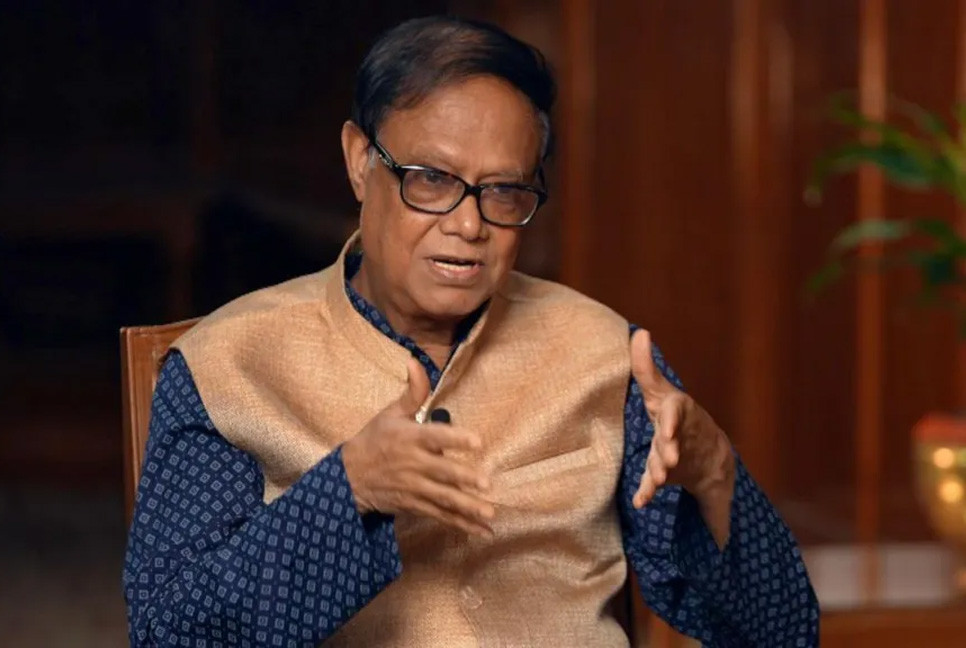
Representatives of our so-called civil society often speak of transparency and accountability, yet critics argue that they do not practice these principles themselves.
Just as Prof Yunus was accused of running the state over the past eighteen months without regard for rules, constitutional provisions, or legal frameworks, his appointed and trusted governor, Ahsan H Mansur, is alleged to have established a similar pattern of arbitrary rule within the Bangladesh Bank.
There is said to be no shortage of complaints from officers and staff of the central bank against him. Their frustration reportedly became visible when he left office, as some officials allegedly forced him out of the premises in protest.
In just 18 months, Ahsan Mansur became one of the most controversial and, according to critics, unpopular heads of the institution. Numerous allegations of administrative irregularities, financial rule violations, and conflicts of interest were raised by the Bangladesh Bank Officers’ Welfare Council. The Council claimed that the dignity and governance standards of the central bank had been compromised and demanded the formation of a high-level, neutral investigation committee comprising members of the Board of Directors.
Allegations of information leak from BFIU
According to the complaint, the governor’s secretariat regularly instructed the Bangladesh Financial Intelligence Unit (BFIU) to provide information about frozen bank accounts. Although there was no official provision for storing such sensitive information at the governor’s office, it was alleged that these details were leaked through family members and the governor’s personal secretary to certain circles. In return, there were claims of financial transactions in exchange for reopening frozen accounts – actions that allegedly violated anti-money laundering laws.
Use of four official vehicles
Though his contract entitled him to two official vehicles, it was alleged that four vehicles were under the control of his family members, with fuel and maintenance expenses exceeding approved limits.
Irregularities in purchasing a luxury vehicle
Despite government austerity measures and the eight-year procurement limit policy, a luxury Toyota Alphard costing nearly Tk2 crore was reportedly purchased. Allegations state that proper Public Procurement Rules (PPR) were not followed, and the state-owned Progoti Industries was bypassed, even though a functional vehicle was already available for the former governor’s use.
Allowance withdrawal by personal secretary
It was also alleged that the governor’s personal secretary (PS), an additional director, received Tk50,000 per month as a vehicle maintenance allowance despite using an official car – an action described as receiving financial benefits beyond regulatory provisions.
Conflict of interest in digital bank licensing
The complaint further alleged that due to prior business relationships, the governor rushed to grant a digital bank license to a specific group, allegedly ignoring ownership limits under the Bank Company Act. The matter was reportedly postponed after objections were raised during a board meeting.
Allegations of misuse of medical benefits
Another accusation involved the alleged misuse of medical benefits – obtaining “no-stock” slips from the bank’s medical center despite medicines being available, and submitting fabricated bills to withdraw funds for external purchases.
Questions over CSR fund allocation
The Council also raised concerns over grants provided from the central bank’s CSR fund to institutions such as Nilphamari Government High School, Khalil-Malik Foundation in Chuadanga, and a girls’ school in Tangail. It was alleged that proper transparency and policy guidelines were not followed, and that some donations involved conflicts of interest due to personal connections.
Administrative tensions and show-cause notices
Tensions reportedly escalated when several officials referred to the governor as “authoritarian,” leading to show-cause notices against three officers. Administrative reshuffles and transfers followed, sparking widespread discussion within the banking community. Shortly afterward, a decision was made to change the governor.
Reappointment without board approval
The former governor was also accused of reappointing former executive director Ahsanullah on a contractual basis without Board approval, allegedly violating Bangladesh Bank’s service rules. Under existing regulations, any contractual appointment or extension requires formal Board approval. Sources claim that the extension was granted unilaterally after the contract expired, causing dissatisfaction among regular officials.
Overreliance on costly advisers
The Bangladesh Bank Officers’ Welfare Council alleged that the former governor excessively relied on expensive advisers and consultants, many of whom lacked sufficient understanding of Bangladesh’s banking environment. As a result, their recommendations were reportedly inconsistent with institutional realities and negatively affected the working environment.
Communication breakdown and executive floor restrictions
In a written complaint to the Governor, the Council expressed concern over the erosion of long-standing traditions of transparent communication between the governor, deputy governors, and officers. One controversial decision involved suddenly locking all entry points to the Executive Floor (4th floor) of the main building, restricting access solely through elevators. Officials viewed this as unprecedented and degrading, interpreting it as an attempt to distance the administration from officers – possibly to facilitate unpopular promotion policies or other controversial decisions.
The Council further noted that although a reform-related report had been submitted on March 19 of the previous year, and assurances were given that the council would be included in reform committees, no visible progress had been made.
Growing vacancies and promotion delays
The letter also highlighted alarming vacancy levels. As of 30 October 2025, out of 6,260 first-class positions, 1,936 remained vacant. Four executive director posts had been vacant for years. No promotions had been granted at the additional director level since 19 May of the previous year, and a promotion panel based on August 31 data remained unapproved. According to the Council, qualified officers were being neglected and promotions deliberately delayed.
Over the course of 18 months, critics argue, Ahsan H Mansur created an unstable environment within Bangladesh Bank, allegedly disregarding established rules and regulations.
Bd-Pratidin English/ AM