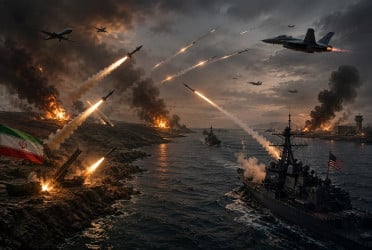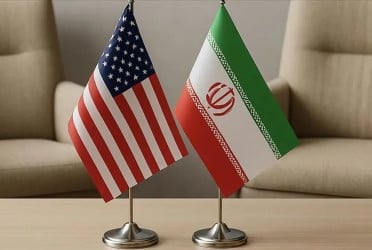
The ongoing US-Israel conflict targeting Iran has triggered fresh uncertainty for Bangladesh’s trade sector, particularly its readymade garment (RMG) exporters, raising concerns over future performance.
Bangladesh ships a significant portion of its garments to European Union and Middle Eastern markets via the Strait of Hormuz, one of the world’s most vital maritime routes.
Industry insiders warn that if the conflict persists, both exports and imports could be severely disrupted, though quantifying the immediate economic loss remains difficult.
“The RMG sector is at a critical juncture,” said industry sources. “Global geopolitical tensions, rising energy costs, logistical disruptions, and trade policy challenges together present a complex set of risks.”
Stakeholders from both public and private sectors are calling for strategic measures, including export diversification, improved logistics planning, and renegotiation of trade terms, to safeguard one of Bangladesh’s key economic drivers.
Rising oil prices and economic risks
Economists are warning of a potential spike in global oil prices following Iranian officials’ hints at closing the Strait of Hormuz, through which roughly 20%-30% of the world’s oil and gas supplies pass.
BGMEA Director Faisal Samad told Daily Sun that the conflict has created instability and uncertainty for foreign trade, particularly in RMG exports.
“Our major vessels to the EU and Middle East pass through the Strait of Hormuz. Initially, our export lead times will be delayed, but if the situation escalates, our exports could be severely affected,” he said, adding that broader economic instability may follow.
Former BGMEA Director Mohiuddin Rubel warned that inflation is likely to rise due to the conflict, which could reduce orders and heighten global instability.
He described the Strait of Hormuz as “a narrow but crucial waterway connecting the Persian Gulf to the rest of the world” and “the most important global energy chokepoint.”
Around 20% of global oil and over 25% of liquefied natural gas (LNG) pass through the strait from Gulf countries, which collectively hold nearly half of the world’s oil reserves and about 40% of its gas reserves.
Approximately 80%-84% of these supplies go to Asian countries, including China, Japan, India, and South Korea.
“Although Bangladesh is not located near the strait, it is indirectly affected,” Rubel explained.
“Any disruption can drive up global oil and gas prices, increasing our fuel import costs, pressuring electricity generation, trade balance, and overall inflation. This could slow economic growth and make life more expensive for ordinary people.”
Dr M A Razzaque, chairman of Research and Policy Integration for Development (RAPID), said it would take time to fully assess the impact of the conflict.
“Any war or conflict disrupts global supply chains and drives up oil prices initially. If prolonged, the effects could spread further,” he said, urging the government to make cautious economic decisions to mitigate fallout and control inflation.
Harun-Ur-Rashid, chairman of the Bangladesh Container Shipping Association, echoed these concerns, noting that a long-term conflict could disrupt the shipping of goods, affecting both imports and exports.
Trade figures highlight exposure
According to Bangladesh Bank and Export Promotion Bureau data, Bangladesh’s bilateral trade in 2023 included $164.52 million with Iran, $1.63 billion with Saudi Arabia, $2 billion with the UAE, and $2.15 billion with Qatar.
Bangladesh's RMG exports were valued at $39.34 billion in the 2024-25 fiscal year, of which $19.7 billion was to the EU.
Source: Daily Sun
Bd-pratidin English/ ANI